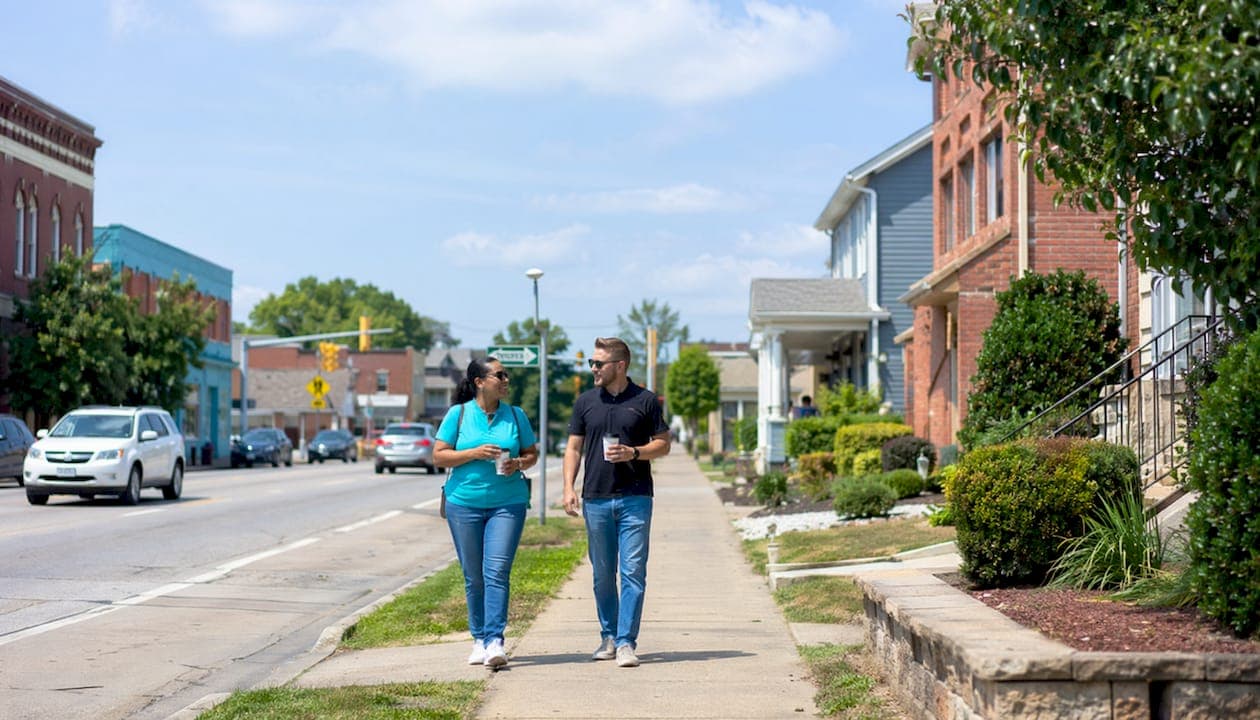
Portage Indiana is the largest city in Porter County and the third largest in Northwest Indiana, making it one of the region's most significant residential and investment markets. Population sits at 38,761 as of 2026, with steady growth of 2.1% since 2020. The median household income of $76,276 places the city well above many comparable Midwest communities. For homebuyers, renters, and investors weighing options in Northwest Indiana, Portage delivers a rare combination of economic stability, natural amenities, and direct access to Chicago.
What are the primary neighborhoods and housing options in Portage, Indiana?
Portage's housing stock reflects its layered history. The city incorporated as a town in 1959 and gained city status in 1967, which means older neighborhoods sit alongside newer subdivisions built under more recent zoning codes. That mix creates real variety for buyers at different price points.
Neighborhood character and housing types
The city's residential areas fall into three broad categories:
- Older established neighborhoods near the city's core, with ranch-style and split-level homes built in the 1960s through 1980s. These properties tend to offer larger lots and mature trees, though some require updating.
- Family-focused subdivisions in the city's eastern and southern corridors, developed from the 1990s onward. These areas attract buyers who want newer construction, cul-de-sac streets, and proximity to well-rated schools.
- Industrial-adjacent areas on the city's northern edge, closer to Burns Harbor port. Housing here is more affordable, but buyers should factor in proximity to commercial and industrial activity when evaluating livability.
The city's diverse housing stock means investors can find single-family rentals, fix-and-flip candidates, and long-term hold properties within the same zip code. That range is unusual for a city of this size and gives buyers real flexibility.
Ownership vs. rental market
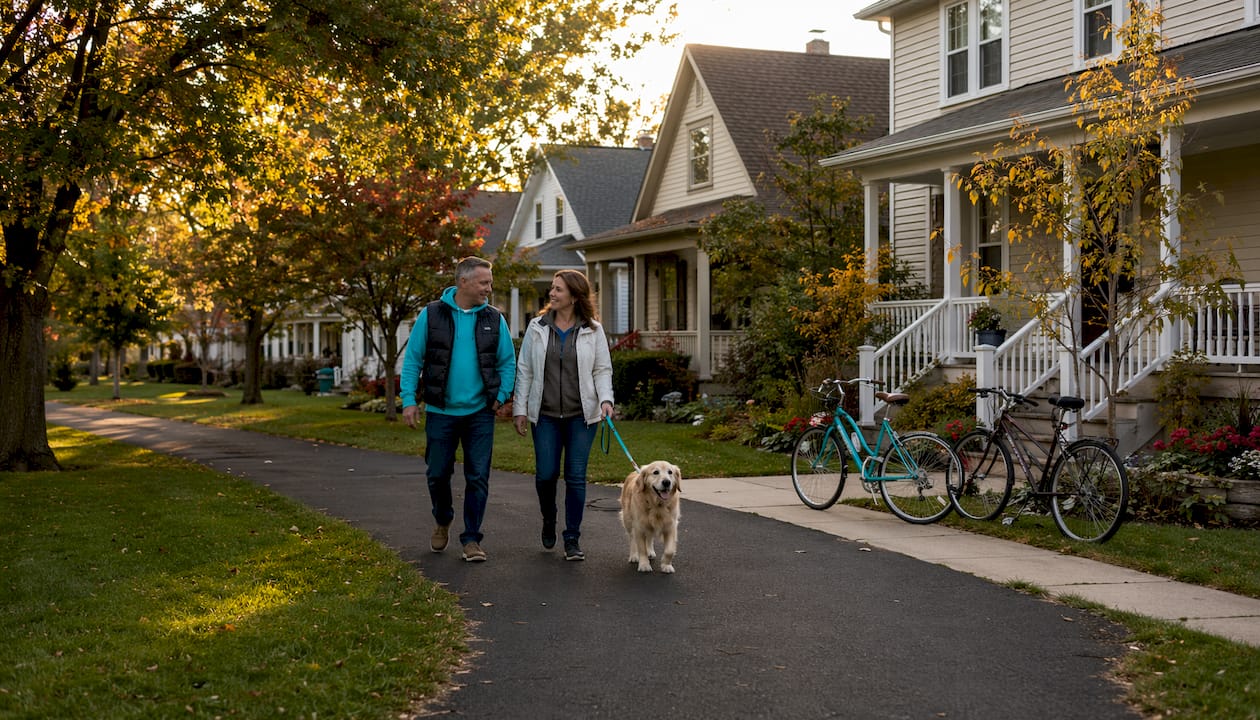
Portage leans toward owner-occupied housing, which signals neighborhood stability. Rental demand remains strong, driven by workers in the industrial and logistics sectors who prefer flexibility. New residential developments, shaped by ongoing city planning updates, are adding inventory in the mid-price range.
Pro Tip: If you are buying in an older Portage neighborhood, pull the permit history on the property. Many homes from the 1970s have had additions or electrical updates that may or may not have been permitted, and that affects both financing and resale.
How does Portage's economic landscape impact real estate?
Portage's economy is built on industrial muscle and geographic advantage. The city's location near Burns Harbor port and its legacy steel industry created a working-class foundation that still shapes property values and neighborhood character today. That industrial base has diversified over time, but manufacturing and logistics remain the dominant employment sectors.
Key economic indicators
| Indicator | Figure |
|---|---|
| Median household income | $76,276 |
| Per capita income | $48,110 |
| Poverty rate | 11.59% |
| Median age | 39.8 years |
| Population (2026) | 38,761 |
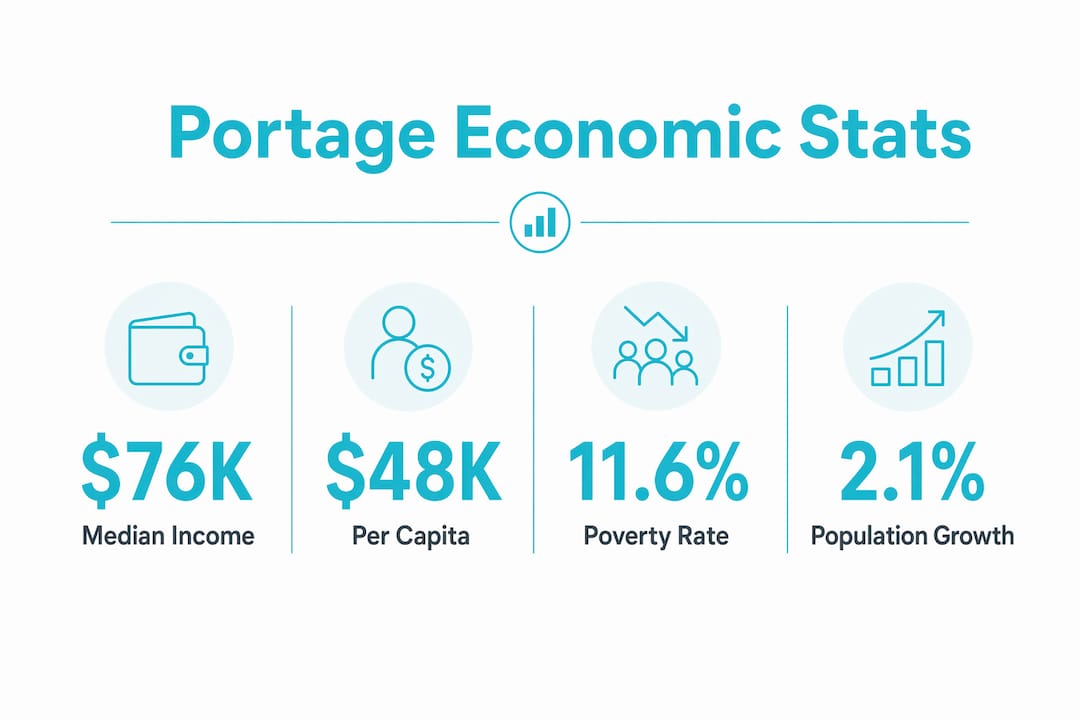
The poverty rate of 11.59% is worth watching. It sits above the national median for similarly sized cities, which means some neighborhoods carry more financial stress than others. Investors targeting rental properties should map poverty concentration by block before committing to a purchase.
The shift from a steel-dominated economy to a more diversified mix of retail, healthcare, and logistics has changed which neighborhoods are appreciating fastest. Areas closer to Interstate 94 and major commercial corridors have seen the strongest demand from both owner-occupants and investors.
Pro Tip: Track industrial job announcements in Porter County. When a major employer expands near Portage, rental demand in adjacent neighborhoods typically rises within 12 months. That window is your best entry point for buy-and-hold acquisitions.
What community amenities and schools does Portage offer?
Strong amenities are one of Portage's clearest competitive advantages over other Northwest Indiana cities of similar size. The city offers a quality-of-life package that appeals to families, active adults, and commuters alike.
Education
Portage Township Schools serves the city's K-12 population. The district operates multiple elementary schools, two middle schools, and Portage High School, which enrolls one of the largest student bodies in the region. Families researching Portage Indiana schools consistently cite the district's extracurricular programs and athletics as standout features. School quality directly affects home values in family-oriented neighborhoods, and Portage's district performs competitively within Porter County.
Parks, trails, and outdoor recreation
Portage punches well above its weight on outdoor amenities:
- Fifteen scenic parks spread across the city, ranging from neighborhood pocket parks to large recreation complexes
- More than 10 miles of paved trails connecting residential areas to commercial districts
- Inclusive playgrounds designed for children with varying physical abilities
- Direct access to Lake Michigan beaches, which sets Portage apart from inland communities of comparable size
- Annual cultural festivals that draw residents from across Porter County
The Indiana Dunes National Park sits just minutes from Portage's northern border. That proximity is a genuine lifestyle asset. Families get world-class hiking and beach access without leaving the metro area.
Transportation and connectivity
Portage sits at the intersection of Interstates 94 and 80/90, plus US Routes 6 and 12. The South Shore Line commuter rail connects residents to downtown Chicago in roughly 90 minutes. That connectivity makes Portage a realistic base for Chicago workers who want more space and lower housing costs than the city offers. The commuter rail access is a factor that consistently supports property values near station corridors.
What future developments should buyers and investors know about?
The city is actively updating its Comprehensive Plan to guide zoning, housing density, and infrastructure investment through the next decade. That plan will determine which neighborhoods see increased development pressure and which remain stable residential zones. Buyers and investors who read the draft plan before purchasing gain a real advantage.
Key areas to watch
- Zoning density changes. The Comprehensive Plan is evaluating areas for increased residential density. Neighborhoods near transit corridors and commercial centers are the most likely candidates. Higher density zoning typically increases land values and rental demand.
- Infrastructure investment zones. Road and utility upgrades signal where the city expects growth. Properties near planned infrastructure improvements tend to appreciate ahead of the broader market.
- Commercial corridor development. Portage's main commercial strips along US Route 6 are targeted for mixed-use redevelopment. Ground-floor retail with upper-floor residential is the model the city is studying.
- Industrial buffer areas. Some parcels near Burns Harbor port are being evaluated for rezoning away from heavy industrial use. That shift could open new residential or light commercial development opportunities.
A title risk buyers often miss
Some historical burial grounds in Portage remain undocumented in property deeds. The Crisman Cemetery case is the most cited example. Older parcels, particularly those with agricultural or undeveloped histories, may carry title complications that standard deed searches do not catch. Buyers of older land should commission a full title search and review township records before closing.
Investors working with older Portage properties also need to understand Indiana's adverse possession rules. Squatter situations and boundary disputes are more common on properties that have sat vacant for extended periods, which is relevant in neighborhoods with higher vacancy rates.
Pro Tip: Request a survey and a full title commitment, not just a title search, on any Portage property with pre-1980 deed history. The extra cost is minimal compared to the risk of discovering an encumbrance after closing.
Key Takeaways
Portage, Indiana offers homebuyers and investors a stable, growing market with strong amenities, solid income levels, and a city planning process that will shape property values for the next decade.
| Point | Details |
|---|---|
| Steady population growth | Portage grew 2.1% since 2020, signaling consistent housing demand. |
| Strong income base | A median household income of $76,276 supports stable property values across most neighborhoods. |
| Outdoor and transit access | Fifteen parks, 10+ miles of trails, and South Shore Line rail access add measurable lifestyle value. |
| Comprehensive Plan matters | Reviewing the city's draft zoning plan before buying identifies neighborhoods with the best growth potential. |
| Title due diligence is critical | Older parcels may carry undocumented burial grounds or adverse possession risks that standard searches miss. |
What I have learned from watching Portage real estate up close
The data on Portage tells a clear story, but the ground-level reality adds important texture. The median age of nearly 40 years and a balanced gender ratio tell me this is a city of established families, not a transient population. That demographic stability is exactly what long-term investors want to see. Turnover is lower, tenants stay longer, and neighborhoods hold their character.
What surprises most outside investors is how much the steel industry's legacy still shapes the city's psychology. Portage residents are practical. They value function over aesthetics. That means properties with solid bones and updated mechanicals sell faster than cosmetically renovated homes with deferred maintenance hiding underneath.
The Comprehensive Plan update is the most underused tool available to buyers right now. Most people skip it. Reading it takes two hours and can save you from buying in a neighborhood about to face commercial rezoning pressure, or help you identify a block where infrastructure investment is coming. That is the kind of edge that separates informed buyers from everyone else.
My honest read on Portage: it is not a flashy market. It will not double in value overnight. What it offers is durability. The combination of industrial employment, Chicago commuter access, and genuine outdoor amenities creates a floor under property values that more speculative markets lack. For buyers who want a home and investors who want steady returns, that durability is worth more than hype.
— Daniel
Selling or buying a home in Portage? Dan buys houses can help
Portage's real estate market rewards buyers who move quickly and sellers who want certainty. Dan buys houses specializes in fast, cash purchases of homes throughout Northwest Indiana, including Portage, with no repairs required and no open houses.

Whether you have inherited a property, need to relocate fast, or simply want to skip the traditional listing process, Dan buys houses makes a direct cash offer and can close in as little as five days. There are no agent fees, no renovation costs, and no drawn-out negotiations. For homeowners who need speed and simplicity, it is the most direct path from decision to done. Reach out to Dan buys houses to get a no-obligation offer on your Portage property today.
FAQ
What is the population of Portage, Indiana in 2026?
Portage has a population of 38,761 as of 2026, reflecting 2.1% growth since 2020. It is the largest city in Porter County and the third largest in Northwest Indiana.
What are home prices like in Portage, Indiana?
Portage offers a wide range of price points, from affordable older homes in industrial-adjacent neighborhoods to newer mid-range subdivisions. The median household income of $76,276 supports a healthy owner-occupant market across most of the city.
How are Portage Indiana schools rated?
Portage Township Schools operates a full K-12 district with multiple elementary schools, two middle schools, and Portage High School. The district is competitive within Porter County and is frequently cited for strong extracurricular and athletic programs.
What things to do in Portage make it attractive for families?
Portage offers fifteen parks, more than 10 miles of paved trails, inclusive playgrounds, annual cultural festivals, and direct access to Lake Michigan beaches and Indiana Dunes National Park.
Is Portage, Indiana a good place to invest in real estate?
Portage is a stable, growing market with strong employment anchors, commuter rail access to Chicago, and an active city planning process. Investors should review the Comprehensive Plan update and conduct thorough title research on older properties before purchasing.