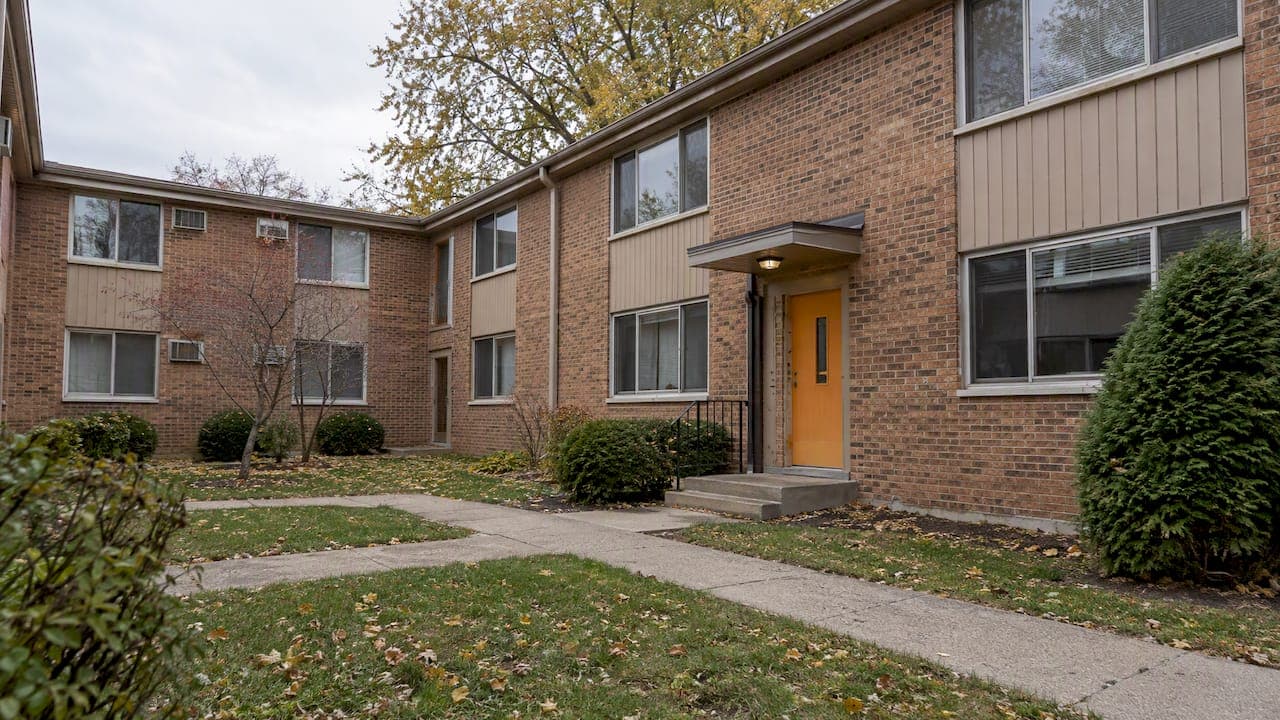
You have two main ways to sell an apartment building in Indiana. You can list it with a commercial broker and wait for a financed buyer to finish diligence. Or you can sell directly to a principal buyer for cash, as-is, with the tenants and leases staying in place. Which one is better depends on how much your building needs, how fast you need to close, and how much of the sale price the IRS will take.
This guide walks through both routes, the numbers buyers will ask for, the taxes that surprise owners, and the situations where a direct cash sale makes the most sense. We buy properties in Northwest Indiana, so we write from that side of the table, and we will say plainly where a broker listing is the better call.
TL;DR
- Buyers of 5+ unit buildings value the property on income, so a current rent roll and a trailing twelve-month (T-12) operating statement matter more than curb appeal.
- A listing can bring a higher headline price, but it also brings a lender's appraisal, third-party reports and a real chance the deal falls out of escrow.
- A direct cash sale is usually faster and more certain, with closings in as little as 5 to 30 days according to one Indiana multifamily buyer. Our own sellers have reported closing in as little as five days on houses.
- Plan for taxes before you accept an offer: Indiana's flat 2.95% rate, federal capital gains, depreciation recapture, and the option of a 1031 exchange.
- Measure every offer by what you net after closing costs, repairs, commissions and taxes, not by the price on paper.
Table of Contents
- What buyers actually pay for
- Listing with a broker versus selling for cash
- What happens to tenants, leases and deposits
- Taxes: what you actually keep
- Sell or keep: a quick test
- When a direct cash sale fits best
- What to ask any buyer before you sign
- Perspective: how we look at apartment buildings
- Selling with Dan Buys Houses
- A practical timeline for a direct sale
- FAQ
- Sources
What buyers actually pay for
A house sells on comparable sales. An apartment building sells on its income. Buyers take your net operating income, apply a capitalization rate, and arrive at a value. That is why two buildings of the same size on the same street can trade at very different prices.
For context, Berkadia's mid-2025 Indianapolis report put metro average occupancy at 95.8% and average effective rent at $1,316 a month, up 1.8% from a year earlier. Transactions in the first half of 2025 averaged $198,400 per unit at an average cap rate of 6.2%. Those are metro-wide averages for the Indianapolis market. Your building in Gary, Hammond, Valparaiso or Michigan City will not trade exactly at them.
Submarkets matter more than the metro number. The same Berkadia report and Tippecanoe County's 2025 rental report both point to how much vacancy can differ from one submarket to the next, especially near campuses. A building with 85% occupancy in a tight neighborhood is priced differently from one with 85% occupancy in a soft one.

The numbers to pull together first
Whether you list or sell direct, gather these before you talk to anyone:
- Rent roll. Every unit, tenant, rent, lease end date, deposit held and any rent concessions.
- T-12. Twelve months of income and expenses, month by month.
- Expense detail. Property taxes, insurance, utilities, management, payroll, repairs and capital spending.
- Loan payoff. A current payoff figure and any prepayment penalty or yield maintenance.
- Deferred maintenance list. Roofs, boilers, parking lots, plumbing stacks, anything a buyer will find anyway.
- Delinquency report. Who owes what, and which evictions are in progress.
Buyers underwrite from these documents. Direct buyers say they rely on their own underwriting built from a T-12 and rent roll rather than a formal appraisal or inspection. Clean books get you a faster and firmer offer from anyone.
Listing with a broker versus selling for cash
The honest answer is that neither route wins on every building. Here is how they compare on what owners tell us matters.
| Factor | Broker listing | Direct cash sale |
|---|---|---|
| Price | Potentially the highest, if the building is stabilized and shows well | Typically below a full market listing, because the buyer takes on the work and risk |
| Timeline | Months: marketing, offers, diligence, lender process | Days to a few weeks once numbers are verified |
| Certainty | Depends on the buyer's financing, appraisal and reports | Cash, no lender conditions |
| Condition | Deferred maintenance often becomes a negotiation | Bought as-is, condition priced into the offer |
| Costs to you | Commission and your share of closing costs | No commissions or fees when selling to us |
| Privacy | Marketing materials circulate, tenants and staff may hear | Quiet, off-market conversation |
A listing makes sense when the building is fully leased, well maintained, and you can wait six months or more. A direct sale makes sense when the building has problems, when time is short, or when a failed closing would cost you more than a lower price.
Why deals fall out of escrow
Financed buyers need a lender's appraisal, an environmental review, a property condition report and often a survey. Each can reopen the price. A low appraisal, a roof estimate or a surprise on an environmental report can all lead to a retrade or a canceled contract. Principal buyers who pay cash argue this is why their model suits distressed or tired-landlord properties: no lender-mandated third-party reports means fewer places for the deal to break.

That is a pitch from buyers, so weigh it accordingly. But the underlying point is sound. Every condition in a contract is a chance for the deal to die, and cash removes the biggest one.
What happens to tenants, leases and deposits
Owners often worry most about this, and it is simpler than they expect. Indiana multifamily properties are commonly sold as-is with leases, security deposits and tenants transferring at closing. Empty units and deferred repairs are factored into the price rather than becoming items you must fix before closing.
In practice, you should:
- Provide copies of every lease and any addenda.
- Reconcile security deposits so the buyer receives credit for the full amount held.
- Disclose any pending evictions, disputes or code notices.
- Prorate rents and expenses at closing.
Tenants generally keep paying rent as before, to a new owner. Their leases do not end because the building sold. Tell them about the sale promptly and in writing once the contract is firm, and give them the new payment instructions.
Taxes: what you actually keep
The sale price is not your payout. For many owners the tax bill is the largest single deduction after the mortgage. Talk to a CPA who handles real estate before you sign, because the right structure can change your net by tens of thousands of dollars. What follows is the outline of what that conversation will cover.
Indiana and federal gains
Indiana has no separate capital gains tax. According to First Home Start Guide, gains are taxed at the flat individual income tax rate, 2.95% for 2026, with a scheduled drop to 2.90% in 2027. Federal capital gains tax applies on top of that.
Depreciation recapture
Many owners overlook this one. Depreciation you took, or could have taken, on the building is taxed at a 25% federal rate at sale, separately from the capital gain on your actual profit. On a building you have owned for fifteen years, that figure can be large. Ask your CPA to model it before you compare offers.
The 1031 exchange
If you plan to buy another investment property, a like-kind exchange under IRC Section 1031 can defer the tax. Indiana conforms to the federal rule, so you can defer both federal and state tax if proceeds roll into a replacement property of equal or greater value. A CPA firm's overview of 1031 exchanges for rental property explains that the exchange can defer tax on depreciation recapture too, and that you must buy the replacement within a set window.
Timing is the catch. A 1031 exchange needs a qualified intermediary in place before closing, and the replacement deadlines are strict. If you want a fast cash sale and a 1031 exchange, tell the buyer on day one so the contract and closing date can fit the exchange.
Property tax and what a buyer sees
Indiana's constitutional circuit breaker caps property tax on residential rental property at 2% of gross assessed value. Buyers know this, so your tax line is predictable in their model. Make sure your T-12 shows the actual bills, because that is what they will test against.
Sell or keep: a quick test
Selling is not the only move. Before you decide, compare what the building earns you with what the equity could earn elsewhere. Brokers who work this market note that selling a multifamily asset means weighing operating potential, market value and the choice between income and liquidity.
A few signs that selling is worth serious thought:
- Net operating income has been flat or falling for two or more years.
- A large capital expense, such as a roof, boiler or sewer line, is coming and you do not want to fund it.
- Turnover, collections or tenant problems are taking more of your time than the income is worth.
- You inherited the property and do not want to manage it.
- A lender is pressing you, or you are behind on payments.
If you are staying, clean books make either decision easier. Tools for bookkeeping for rental property owners help you produce the T-12 and expense detail any buyer will ask for, now or years from now.
When a direct cash sale fits best
In our experience, cash buyers earn their place in a handful of situations:
- Distressed buildings. Heavy deferred maintenance, high vacancy or code problems that would scare off lenders.
- Foreclosure pressure. When a lender's timeline is shorter than a listing timeline. Our guide to the Indiana foreclosure timeline lays out how much time you may really have, and our piece on an emergency home sale to stop foreclosure covers the options.
- Estates. Heirs who want to liquidate before probate drags on and would rather not manage tenants in the meantime.
- Tired landlords. Owners who are done with evictions, turnover and repairs.
- Relocation or divorce. When one signature and one closing date beat months of showings.
What to ask any buyer before you sign
Whoever you sell to, ask these questions in writing:
- Are you buying the building yourself, or assigning the contract to someone else?
- Is there any financing, appraisal or inspection contingency?
- Who pays closing costs, title and any transfer-related fees?
- How is the price set, and what documents will you use to set it?
- How flexible is the closing date, and what happens if a tenant issue surfaces?
- Can I see proof of funds?
A principal buyer who uses their own money should answer all six without hesitation. Vague answers on contingencies and assignment are the warning sign.
Perspective: how we look at apartment buildings
We are a local buyer, not a hedge fund or a national investor. We purchase properties directly, with our own money, and we make money by buying at a discount and then reselling or renting. That is the honest version of the model, and it means our offer will be below what a perfect, fully stabilized, well-marketed listing might bring in a best case.
What we offer in exchange is simplicity. We buy as-is, so you do not paint, clean or repair. You pay no commissions or fees, and we cover closing costs. We can set a closing date around your life, including a flexible move-out schedule where that applies. The offer does not depend on a lender's appraisal, because there is no lender.
Our advice to owners is to run both numbers. Get a realistic listing estimate from a commercial broker if the building is in good shape. Then compare it with a cash offer after subtracting commissions, repairs, carrying costs through a long marketing period, and the risk of a failed closing. Sometimes the listing wins. When time, condition or stress is the real problem, the cash offer often does.
— Daniel
Selling with Dan Buys Houses
We buy houses, condos, duplexes, townhomes, mobile homes, commercial properties, apartment complexes and land in Northwest Indiana, in any condition, for cash. There are no fees or commissions, and the closing costs are ours. If you own a building in Hobart, Portage, Merrillville, Highland, Chesterton or nearby, you can request a cash offer and see what a direct sale would net you. If you want to know what the steps look like first, read how our process works.
A practical timeline for a direct sale
No two buildings are the same, but most direct sales follow this sequence:
- Initial conversation. You describe the building, its units, occupancy and your goals.
- Documents. You share the rent roll, T-12 and any known repair issues.
- Offer. The buyer underwrites from your numbers and makes a cash offer.
- Contract and title. A title company opens the file and confirms ownership and liens.
- Closing. You pick the date. Some deals close within days, while larger buildings with more paperwork take longer.
As a reference point, some of our house sellers have closed in as little as five days. A multi-unit building has more moving parts, so ask for a realistic date for yours instead of assuming the fastest case.
FAQ
Do I need an appraisal or inspection to sell an apartment building for cash?
Usually not. In an off-market cash deal, the buyer typically relies on its own underwriting from your rent roll and T-12 rather than a lender-ordered appraisal or formal inspection, as one Indiana buyer describes. The buyer will still want to understand the building's condition. Whatever problems exist are priced into the offer.
What happens to my tenants if I sell?
Tenants stay, and their leases transfer to the new owner at closing, along with security deposits. Rent simply goes to a new payee. Give tenants written notice and new payment details once the sale is firm.
How much tax will I owe when I sell an apartment building in Indiana?
It depends on your basis, how long you held the building and how much depreciation you took. You will generally face federal capital gains tax, Indiana's flat 2.95% rate for 2026, and depreciation recapture. A 1031 exchange may defer these taxes if you buy a replacement property. Have a CPA run your numbers before you accept an offer.
Can I sell if the building has vacancies or needs major repairs?
Yes. Vacancies and deferred maintenance do not have to be fixed before the sale, since they are factored into the buyer's price. The price will reflect them, so a building with problems will fetch less than a fully leased, well-kept one.
Is a cash offer always lower than a listing?
Often, but not always once you count costs. A listing can reach a higher sale price, then lose some of it to commissions, repairs, months of carrying costs and renegotiation after diligence. Compare what you would net on each path, and how likely each is to close.
Sources
- Berkadia, Indianapolis Mid-Year 2025 Multifamily Market Report
- Tippecanoe County 2025 Rental Report
- First Home Start Guide, Indiana Property Tax Cap and Capital Gains
- WCG CPAs & Advisors, Selling Your Rental Property: 1031 Like-Kind Exchange
- René Hauck, Should I Sell or Rent My Home in Indiana?
- Indiana multifamily buyer guide, Skyline Capital Investments
- Sell an Apartment Building, Kentuckiana Commercial Co.
- The Kirkland Co., Indiana multifamily
- ExpressPlanner, Bookkeeping for rental property owners and landlords