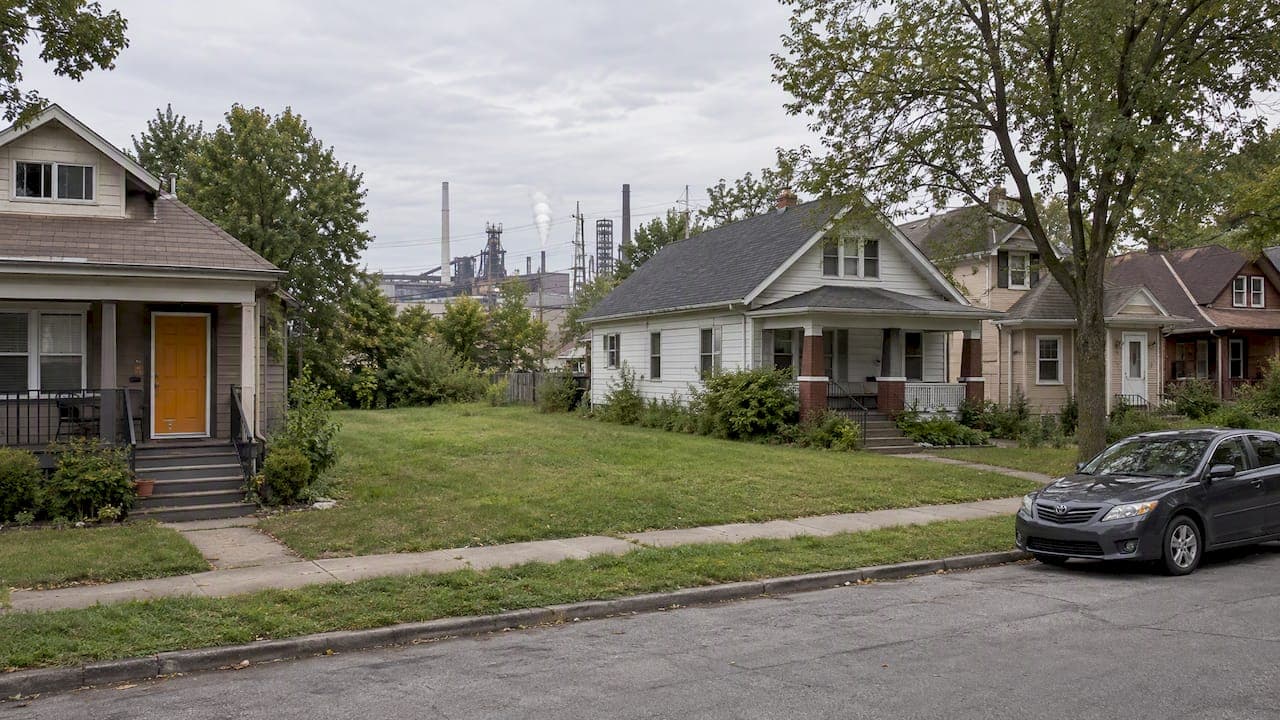
Gary's housing market remains one of the most affordable in the region, with recent price gains giving sellers some leverage while buyers still find real value. The median owner-occupied home value sits at $94,700, and local sales data point to modest upward movement. Buyers should move on well-priced listings quickly, while sellers can set realistic expectations without assuming a slow market.
TL;DR:
- Well-priced listings in Gary sell quickly due to limited inventory and active demand from local buyers and commuters.
- Sales vacancy is low, but the region's median sales price has risen to around $130,000, making some properties more expensive than the Census median.
- Submarkets like the Broadway corridor and areas suitable for accessory dwelling units are expected to appreciate as redevelopment progresses.
- Mortgage rates exceeding 6% have slightly dampened homebuying demand, influencing affordability and sales trends in the market.
- Off-market deals and distressed properties are accessible through local networking, tax sale schedules, and targeted ZIP code searches.
Table of Contents
- Gary in context: population, employment, and ties to Chicago
- Sourced numbers: median value, rents, and the mortgage backdrop
- Inventory, foreclosure signals, and finding priced deals
- Neighborhoods and corridors worth watching
- Buying and selling tips for the Gary market
- A local perspective on Gary's housing market
- Sell fast in Gary: how a cash, as-is sale works
- FAQ
- Sources
Gary in context: population, employment, and ties to Chicago
Gary's housing demand is shaped as much by its people as by its prices. The city's population has declined significantly since 2000, a long-running trend tied to the decline of the steel industry that once anchored the local economy, according to HUD's housing market analysis. That shrinkage has left a larger share of vacant housing stock than you would find in a growing city, which keeps prices low but also limits the pace of redevelopment.
Gary sits within the Chicago metropolitan statistical area, which matters more than it might seem. Commuters who work in Chicago or in Northwest Indiana's industrial corridor often choose Gary for its lower housing costs relative to the broader metro.
Three buyer types tend to dominate local transactions:
- Local families looking for affordable starter homes or long-term residences near relatives and established neighborhoods.
- Commuters who work in Chicago or nearby Indiana industrial centers and want lower housing costs than the city offers.
- Investors targeting rental properties or fixer-uppers in a market where entry prices remain low.
Only 49.1% of housing units in Gary are owner-occupied, according to Census Bureau data, a figure that reflects both the rental demand from commuters and the number of vacant or investor-owned properties scattered through the city.
Sourced numbers: median value, rents, and the mortgage backdrop
The clearest picture of Gary's market comes from a handful of reliable figures. The Census Bureau puts the median value of owner-occupied housing units at $94,700, with median gross rent at $1,012 based on 2020 to 2024 data. Local sales data tell a slightly different, more current story.
- Median owner-occupied home value: $94,700, with an owner-occupancy rate of 49.1%, per Census QuickFacts.
- Median gross rent: $1,012 a month, reflecting Gary's position as an affordable rental market relative to the Chicago metro.
- Regional median sales price: around $130,000 in the second quarter of 2026 for Northwest Indiana's Gary-area market, according to Sotheby's regional market update.
That gap between the Census Bureau's broader valuation and the more recent regional sales figure suggests prices have climbed since the last full Census survey period. Mortgage rates add another layer to affordability. National 30-year fixed mortgage rates have more than doubled since 2020, reaching over 6% by late 2022, a shift that HUD's analysis ties to softer homebuying demand nationwide. Fannie Mae's September 2026 housing forecast projects continued mortgage-rate and sales trends that will shape affordability in smaller markets like Gary well into the year.
Inventory, foreclosure signals, and finding priced deals
Gary's vacancy data tells a nuanced story. HUD reports a very low sales vacancy rate as of April 2023, a tight figure that signals limited for-sale inventory even in a market with plenty of lower-priced housing, according to the HUD market analysis. Rental vacancy runs notably higher than sales vacancy, which points to softer demand on the rental side than on the ownership side.
Local listing aggregates show meaningful price variation by ZIP code, with some areas concentrating lower-priced and foreclosure-adjacent inventory more heavily than others. If you are hunting for a deal, a few practical steps help:
- Set up MLS alerts filtered by ZIP code rather than city-wide searches, since Gary's price range varies block by block.
- Check Lake County recorder filings and tax sale schedules, which often surface distressed properties before they hit the open market.
- Connect with local investor networks or cash-buying services active in Northwest Indiana, since many off-market deals never reach traditional listing sites.
- Request a free home valuation to confirm whether a listing is genuinely priced below market, using a tool like Gregg Perrah's valuation service.
Neighborhoods and corridors worth watching
Not every part of Gary moves at the same pace. The Broadway corridor has drawn attention from the Gary Housing Authority as a target for transit-oriented redevelopment, a signal that infrastructure investment could eventually lift property values along that stretch. Local planning documents also point to growing acceptance of accessory dwelling units, which gives homeowners in Gary's narrow-lot neighborhoods a practical way to add rental income or multigenerational housing without a full rebuild.
- Broadway corridor: targeted for transit-oriented development, making it worth watching for buyers betting on long-term appreciation.
- Narrow-lot residential blocks: increasingly viable for ADU additions, which can boost rental income on otherwise modest properties.
- Established residential pockets: showing relative price stability compared to more vacancy-heavy sections of the city.
If you are weighing an ADU as a way to add value, review the design and permit requirements closely before committing, since lot size and setback rules vary by block, as outlined in this guide to attached ADU design.
Pro Tip: Cross-reference any neighborhood you're considering against recent city redevelopment announcements, since corridor investment tends to move property values before it shows up in sales data.

Buying and selling tips for the Gary market
Whether you are buying or selling, a few steps separate a smooth transaction from a stressful one.
- Get mortgage pre-approval before touring homes, since Gary's tight sales-vacancy rate means well-priced listings move fast.
- Order a full inspection, with particular attention to vacancy history and utility shutoffs, which are common in a market with significant vacant stock.
- Research the specific block, not just the ZIP code, since conditions can shift dramatically within a few streets.
- If selling, compare your options: a traditional agent listing, a direct investor sale, or a fast-cash buyer, each with different timelines and net proceeds.
- Verify any cash offer by asking for proof of funds and a clear, written timeline before signing anything.
Pro Tip: A seller facing foreclosure or costly repairs should get at least one fast-cash quote alongside a traditional agent estimate before deciding, since the two routes solve very different problems. Homeowners weighing their options can also review foreclosure avoidance resources specific to Indiana.
A local perspective on Gary's housing market
We track Gary's housing market closely because we work with sellers here every week, not as an abstract data exercise. The scenarios we see most often involve foreclosure deadlines, inherited homes nobody wants to manage from out of state, sudden relocations, or properties that need more repair work than a traditional sale can absorb. If you are in one of those situations, we are glad to talk through your options with no pressure to sign anything.
— Daniel
Sell fast in Gary: how a cash, as-is sale works
![CTA image placeholder]

For homeowners who need certainty more than they need top dollar, a direct cash sale solves a specific problem: no repairs, no showings, and a close that can happen in days rather than months. We buy houses in any condition, cover closing costs, and charge no fees or commissions. A reputable buyer will give you a transparent offer and proof of funds before you commit to anything. If speed and certainty matter more than squeezing out the last dollar, see how our cash offer process works and get a no-obligation quote.

FAQ
Is Gary, Indiana making a comeback?
Gary shows pockets of redevelopment activity, particularly along the Broadway corridor, where transit-oriented planning is underway through the Gary Housing Authority. The broader population trend has declined for decades, so recovery is uneven and concentrated in specific neighborhoods rather than citywide.
What is the hottest housing market in the U.S. right now?
National housing conditions vary widely by region, and Fannie Mae's housing forecast tracks these shifts at the national level rather than naming a single hottest market. Gary itself is not a high-demand national market, but it remains notably affordable compared to many metro areas.
Will the housing bubble burst in 2026?
There is no consensus forecast predicting a housing bubble burst in 2026. Fannie Mae's September 2026 forecast projects continued, more moderate trends in sales and mortgage rates rather than a dramatic correction.
Are there homes for sale in Gary, Indiana for $1?
Gary has participated in municipal lot and property donation programs in the past, but these are limited, require specific qualifications, and are not standard market listings. If you are looking for genuinely low-cost housing in Gary, local listing aggregates show meaningful price variation by ZIP code, so searching by specific neighborhood is more reliable than searching for one-dollar listings.
How do I sell a house fast in Gary without making repairs?
Selling to a direct cash buyer lets you skip repairs, showings, and lengthy negotiations entirely. Our cash-buying process in Northwest Indiana involves no fees, no commissions, and closing timelines as short as five days.
Sources
- U.S. Census Bureau QuickFacts: Gary city, Indiana
- Comprehensive Housing Market Analysis for Gary, Indiana — HUD
- Housing Forecast - September 2026 — Fannie Mae
- Single Family Homes & Condos | Q2 2026 - Northwest Indiana — Sotheby’s Market Update