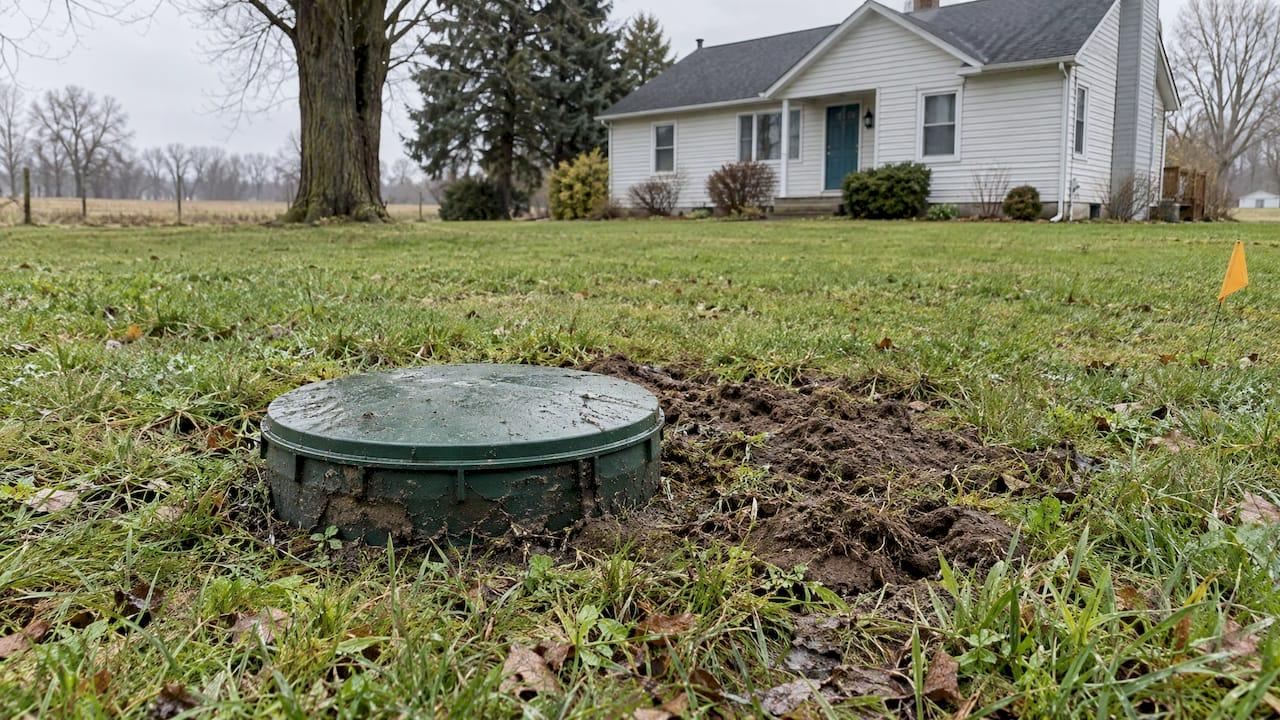
Yes, you can sell a house with septic problems in Indiana. Indiana has no statewide rule that stops the sale, but you have to disclose what you know, and your county may have its own rules. A buyer's lender may also balk at a failing system. The fastest path for most owners is selling as-is for cash. We buy Northwest Indiana houses in any condition, charge sellers no fees or commissions, and cover the closing costs, so a failed tank or drain field does not have to be fixed first.
TL;DR
- Indiana has no statewide septic inspection at sale, but some counties, such as La Porte and St. Joseph, have their own transfer rules.
- You must disclose known septic and sewer problems on the state's Seller's Residential Real Estate Sales Disclosure form.
- A failing system is not grandfathered in Indiana, and the health officer sets the deadline to correct it.
- Replacement often costs five figures, and lenders usually want proof the system works, which is why financed buyers often walk away.
- An as-is cash sale skips repairs, inspections and lender conditions. Some of our sellers have closed in as little as five days.
Table of Contents
- What Indiana law requires you to tell buyers
- Does Indiana require a septic inspection when you sell?
- Can a failing septic system be grandfathered?
- What happens once the system is flagged as failed
- What repair, replacement and inspection cost
- How a failed septic system affects a traditional sale
- Selling as-is for cash: the direct route
- Who this fits best
- Perspective: why we buy these houses
- Get a cash offer for a house with septic problems
- A checklist before you decide
- FAQ
- Sources
What Indiana law requires you to tell buyers
Start with disclosure, because it applies whatever else you decide. Under Indiana Code Title 32, Article 21, Chapter 5, the owner of residential real estate with no more than four dwelling units completes a disclosure form. It covers the known condition of the water and sewer systems and any additions that may require improvements to the sewage disposal system.
The state's Seller's Residential Real Estate Sales Disclosure form asks you to report known defects. It defines these as conditions that significantly impair the health or safety of future occupants or adversely affect the property value. A septic system that backs up, pools effluent in the yard or has been flagged by the health department fits that definition.
The Indiana Court of Appeals has also pointed to this duty. In Hizer v. Holt, the opinion describes section 32-21-5-7(1) as requiring disclosure of the water and sewer systems and of additions that may need sewage disposal improvements.
The form covers what you actually know. If you know the tank was pumped three times last year because of slow drains, write that down. If a previous inspection report exists, keep it. Disclosing plainly is simply what the law requires, and it keeps the sale clean for everyone.
Does Indiana require a septic inspection when you sell?
Not statewide. The Hendricks County Health Department's publication says Indiana has no statewide inspection program that locates septic systems at sale, and that buying a home without a properly functioning system is legal (Hendricks County Health Department). That publication dates from 2004, so check your county for current practice. A 2026 summary of state rules reaches the same conclusion: no statewide mandate, but a local ordinance may still require an inspection.
The local ordinance is where Northwest Indiana owners get caught.
La Porte County
La Porte County was the first in Indiana to adopt a point-of-sale ordinance. Septic systems must be inspected by certified members of the Indiana Onsite Wastewater Professionals Association, then repaired or replaced if necessary, according to Pumper magazine's 2017 report. By March 31, 2017, the county had seen 499 systems inspected under the ordinance. Of those, 34 failed, and 28 tanks and five distribution boxes were replaced. Those numbers are from 2017, so ask the La Porte County Health Department how the process works today.

St. Joseph County
St. Joseph County runs a property transfer process through its health department. Penalties for violating the transfer ordinance run up to $1,500 per violation per day, according to the county. If your house is in or near South Bend, read the county's page before you list.
Other counties
Rules differ across the state, so call the local health department that covers your parcel. Ask three things: whether a transfer inspection is required, what happens if the system fails, and what the timeline is. Lake and Porter counties are in the middle of our service area, and we are glad to talk through where your property stands.
Can a failing septic system be grandfathered?
No. Many owners assume an old system gets a pass because it was legal when installed. Indiana's rules do not work that way for a system in failure. The Hendricks County publication cites 410 IAC 6-8.1 and says no failing system is grandfathered: a system cannot contaminate groundwater, harm household plumbing or discharge untreated effluent to the surface. Purdue Extension says the current rule, 410 IAC 6-8.3, does not allow grandfathering a system in failure and treats it as a health hazard.
An older system that still works can generally keep operating. The trouble starts when it stops working or the health department finds it failing.
Age matters here for a practical reason. The Hendricks County Health Department notes that homes built before 1980 often have undersized systems that suited a small family but fail under a larger family's water use, often the first spring after the new owners move in. Purdue Extension adds that many older Indiana systems were undersized from the start because of lot limits and limited soil knowledge, and that Indiana subsoils typically hold 30 to 40 percent clay, which does not absorb household effluent quickly. If your house is from the 1960s or 1970s and the buyer's family is bigger than yours, a failed inspection is a realistic outcome.
What happens once the system is flagged as failed
Under 410 IAC 6-8.3-55, a failed residential on-site sewage system must be corrected by the owner within the time limit the health officer sets. The officer may require repair, replacement or service of defective components, according to the Indiana Department of Health final rule. The same rule lets the local health department use its best judgment on repairing or replacing a soil absorption system, so the fix is not always a full replacement.
The process looks like this in at least one county. Brown County's health department says that when a system fails inspection, the owner gets a certified letter from the Health Officer. It describes the failure, the remedial action needed and the deadlines. Standard completion is 90 to 180 days, depending on weather and soil conditions. Other counties set their own timelines.
That time frame is the problem for sellers in a hurry. A listing, a contract and a repair order can all be running at once.

What repair, replacement and inspection cost
A basic septic inspection typically runs $300 to $600, according to Realtor.com. Replacement costs far more. Angi's 2026 data for Indianapolis puts typical installation at $11,666 to $12,500, about $12,000 on average. A high water table, tank size and soil can push a bid higher. Your quote depends on your lot, your bedroom count and your county's permit requirements.
| Step | Typical cost | Who decides |
|---|---|---|
| Basic septic inspection | $300 to $600 | You or the buyer, unless a county ordinance requires it |
| Repairs to components (as ordered) | Varies by quote | Local health officer |
| Full system replacement | Around $12,000 in Indianapolis | Health officer, soil and lot conditions |
| As-is cash sale to us | No fees or commissions to you | You |
Who pays for the inspection is negotiable in a traditional sale. In a county with a transfer ordinance, the law may effectively put it on the seller. In other places, the buyer typically orders it as a contingency, and a failed result reopens the price conversation.
How a failed septic system affects a traditional sale
There are three pressure points in a listed sale.
Financing. A buyer's lender will usually want proof that the septic system works. A 2026 review of septic rules says a surprise failure can derail closing and can cost five figures to fix. If the buyer's loan depends on a passing report, a failed one can end the deal.
Timeline. Inspections, permits, soil evaluations and installer schedules are rarely quick. Weather and soil conditions affect the schedule, as Brown County's range of 90 to 180 days shows. During that time you keep paying the mortgage, taxes and insurance.
Price. Buyers who discover a failed system mid-contract often ask for a large credit or a repair before closing. Once a failure is in the inspection report, you have to disclose it to the next buyer too.
If you decide to repair and list anyway, presentation still matters. A clean, well-kept home helps it sell, and this guide to cleaning before you sell explains what buyers notice. A fresh-looking house does not remove a septic defect from the disclosure form, though, so plan the repair first.
Selling as-is for cash: the direct route
For a seller who does not want to spend about $12,000 or wait months, a direct as-is sale takes the septic system off the critical path. We purchase houses, condos, duplexes, townhomes, mobile homes, commercial properties, apartment complexes and land in as-is condition for cash. You do not need repairs, cleaning, or to pay closing costs.
There is no lender conditioning the deal on a working system, so a failed septic report does not end the contract the way it can with a financed buyer. You still disclose what you know. Telling us everything up front lets us make an offer that reflects the real condition, and it keeps the sale honest.
The process is simple. Here is how our process works in Indiana. You tell us about the property, we make a cash offer, and you pick the closing date. We offer flexible closing dates and move-out schedules, so you are not forced to pack in a hurry. Some sellers have closed in as little as five days.
Why this matters if the county is involved
If your health department has already sent a failure notice, the clock matters. Talk to your county health department about its rules for your property, and if you are in a county with a transfer ordinance, ask how it applies to a sale to us. Sellers dealing with other pressure, such as a lien or unpaid taxes, can read our guides on selling a house with liens in Indiana and selling with back taxes. Sellers facing foreclosure can read about an emergency home sale to stop foreclosure.
Who this fits best
Septic trouble tends to show up at the worst moments. Here are the situations we hear described most:
- Inherited houses. Heirs often discover the system's condition only when they start the sale, and may live out of state.
- Relocations. A job transfer does not wait for a 90 to 180 day repair order.
- Older homes. A house with its original system from the 1960s or 1970s often needs more than the seller planned to spend.
- Landlords. A rental with a failing system and a tenant is a repair and a scheduling problem together.
- Owners facing foreclosure. Cash is the issue, not the septic tank, and spending $12,000 on a replacement may not be possible.
Perspective: why we buy these houses
A septic problem looks scarier than it is, because it brings a lot of unknowns: a repair order, a county letter, a buyer's lender, a price that keeps shifting. Our job is to remove those unknowns.
We buy for cash and as-is, and we do not charge sellers fees or commissions. We cover the closing costs. We are a local buyer, not a hedge fund or a national investor, so the person who looks at your house is the person who makes the offer.
What we believe is simple: you should not have to sink savings into a system you are about to hand over. Tell us what you know, and we will give you a straight number and a closing date that works for your life.
Daniel
Get a cash offer for a house with septic problems
If you own a house in Northwest Indiana with a failed or suspect septic system, we can make you a cash offer without any repairs. We pay the closing costs, charge no fees or commissions, and work to a closing date that suits you. Start on our Sell Your House For Cash page, or call us about your property.

We buy in Hammond, Hobart, Highland, Chesterton, Merrillville and the surrounding area. If you want to see your local page, look at Hobart or Merrillville.
A checklist before you decide
- Find your county's rule. Call the health department and ask if a transfer inspection applies.
- Gather records. Pumping receipts, permits, past inspections and any health department letters.
- Complete the disclosure form honestly. Use the state form and list every known problem with the septic or well.
- Get a repair quote if you are weighing the options. A written number lets you compare the cost and time of repairing against a direct sale.
- Ask us for a cash offer. We make offers on houses in any condition.
FAQ
Is it hard to sell a house with a septic tank?
A working septic system is routine to sell. A failed one is harder to sell to financed buyers, because lenders usually want proof the system functions. Selling as-is to a cash buyer avoids that lender step.
What are the septic regulations in Indiana?
The state's rule, 410 IAC 6-8.3, requires an owner to correct a failing system within the time the health officer sets. There is no statewide inspection at sale, but counties such as La Porte and St. Joseph have transfer rules. Check with your local health department.
Who pays for a septic inspection when selling a house?
It depends on the county and the contract. Where an ordinance requires an inspection, it usually falls on the seller. Elsewhere, the buyer typically orders it, and a basic one runs $300 to $600, according to Realtor.com. When you sell to us, you pay no fees or commissions.
Can a septic system be grandfathered in Indiana?
An older system that still works can generally keep operating, but a system in failure cannot be grandfathered, according to Purdue Extension and the Hendricks County Health Department. The health officer decides what must be repaired or replaced.
Sources
- Indiana Code Title 32, Article 21, Chapter 5
- Seller's Residential Real Estate Sales Disclosure form
- Hizer v. Holt, 937 N.E.2d 1
- Hendricks County Health Department, Home & Environment
- Septic Inspection at Home Sale: The 50-State Rules
- Pumper: Laying the Groundwork for Time-of-Sale Inspections
- St. Joseph County: Property Transfer Process
- Purdue Extension publication HENV-1
- Indiana Department of Health Final Rule
- Brown County Health Department
- Realtor.com: Septic System Inspection Costs
- Angi: Septic System Cost in Indianapolis