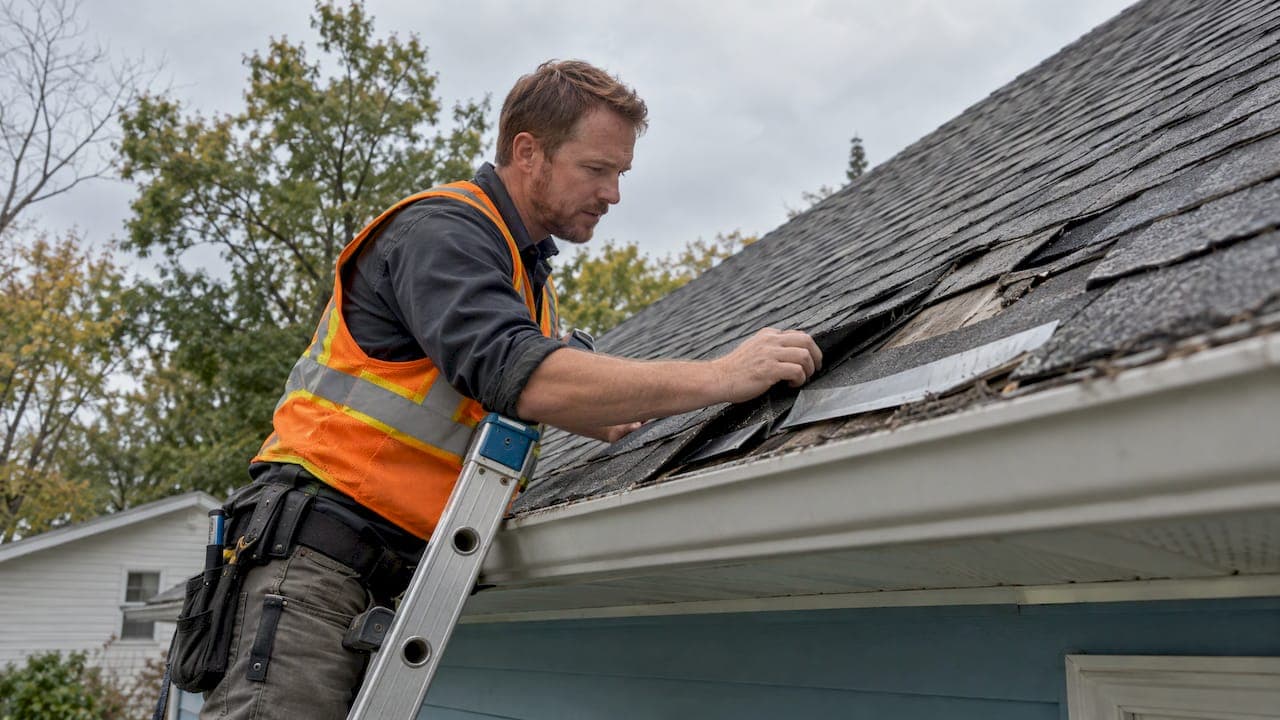
Yes, you can sell a house with roof damage without repairing or replacing the roof. You have four realistic routes: fix it first, offer the buyer a credit, sell as-is on the open market, or sell as-is to a direct cash buyer. Each one trades money, time and hassle differently. Which is best depends on how bad the roof is, how fast you need to close, and whether your buyer needs a mortgage.
This guide walks through each route with real numbers, the disclosure rules that apply in Indiana, and how to decide.
TL;DR
- A damaged roof does not stop you from selling. It changes who can buy and how much they will pay.
- Mortgage buyers often run into lender roof standards, so repairs or credits come up fast. Cash buyers buy the roof as it is.
- Indiana law generally requires sellers of 1 to 4 unit homes to complete a disclosure form about known conditions, so write down what you know about the roof.
- A full roof replacement typically runs from about $5,900 to $18,000 depending on the source and scope, so compare that against the discount you would accept as-is.
- If you want no repairs, no cleanup and no closing costs on your side, we buy houses in Northwest Indiana for cash in any condition.
Table of Contents
- How roof damage affects your sale
- Your four options, side by side
- What a new roof costs versus what you might give up
- When the lender decides for you
- What you have to disclose in Indiana
- Steps to take before you choose a route
- Landlords with a damaged roof
- Our perspective
- Selling your Northwest Indiana house with a bad roof to us
- Mistakes that slow down a roof-damaged sale
- FAQ
- Sources
How roof damage affects your sale
A roof is the first thing an inspector climbs and the last thing a buyer wants to pay for right after closing. Visible damage like missing shingles, sagging, or ceiling stains makes buyers wonder what else is wrong. Roofing contractors who write about home sales note that buyers may read roof damage as a sign of larger hidden problems, then lower their offer or ask for credits.
Three things usually happen:
- Fewer buyers qualify. Some loan programs may require major repairs, such as a new roof, before closing, or money set aside to pay for repairs right after closing, according to the Consumer Financial Protection Bureau.
- The inspection reopens the price. After the inspector documents the roof, buyers may negotiate over who makes or pays for repairs, and the seller may agree to a repair credit.
- The timeline stretches. Quotes from roofers, a second inspection, lender re-review and renegotiation all add days or weeks.
None of this means the house is unsellable. It means you should choose your route on purpose rather than let the inspection choose it for you.
Your four options, side by side
| Option | Upfront cost to you | Speed | Best when |
|---|---|---|---|
| Repair or replace first | Full cost of the work | Slowest: contractor scheduling plus a normal listing | You have cash, time, and a mostly sound house |
| Credit or price cut for the buyer | Reduced proceeds at closing | Medium: depends on the buyer's inspection and loan | The damage is moderate and you still want the open market |
| As-is sale on the open market | A lower asking price, agent commission, and your own closing costs | Medium to slow | The roof is old but not leaking, and buyers have cash or flexible loans |
| As-is sale to a direct cash buyer | No repairs, no cleaning, no owner-paid closing costs with our service | Fast, with flexible closing dates | You need certainty and speed, or the roof is badly damaged |
Option 1: Repair or replace before listing
Replacing a roof can protect your equity and keep an appraisal from dinging the value. Fixr's analysis of replacing a roof before selling describes it as a way to prevent appraisal deductions and support a smoother sale. The catch is that you pay first and recover only some of it. You also wait on a roofer and on permits and weather, which in Northwest Indiana winters can mean weeks.
Spot repairs are a different story. If a handful of shingles blew off or a flashing joint leaks, a targeted fix with a receipt can calm a buyer without a full replacement.
Option 2: Offer a credit or lower the price
A credit at closing lets the buyer handle the work after they own the house. The part sellers underestimate: buyers often ask for credits that exceed the actual repair cost, to cover the hassle of managing contractors after they move in. If you go this way, get your own roofing quote first so you know what a fair number looks like.
An escrow holdback is a related tool. A third party, such as a title company, holds funds at closing so the roof repairs are completed afterward, as described in this overview of selling with an open hail claim. Ask your title company whether it handles holdbacks and on what terms.
Option 3: Sell as-is on the open market
Listing as-is means you will not make repairs, but the buyer still gets an inspection and can still walk away. Redfin's guidance on replacing a roof versus selling as-is suggests pricing lower when you sell as-is, which may help attract multiple buyers. Expect more investors and cash buyers in your showings, and fewer first-time buyers using FHA or VA financing.
Option 4: Sell to a direct cash buyer
A direct buyer purchases the house in its current state. There is no listing, no showings and no repair negotiation, because the offer already accounts for the roof. The trade-off is straightforward: you accept a price that reflects the work the buyer will take on, and in return you skip repair costs, commissions, and the uncertainty of a financed buyer falling through. We cover how this fits among other buyer types in our guide to types of buyers for damaged homes.
What a new roof costs versus what you might give up

The real question is not whether the roof is bad. It is whether replacing it costs more or less than the discount you would take by not doing it.
Published figures vary by method and by year:
- HomeAdvisor's data, published through Angi, lists an average roof replacement cost of $9,607, with a normal range of $5,902 to $13,374.
- The HomeMatchup Roofing Cost Index puts a typical asphalt-shingle replacement at roughly $11,500 nationally in mid-2026, with most projects between $9,000 and $18,000.
Your own number depends on roof size, pitch, layers to tear off, decking repairs and local labor rates. Get at least two written quotes from licensed local roofers. Then run a simple comparison:
- Estimated roof cost, including any rotted decking.
- Plus carrying costs while you wait: mortgage, taxes, insurance, utilities.
- Plus agent commission and closing costs if you list.
- Compared with a cash offer where you pay none of the repair, commission or closing costs.
When the roof is the only issue and you have the money and months to spare, repairing can make sense. When the roof is one of several problems, or time is short, the math often tilts toward selling as-is. Our guide to selling a home that needs work walks through that comparison for houses with more than one issue.
When the lender decides for you
If your likely buyer needs a mortgage, the roof can become non-negotiable. According to a real estate brokerage summary, FHA loans require the roof to have at least three years of remaining life, and VA loans require a serviceable roof with no active leaks. If the property fails those standards, repairs must be completed before closing. Confirm current standards with the buyer's lender, since programs update their guidelines.

This is why a roof with active leaks narrows the field to cash buyers and renovation lenders. A roof that is simply old but sound has much more room on the open market.
What you have to disclose in Indiana
Sellers across the U.S. are generally required to disclose known material defects that affect value or desirability, though the rules vary by state. In Indiana, the state's Seller's Residential Real Estate Sales Disclosure form cites IC 32-21-5 and applies to sellers of 1 to 4 unit residential property, covering the known physical condition of the property, including the roof.
In practice:
- Disclose what you actually know: past leaks, patches, storm damage, prior claims, stained ceilings.
- Answer from your own knowledge. The form reflects what you know, not what an inspector might find later.
- Keep roofer invoices, photos, and any insurance paperwork together.
- Do not paper over stains or hide active leaks. Concealment is how a closed sale turns into a lawsuit.
How long a seller stays exposed after closing depends on the state and the facts. A Georgia example from a local real estate blog says obligations typically end at closing unless fraud, concealment or failure to disclose is involved. Indiana's rules differ, so if you are worried about a specific roof problem, talk to an Indiana real estate attorney before you sign anything. Our pages on as-is home sale paperwork and what an as-is sale means explain how disclosure fits into an as-is deal.
If the roof has already let water into the house, the damage may extend to ceilings, insulation, and framing. See our piece on water damage and a home sale for how to disclose it and weigh repairs against a cash sale.
Steps to take before you choose a route
- Get the roof looked at. A professional inspection before you list helps you understand the roof's condition and prepare for buyer questions. A roofing company in Illinois recommends exactly this, and a home inspection firm adds that early findings let you fix, reprice or disclose.
- Photograph everything. Take dated photos of the roof, attic, and ceilings, inside and out.
- Collect records. Gather past repair invoices, warranty papers, and insurance claim documents. Our quick sale document checklist lists what to have ready.
- Check your insurance. If a storm caused the damage, an open claim affects who gets the payout and how a sale is structured. Ask your insurer before you sign a purchase agreement.
- Price the options. Get roofing quotes, then compare with what a cash offer looks like.
- Pick a closing date that works for you, not just the buyer.
Landlords with a damaged roof
If the house is a rental, roof work raises an extra question: is it a repair or a capital improvement? The answer affects how you track costs and record them. A contractor's explainer on capital improvement versus repair records shows how documentation matters when you account for property work. Talk to your CPA about how your own roof work should be treated. If a damaged roof plus a difficult tenant has you ready to move on, selling as-is avoids both projects.
Our perspective
We buy houses in Northwest Indiana as a principal buyer. That means we purchase directly, with cash, and we are not a hedge fund or a national investor. The roof is your problem until you sell, and then it becomes ours.
Most of the sellers we talk to are not debating shingles. They are dealing with foreclosure pressure, an inherited house, a move, a divorce, or a rental that has worn them out. A roof quote of several thousand dollars on top of that is the last thing they need.
So our approach is simple. We buy in any condition. You do not repair, clean out, or pay closing costs, and we charge no fees or commissions. Closing dates are flexible, and some sellers report closing in as little as five days. If you need more time to move, we can talk about a move-out schedule.
A cash sale is not right for every house. If your roof is sound and you have months to wait, listing may bring a higher price. But if the roof is damaged, the clock is running, and you want a straight answer, we would rather give you a clear offer than leave you guessing.
Daniel
Selling your Northwest Indiana house with a bad roof to us
If you want to skip the repair estimates, we can make a cash offer on your house as it stands, whether the damage is a few missing shingles or a roof that has been leaking for years. We buy houses, condos, duplexes, townhomes, mobile homes, and more across Northwest Indiana, including Hobart, Portage, Merrillville, Highland, and Chesterton.
Tell us about your house and get a cash offer to see what selling as-is would look like, with no repairs and no owner-paid closing costs. You can also read how our buying process works first.

If you are comparing the full cost of selling the traditional way, our article on costs you may face selling in Portage breaks down the typical line items. Houses with several problems, such as code violations, can also be sold as-is; see how sellers handle code violations. And if the damage came from a fire rather than weather, read about selling a fire damaged home.
Mistakes that slow down a roof-damaged sale
- Listing at full price and hoping. The inspection will find the roof. Pricing for it up front prevents a late renegotiation.
- Patching cosmetically. A fresh coat of paint on a ceiling stain, with no explanation, reads as concealment.
- Skipping the roofer's quote. Without your own number, you cannot judge a buyer's credit request.
- Assuming every buyer can close. If the roof fails lender standards, a financed buyer may need repairs before closing.
- Waiting through winter. Leaks that sit through freeze and thaw cycles tend to spread, so the cost of waiting can grow.
- Forgetting the insurance claim. Settle who receives the payout before you sell.
FAQ
Can I sell my house if the roof is damaged?
Yes. You can fix it, offer a credit, sell as-is on the open market, or sell directly to a cash buyer who purchases the house in its current state. Mortgage buyers are the group most likely to be blocked by a damaged roof, so a cash sale is usually the smoothest path when damage is significant.
Do I have to disclose roof damage in Indiana?
Generally yes, if you know about it. Indiana's disclosure form under IC 32-21-5 asks sellers of 1 to 4 unit residential property about known physical conditions. Answer based on what you know, keep records of repairs, and ask an Indiana real estate attorney if your situation is unclear.
Should I replace the roof before selling?
It depends on your budget, timeline and the rest of the house. Typical replacement costs run from the mid-$5,000s to the high-$10,000s or more depending on the source and scope, so get local quotes. If the roof is your only issue and you have time, replacing can help. If not, selling as-is may leave you better off.
Will a buyer's loan require a new roof?
Possibly. Some loan programs may require major repairs, like a new roof, before closing. FHA loans look for a minimum remaining roof life and VA loans look for a serviceable roof without active leaks, so ask the buyer's lender about its current rules.
How fast can a cash sale close with a damaged roof?
It depends on the title work and your timing. Some of our sellers report closing in as little as five days, and we can set a closing date that suits you, including time to move out.
Sources
- Schedule a home inspection, Consumer Financial Protection Bureau
- Roof Inspection for Real Estate: Buyer & Seller Guide, Tony's Roof Care
- Selling a Home With an Open Insurance Claim in Minnesota
- Should You Replace Your Roof or Sell As-Is?, Redfin
- Replace Roof Before Selling: Costs, ROI, and Lender Issues, Fixr
- How Much Does Roof Replacement Cost?, Angi
- Roofing Cost Index 2026, HomeMatchup
- What Fixes Are Mandatory After a Home Inspection?
- Selling a Home? What You Must Tell Buyers About Its Defects, Nolo
- Seller's Residential Real Estate Sales Disclosure, State of Indiana
- How Long Are You Liable After Selling a House in Georgia?
- Can I Sell My House With an Older or Worn Roof?
- Pre-Listing Seller Checklist to Avoid Repair Surprises
- Capital Improvement vs Repair