
Foreclosure is the legal process your lender uses to collect an unpaid mortgage debt. A sheriff's sale is the courthouse auction that often closes that process out, transferring your home to a new owner. If you've received a notice, the process is still moving, but you almost always have time and legal options to change the outcome before the gavel drops.
TL;DR:
- The foreclosure process begins after missed payments, with federal rules requiring at least 120 days' delay before formal action starts, giving time to seek mitigation.
- Judicial foreclosures, which end in sheriff's sales, can take six months to over a year, while nonjudicial processes often wrap up in a few months, depending on local laws.
- Homeowners can stop or delay a sheriff's sale through options like reinstatement, loan modification, bankruptcy, or a quick cash sale, with timing and eligibility varying by state.
- A sheriff's sale transfers property interest without warranty, leaving potential liens and title issues that require careful title searches before bidding.
- Taking action within 7 to 30 days, including verifying sale dates and exploring loss mitigation, can significantly improve chances of avoiding foreclosure or selling quickly.
Table of Contents
- Sheriff Sale vs Foreclosure: How the Two Actually Differ
- How Long Does Foreclosure Take Compared to a Sheriff's Sale?
- What Can You Do to Stop or Avoid a Sheriff's Sale?
- What Happens to the Buyer and Homeowner After a Sheriff's Sale?
- What Should You Do in the Next 7 to 30 Days?
- Why Homeowners Wait Too Long to Explore an Emergency Sale
- Get a Fast, No-Obligation Cash Offer Before Your Sale Date
- Where to Verify Your State's Rules and Get Free Help
- Sources
- FAQ
Sheriff Sale vs Foreclosure: How the Two Actually Differ
Foreclosure and sheriff's sale get used as if they're the same thing, but one is the whole legal journey and the other is a single, final stop on that journey. Foreclosure is the legal process a lender uses to recover a debt after a borrower defaults, starting with missed payments and ending, in many judicial states, with a court-ordered auction. That auction is the sheriff's sale.
Federal rules generally require your servicer to wait at least 120 days after your first missed payment before starting formal foreclosure, according to Cornell's Legal Information Institute. That waiting period exists so you have a real shot at loss mitigation before the legal machinery starts.
The two processes also differ in who's running the show and what happens to the property's debts:
- Foreclosure is initiated and managed by the lender, its servicer, or (in nonjudicial states) a trustee acting under the deed of trust.
- Sheriff's sale is the public auction itself, run by the sheriff or a court officer under a judge's order, not by the lender.
- Judicial foreclosures route through the courts and typically end in a sheriff's sale.
- Nonjudicial foreclosures skip the courtroom and end in a trustee's sale instead, a similar auction with different legal footing.
- Junior liens recorded after the foreclosing mortgage usually get wiped out by the sale; liens with higher priority often survive and stick to the property, according to Nolo's foreclosure basics guide.
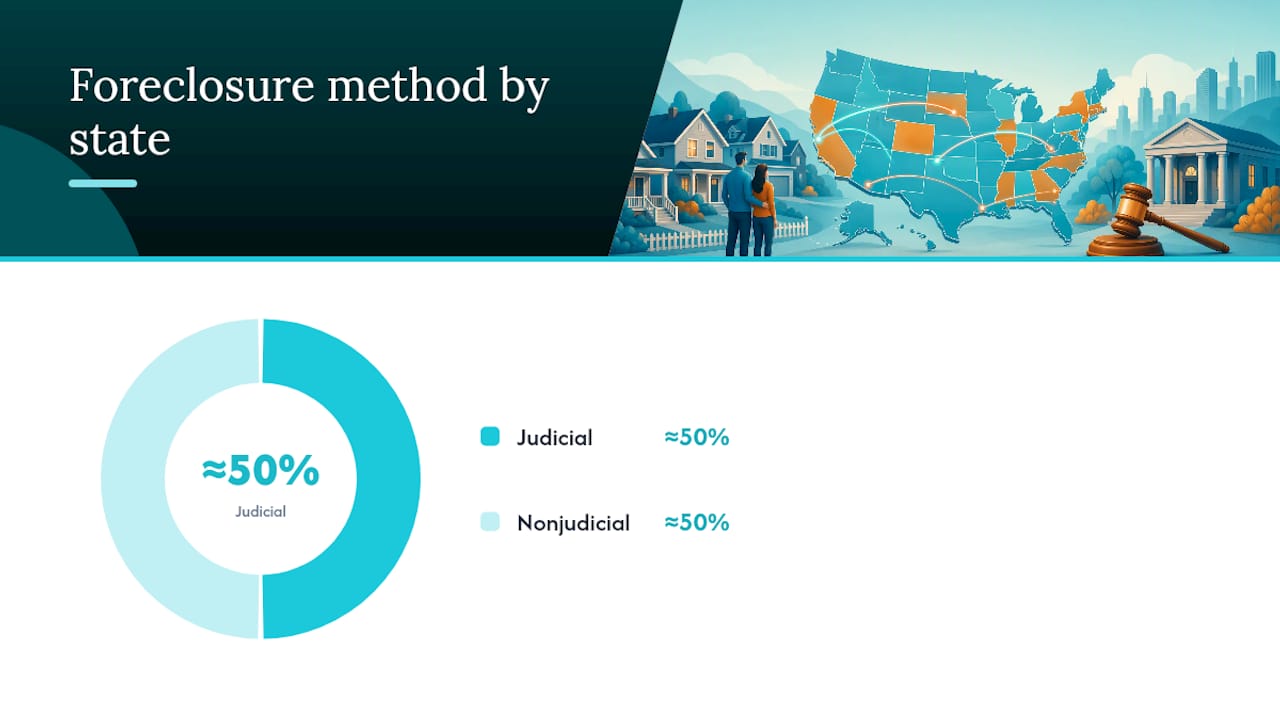
Roughly half the states use judicial foreclosure, and the rest rely on the nonjudicial, trustee's sale model. Which one applies to you depends entirely on your state's statutes, not your lender's preference.
How Long Does Foreclosure Take Compared to a Sheriff's Sale?
Timing swings wildly by state, and that gap is exactly why you need to check your own county's rules instead of trusting a national average. Nonjudicial foreclosures often wrap up in a few months, since there's no court calendar to wait on. Judicial foreclosures, which end in a sheriff's sale, commonly run from several months to over a year, and sometimes longer if the court docket is backed up or you contest the filing.
A few practical notes on what those timelines actually look like:
- "Notice" periods are legal deadlines, not suggestions. Missing one can forfeit a right to object or cure.
- "Advertisement" windows, where the pending sale gets published in a local paper or posted at the courthouse, usually run two to four weeks before the auction date.
- Your county recorder, sheriff's office, or court clerk website will list scheduled sale dates and case numbers. Check that page directly.
- The CFPB's foreclosure overview confirms that state and federal rules layer additional notice and, in some states, mediation requirements on top of the baseline timeline.
Don't assume you have months just because a neighboring state's process ran long. Pull your own county's docket.
What Can You Do to Stop or Avoid a Sheriff's Sale?
You have more leverage before the sale date than most homeowners realize, and several of these options can be started with one phone call.
- Reinstatement. Pay the full past-due amount plus fees in a lump sum to bring the loan current, often available right up until days before the sale.
- Repayment plan. Your servicer adds the missed amount onto future payments in installments instead of demanding it all at once.
- Loan modification. The servicer permanently changes your rate, term, or principal to make payments affordable going forward.
- Short sale. You sell the home for less than what's owed, with lender approval, avoiding the auction entirely.
- Deed in lieu of foreclosure. You hand the deed back to the lender voluntarily, which usually causes less credit damage than a completed foreclosure.
- Bankruptcy. Filing Chapter 7 or Chapter 13 triggers an automatic stay that halts a scheduled sheriff's sale, at least temporarily, giving you breathing room to negotiate or reorganize debt.
- Emergency cash sale. Selling directly to a cash buyer can close in days rather than months, removing the property from the foreclosure timeline before the auction date arrives.
The CFPB confirms that servicers must evaluate loss mitigation options before completing a sale, so options one through three aren't just theory, they're often a legal requirement your servicer has to walk through with you.
For homeowners in Northwest Indiana who don't have time for a modification review or a slow retail listing, an as-is cash sale through Dan buys houses is a direct route that sidesteps repairs, showings, and financing delays. Our guide on stopping a foreclosure sale fast walks through timing specifics.
Pro Tip: Gather your mortgage statement, the notice of default, and any servicer correspondence before you make a single call. Having dates and figures in front of you turns a 20 minute conversation into a 5 minute one.

What Happens to the Buyer and Homeowner After a Sheriff's Sale?
A sheriff's sale doesn't hand the buyer a clean title the way a normal home sale would. The sheriff's deed transfers whatever interest the former owner had, without warranty, which means the buyer inherits any title defects and can't sue the sheriff or the court if problems surface later.
That "as is" transfer creates real exposure on both sides:
- Senior liens, meaning debts recorded before the foreclosing mortgage, generally survive the sale and become the buyer's problem, not the former owner's.
- A title search before bidding is the only reliable way to find those surviving liens, since county land records don't always make them obvious at a glance.
- If the sale price doesn't cover the full debt, you as the former homeowner may still face a deficiency judgment in states that allow it.
- If the sale price exceeds what's owed, surplus funds typically get distributed to junior lienholders first, with any remainder going to the former owner.
- Redemption rights, meaning the legal window to buy the property back after the sale, exist in some states and not others, and the deadline is often shorter than people expect.
One structural fact worth remembering: a sheriff's deed carries no guarantee against hidden claims. That single detail is why serious auction buyers pay for a title search before they ever raise a paddle.
What Should You Do in the Next 7 to 30 Days?
If you have a notice in hand or a sale date on the calendar, prioritize speed over perfection. Here's the order that actually moves the needle:
- Write down the exact sale date and keep every notice you receive, even the ones that feel repetitive.
- Check your county recorder or sheriff's office website to confirm the sale is still scheduled as listed.
- Call your servicer and request loss mitigation options in writing, not just over the phone.
- Log every conversation: date, representative name, and what was promised.
- Contact a HUD-approved housing counselor for free guidance, and consult a bankruptcy attorney if a stay might buy you time.
- Pull together basic property details, mortgage balance, and condition notes so you can move fast if an emergency sale becomes the right call.
Pro Tip: Ask your servicer directly, "Is a sale currently scheduled, and can it still be postponed?" Get the answer in writing. Verbal reassurances have a way of disappearing when a deadline passes.
Our urgent action plan for selling before foreclosure breaks down exactly what to prepare if you decide speed matters more than maximizing price.
Why Homeowners Wait Too Long to Explore an Emergency Sale
Most people treat foreclosure like a wall they've already hit, when it's really a countdown they can still influence. The homeowners who come out best aren't the ones who found a legal loophole. They're the ones who called someone the same week the notice arrived instead of the same week as the sale date.
An as-is cash sale isn't the right fit for everyone, and I won't pretend it beats every alternative in every state. But for a homeowner in Northwest Indiana staring down a sale date with no time left for a modification review, it's often the one path that can actually close before the sheriff's office does. Local rules on timing and redemption vary enough that what worked for your neighbor two counties over may not apply to you.
— Daniel
Get a Fast, No-Obligation Cash Offer Before Your Sale Date
A reputable local cash buyer is an alternative to a traditional listing or a slow lender negotiation when your timeline is measured in days, not months. Such buyers purchase houses in as-is condition, may cover closing costs, typically charge no fees or commissions, and can sometimes close quickly.

If you're weighing a deed in lieu against a sheriff's sale, our team can tell you within a day whether a cash sale beats waiting out the auction clock. To speed up your offer, have your mortgage statement, the foreclosure or sale notice, and a quick rundown of the property's condition ready. Homeowners near Highland can start with our local Highland page, and anyone in the region can see how our process works or request a cash offer for your house directly. If you're also rebuilding finances after a major life event, this credit rebuilding checklist is worth a read too.
Where to Verify Your State's Rules and Get Free Help
State foreclosure law changes the entire timeline, so verify everything locally before you make a decision based on this article alone.
- The Consumer Financial Protection Bureau covers your rights, loss mitigation requirements, and how to find a HUD-approved counselor.
- Cornell's Legal Information Institute defines lien priority, sheriff's deeds, and the legal mechanics behind each sale type.
- Nolo breaks down judicial versus nonjudicial procedure in plain language, state by state.
This article is general information, not a substitute for advice from a qualified financial advisor. Consult a qualified financial professional about your own circumstances before acting on anything here.
Sources
- Foreclosure sale — Cornell Law School, Legal Information Institute (WEX)
- How does foreclosure work? | Consumer Financial Protection Bureau
- How does foreclosure work? | American Default
FAQ
Is a Sheriff's Sale the Same as Foreclosure?
No. Foreclosure is the entire legal process that starts after missed payments, and a sheriff's sale is the courthouse auction that often ends a judicial foreclosure. Nonjudicial states use a similar auction called a trustee's sale instead.
Can I Stop a Sheriff's Sale Once It's Scheduled?
Yes, in many cases. Filing bankruptcy triggers an automatic stay that halts the sale, and reinstating the loan, negotiating a modification, or closing an emergency cash sale before the date can also work, depending on how much time is left.
How Long Does the Foreclosure Process Usually Take?
Nonjudicial foreclosures often finish in two to six months, while judicial foreclosures commonly take six to eighteen months or longer. Your state's process, judicial or nonjudicial, determines which timeline applies.
Does Dan Buys Houses Buy Homes Facing Foreclosure?
Yes. Dan buys houses purchases homes in Northwest Indiana in as-is condition, with no fees or commissions, and some sellers close in as little as five days. Current details are available on the Sell Your House For Cash page.
What Happens to Liens After a Sheriff's Sale?
Liens recorded before the foreclosing mortgage typically survive the sale and transfer to the new buyer, while junior liens are usually wiped out. A title search before or after the sale is the only reliable way to confirm which liens remain.