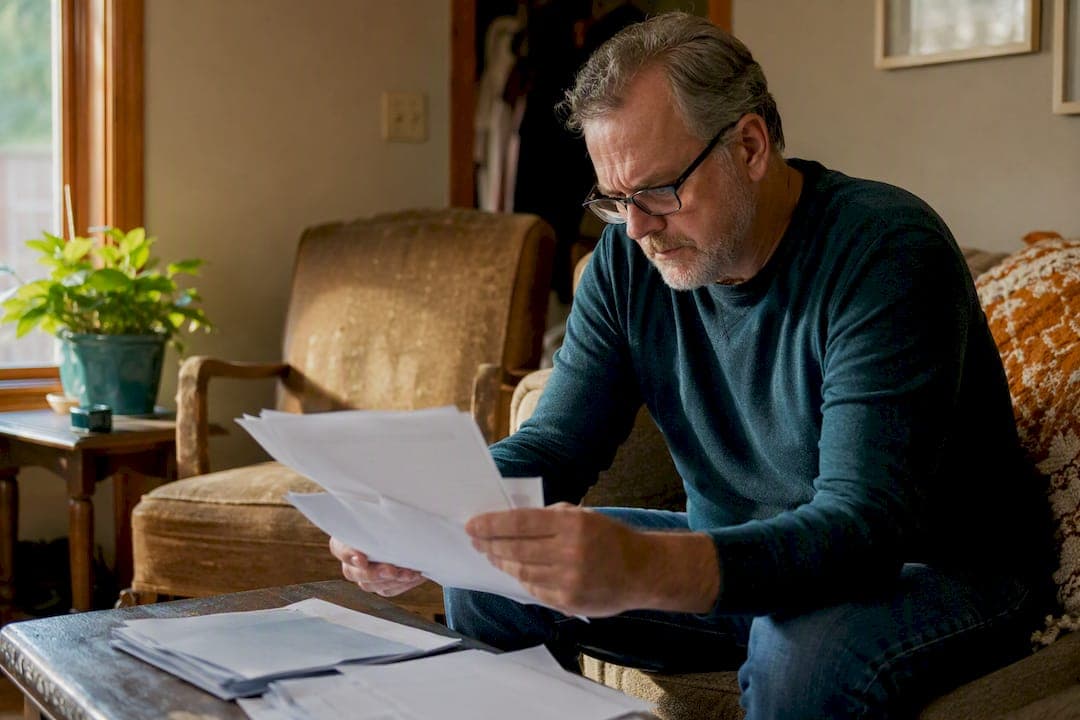
For most homeowners drowning in debt across multiple accounts, bankruptcy is the stronger option because it wipes out unsecured balances alongside mortgage trouble. If the mortgage is genuinely your only problem and you don't intend to keep the house, letting foreclosure run its course can be the simpler, cheaper route. The moment you file bankruptcy, the automatic stay under 11 U.S.C. § 362 halts a foreclosure sale immediately, while a completed foreclosure just shows up on your credit report for about seven years.
Two quick scenarios:
- You've fallen behind on credit cards, medical bills, and the mortgage. Bankruptcy, likely Chapter 13, addresses all of it at once.
- You're currently only behind on the house, have no other debt problems, and you're ready to walk away. Foreclosure (or a faster alternative) may be the less costly path.
Key Takeaways
Bankruptcy suits systemic debt problems and can pause foreclosure through the automatic stay, while foreclosure or a cash sale often fits situations where the mortgage is the only real issue.
| Point | Details |
|---|---|
| Automatic stay stops action fast | Filing bankruptcy triggers an immediate halt to foreclosure under 11 U.S.C. § 362. |
| Chapter 13 buys years, not months | A 3 to 5 year repayment plan can cure mortgage arrears and keep the home. |
| Credit damage lasts longer with bankruptcy | Foreclosure reports for about 7 years; bankruptcy for roughly 7 to 10 years. |
| Timing decides your options | Filing before a scheduled sale preserves far more choices than filing after. |
| A cash sale is a real third path | Dan buys houses buys homes as-is across Northwest Indiana with closings in as few as five days. |
Table of Contents
- Bankruptcy vs Foreclosure: What Each One Actually Resolves
- Can Bankruptcy Stop Foreclosure, and for How Long?
- How Much Will This Hurt Your Credit and Your Next Mortgage?
- How Does the Foreclosure Process Actually Play Out?
- Weighing the Trade-Offs: When Each Path Makes Sense
- How to Decide: A Practical Checklist Before You Act
- Practical Alternatives Worth Considering First
- Frequently Asked Questions
- Sources
Bankruptcy vs Foreclosure: What Each One Actually Resolves
Bankruptcy is a federal legal process that discharges or restructures debt. Foreclosure is a lender's legal remedy to repossess collateral, specifically your house, when payments stop. They're not really opposites; one is a debt-relief tool, the other is a collection action, and they can happen to the same person in sequence.
Bankruptcy has real limits. Certain debts are generally non-dischargeable, including:
- Most federal student loans, absent proof of undue hardship
- Child support and alimony obligations
- Most tax debts
- Secured debts like your mortgage, which survive Chapter 7 unless you surrender the collateral
Here's the split that matters most: Chapter 7 liquidates non-exempt assets and discharges unsecured debt fast, but it doesn't create a mechanism to catch up on missed mortgage payments. Chapter 13 does exactly that, letting you fold arrears into a repayment plan while you keep the house.
Can Bankruptcy Stop Foreclosure, and for How Long?
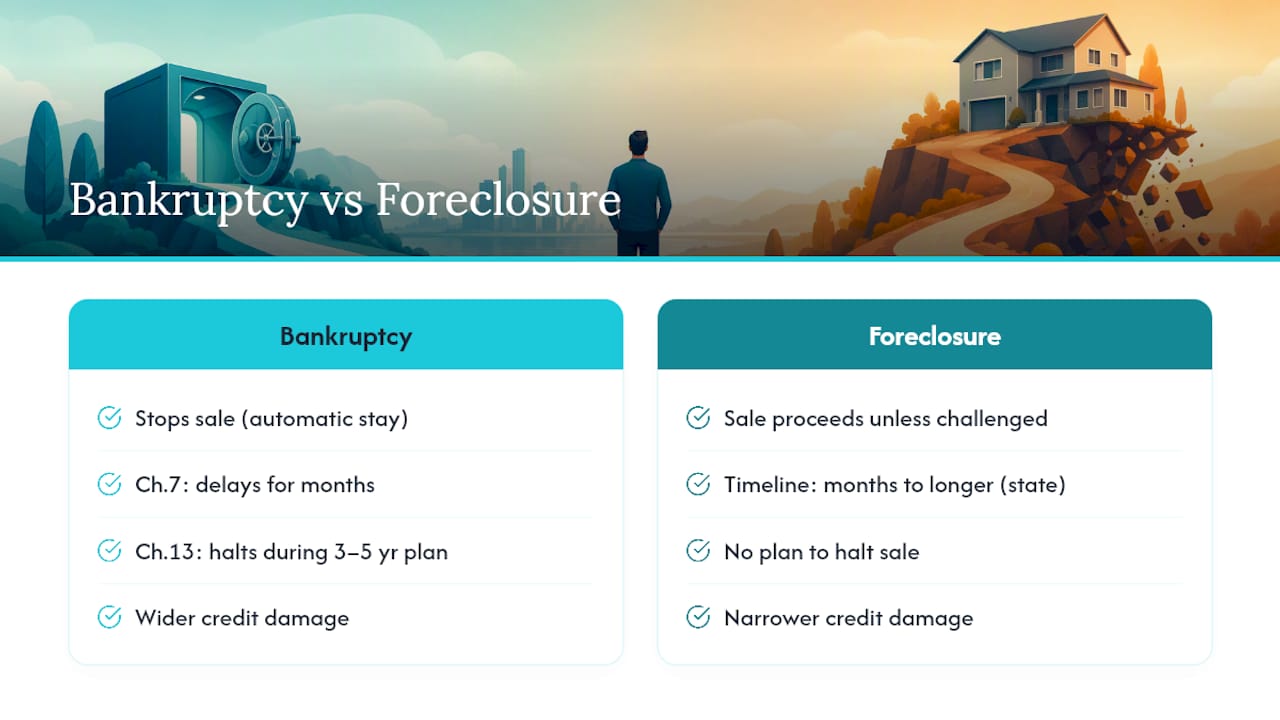
Yes, and the mechanism is specific. Filing bankruptcy triggers the automatic stay under 11 U.S.C. § 362, which orders your lender to stop all collection activity, including a scheduled foreclosure sale, the instant your petition is filed.
What happens next depends on which chapter you file:
- Chapter 7 delays foreclosure temporarily, usually a few months, while the case moves through the system. There's no cure mechanism, so once the case closes, the lender can resume.
- Chapter 13 can stop foreclosure for the life of the plan, typically 3 to 5 years, as long as you stay current on the plan and ongoing mortgage payments.
- Timing matters enormously; understanding the strict creditor notice and short timelines is crucial for imminent foreclosure timing. If the foreclosure sale already closed before you filed, the stay can't undo it. Repeat filers also face shorter or denied stays under federal rules designed to stop serial filing abuse.
Pro Tip: File before the sale date, not after. Once the gavel falls at auction, bankruptcy can no longer reclaim the house, only address what's left of your debt.
How Much Will This Hurt Your Credit and Your Next Mortgage?
Bankruptcy usually causes the sharper initial credit score drop because it touches every account on your report at once, not just the mortgage. Foreclosure tends to be a narrower hit that's still serious, but contained to one tradeline.
The bigger difference shows up in how long the damage lingers:
- A foreclosure stays on your credit report for about seven years from the first missed payment.
- Bankruptcy stays for roughly 7 to 10 years, depending on whether you filed Chapter 7 or Chapter 13.
- Waiting periods to qualify for a new mortgage vary by loan type and by whether extenuating circumstances (job loss, medical crisis) apply, and both FHA and conventional lenders offer shortened waits in those cases.
Neither outcome is permanent. Lenders increasingly look past a single derogatory event once you rebuild a track record of on time payments.
How Does the Foreclosure Process Actually Play Out?
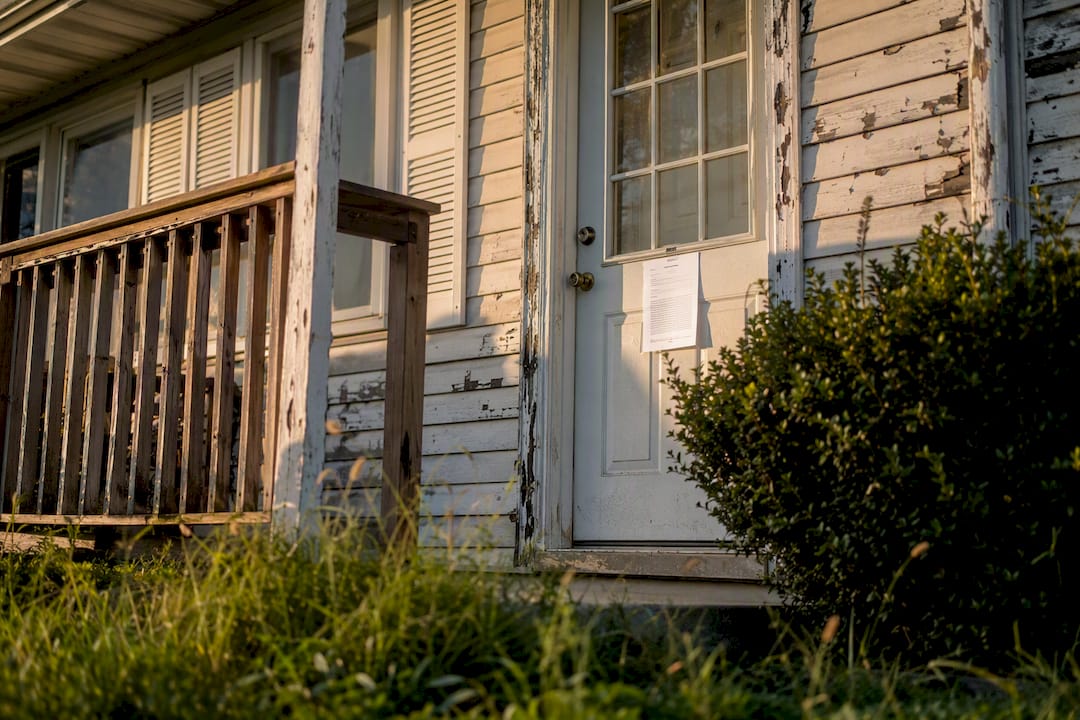
Foreclosure timelines vary sharply by state because some use judicial foreclosure (through the courts) and others use nonjudicial, power-of-sale foreclosure that skips court entirely. Judicial states tend to run longer, sometimes well over a year; nonjudicial states can move in a matter of months.
The general sequence looks like this:
- You miss payments, typically 90 to 120 days triggers formal action.
- The lender issues a notice of default or files suit, depending on the state.
- A sale or auction date gets scheduled and published.
- Some states offer a post-sale redemption period, allowing you to reclaim the property within a set window.
Loss mitigation requests, mediation programs, and emergency motions can all slow this timeline down, but they need to happen early, before the sale date locks in.
Weighing the Trade-Offs: When Each Path Makes Sense
Bankruptcy tends to be the better call when your debt problem is systemic rather than confined to one account, according to a University of Wisconsin Extension analysis comparing the two paths. It also blocks most deficiency judgments, the lawsuits lenders sometimes file when a foreclosure sale doesn't cover the loan balance.
Letting foreclosure proceed can be acceptable when:
- The mortgage is your only real financial trouble
- Your state limits or bars deficiency judgments outright
- You have no intention of keeping the home
Pro Tip: Add up attorney fees, court costs, and credit counseling requirements against the long-term liability of a potential deficiency judgment before deciding. Bankruptcy costs money upfront; foreclosure can cost more later.
How to Decide: A Practical Checklist Before You Act
Start with these four questions before you talk to anyone else:
- Is my debt problem limited to the mortgage, or is it spread across cards, medical bills, and loans too?
- Can I realistically afford ongoing mortgage payments plus a Chapter 13 plan payment?
- Does my state allow deficiency judgments after foreclosure?
- How close is the sale date, and does that timeline still allow for a bankruptcy filing to matter?
Bring these questions directly to an attorney or a HUD-approved housing counselor:
- Would I pass the means test for Chapter 7, or does my income point toward Chapter 13?
- What's a realistic Chapter 13 plan payment given my actual income?
- What tax consequences might a short sale or deed-in-lieu trigger?
If you already have an auction date on the calendar or a lender's motion for relief from stay, that's a red flag demanding same-week action, not next month.
Practical Alternatives Worth Considering First
Bankruptcy and foreclosure aren't the only two doors. A short sale lets you sell for less than you owe with lender approval, and it tends to be gentler on credit than a completed foreclosure. A deed-in-lieu of foreclosure hands the property back to the lender voluntarily, which usually avoids the public auction stigma. Loan modification or reinstatement can work if your hardship was temporary and you can resume payments.
Then there's the option a lot of homeowners overlook: a straight cash sale. It sidesteps the auction, the credit reporting cycle, and potential deficiency exposure entirely, provided the lender and buyer both agree to terms. This is exactly the lane Dan buys houses operates in for homeowners across Northwest Indiana, purchasing properties as-is with no repairs required and closings that can happen in days rather than months.
Pro Tip: Ask about deed-in-lieu and short sale even if your lender hasn't mentioned them. Both require an application, and lenders won't always volunteer the option.
Timing Is the One Variable You Actually Control
A frequent mistake among people I talk to about this: waiting until an auction date is already set to make any decision at all. Options narrow fast once a sale is scheduled. If you're behind on the mortgage today, your first call should go to a HUD-approved housing counselor or a bankruptcy attorney this week, not after the next notice arrives.
If You Need a Fast Cash Sale in Northwest Indiana
If bankruptcy doesn't fit your situation and foreclosure feels like a countdown you'd rather not watch, a direct cash sale gives you a third route. Dan buys houses purchases homes across Northwest Indiana in as-is condition, no repairs, no cleaning, no owner-paid closing costs, with flexible closing dates that some sellers use to close in as little as five days.

This works for homeowners facing an approaching foreclosure date, an inherited property nobody wants to manage, or a mortgage situation that's simply become unworkable. There's no fee and no commission taken from the sale. If your foreclosure timeline is tightening, get a no-obligation cash offer and see whether a fast, straightforward sale beats waiting out a court date.
Frequently Asked Questions
Does bankruptcy always stop a foreclosure sale? It stops the sale the moment you file, through the automatic stay, but Chapter 7 usually only delays it for a few months. Chapter 13 can stop it for the life of a 3 to 5 year plan if you stay current.
Is foreclosure or bankruptcy worse for my credit? Bankruptcy tends to cause a bigger initial score drop since it touches every account, and it stays on your report longer, 7 to 10 years versus about 7 for foreclosure. Foreclosure's damage is narrower but still serious.
Can bankruptcy eliminate a deficiency judgment from foreclosure? Often yes. Filing bankruptcy before a foreclosure sale can discharge your personal liability for any shortfall, though deficiency rules vary by state.
What's the difference between judicial and nonjudicial foreclosure? Judicial foreclosure goes through the court system and typically takes longer. Nonjudicial foreclosure follows a power-of-sale clause in the mortgage and can move in a matter of months, depending on the state.
Are there alternatives to both bankruptcy and foreclosure? Yes. Short sale, deed-in-lieu, loan modification, and a direct cash sale can all resolve mortgage trouble without a bankruptcy filing or a completed foreclosure, provided you act before the sale date locks in.
This article is general information, not a substitute for advice from a qualified financial advisor. Consult a qualified financial professional about your own circumstances before acting on anything here.
Sources
- Automatic stay — Cornell Legal Information Institute
- How does foreclosure work? — Consumer Financial Protection Bureau