An appraisal estimates a home's market value for the lender. An inspection evaluates its physical condition for you, the buyer. Those are two different jobs, done by two different professionals, serving two different interests.
For financed purchases, mortgage lenders almost universally require an appraisal to protect their collateral. A home inspection is optional, but skipping it is one of the riskier decisions a buyer can make. Most experienced agents will tell you to order both.
Here's the quick breakdown:
- Who orders and who pays: The lender assigns the appraiser; the buyer pays the fee (typically at closing or upfront). The buyer hires and pays the inspector directly.
- Required for a loan? Appraisal: yes, for virtually all financed purchases. Inspection: no, but strongly recommended.
- Typical cost ranges: Appraisals generally cost a few hundred dollars for a single-family home. Home inspections typically cost $250–$700 depending on property size and any specialty add-ons.
Key Takeaways
A home appraisal and a home inspection serve entirely different purposes: the appraisal protects the lender's investment, and the inspection protects yours.
| Point | Details |
|---|---|
| Run the inspection first | Schedule within your contingency window before the lender orders the appraisal to avoid wasted fees. |
| Appraisals are lender-required | Virtually all financed purchases require an appraisal; inspections are optional but strongly recommended. |
| Costs differ by service | Appraisals typically run $300–$500; inspections run $250–$700 depending on size and add-ons. |
| Verify credentials before hiring | Confirm state licensing for appraisers and look for ASHI or InterNACHI membership for inspectors. |
| Each finding triggers different options | A low appraisal affects loan terms; major inspection defects trigger repair requests, credits, or walkaway rights. |
Table of Contents
- What a home appraisal actually does for your mortgage
- What a home inspection actually covers
- Appraisal vs. inspection at a glance
- Which comes first: inspection or appraisal?
- How low appraisals and major inspection findings affect your deal
- How to verify credentials and read reports with confidence
- A direct take on what buyers actually get wrong
- Sources
What a home appraisal actually does for your mortgage
An appraisal is a professional estimate of a home's market value, used by lenders to underwrite a mortgage and confirm the loan amount is justified by the property's worth.
A licensed appraiser visits the property, notes its condition at a high level, measures square footage, and researches recent comparable sales in the area. What they do not do is test the furnace, run the dishwasher, or probe the foundation for cracks. The appraisal focuses on value, not detailed systems testing, and it exists primarily to protect the lender's collateral, not to protect you.
The dominant method for single-family homes is the sales comparison approach: the appraiser identifies three to six recently sold comparable properties and adjusts for differences in size, condition, location, and features. The cost approach (estimating land value plus depreciated replacement cost of improvements) and the income approach (used for rental properties) come into play when comparable sales are scarce or the property type warrants it. A new construction appraisal, for example, often leans on the cost approach when no direct comps exist.
Appraisers must follow the Uniform Standards of Professional Appraisal Practice (USPAP), the national ethical and performance standards set by the Appraisal Foundation. For FHA loans, HUD Handbook 4150.2 adds another layer: appraisers must document property condition on valuation forms, note necessary repairs, and confirm the home meets FHA Minimum Property Standards. If it doesn't, the loan can be denied until the seller corrects the deficiencies.
The deliverable is a written appraisal report sent directly to the lender. You may receive a copy, but the report is the lender's document. If the appraised value comes in below the purchase price, the lender will finance only based on the lower number.
What a home inspection actually covers
A home inspection is a detailed visual and functional review of a house's systems and structure, ordered by the buyer to uncover defects before closing.
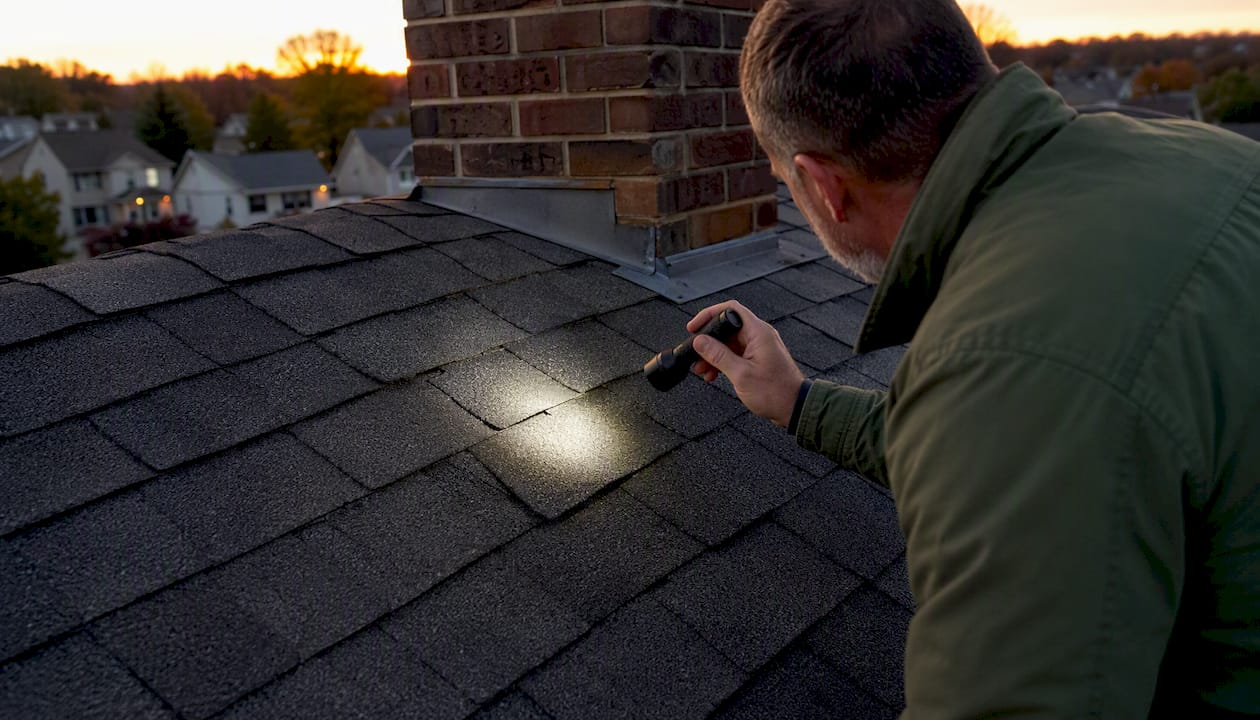
A qualified inspector works through the property systematically: roof condition, foundation, exterior drainage, attic insulation, plumbing, electrical panels and wiring, HVAC operation, water heater, windows, doors, and visible signs of moisture or mold. Inspector standards of practice define which systems fall within scope and which are excluded, and a thorough inspector will note those exclusions explicitly in the report.
Common specialty add-ons go beyond the standard scope:
- Radon testing: a separate air-quality test, often run simultaneously
- Sewer scope: a camera inspection of the lateral sewer line
- Termite/wood-destroying organism report: sometimes required by lenders in certain states
- Pool and spa inspection: separate specialist, separate fee
- Septic inspection: critical for rural properties not on municipal sewer
The buyer hires and pays the inspector. The buyer also attends. That last part matters more than most people realize. Inspections typically run 3–4 hours and are interactive: you walk the property with the inspector, ask questions in real time, and leave with a working understanding of the home's quirks and priorities. Reading the report cold, without that context, is a much weaker position.
The deliverable is a written report with photos, descriptions of each defect, and severity ratings. Reports that include prioritized repair lists and rough cost estimates give you far better negotiation leverage than reports that simply list problems without context.
Pro Tip: Attend the inspection in person and ask the inspector to distinguish between safety hazards, functional defects, and cosmetic issues. That triage shapes your repair requests and keeps negotiations focused on what actually matters.
Appraisal vs. inspection at a glance
| Dimension | Appraisal | Home Inspection |
|---|---|---|
| Purpose | Estimate market value for the lender | Identify condition defects for the buyer |
| Who hires / who pays | Lender assigns; buyer pays | Buyer hires and pays |
| Required for loan? | Yes, for virtually all financed purchases | No, but strongly recommended |
| Scope highlights | Condition overview, square footage, comparable sales | Roof, foundation, plumbing, electrical, HVAC, moisture, pests |
| Deliverable | Written appraisal report to lender | Written inspection report with photos to buyer |
| Typical cost | $300–$500 (single-family) | $250–$700 depending on size and add-ons |
| Typical timing | Lender orders after offer acceptance; delivered within about one week | Buyer schedules within inspection contingency window, before appraisal |
| Impact on sale | Low value can kill or restructure the loan | Major defects trigger repair requests, price cuts, or buyer walkaway |
Which comes first: inspection or appraisal?
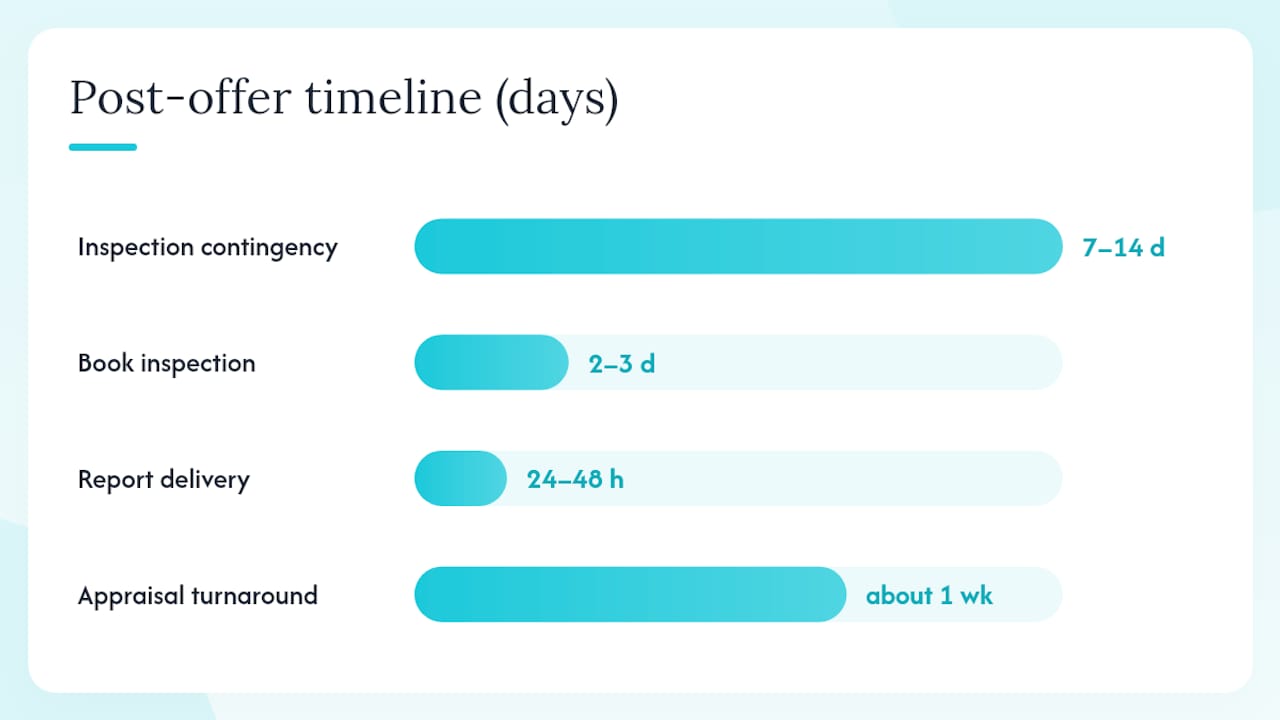
Run the inspection first. The logic is straightforward: if the inspection reveals a deal-killing problem, you can walk away before spending $300–$500 on an appraisal for a home you were never going to buy.
Industry guides consistently recommend this sequence for exactly that reason. Here's how the typical timeline flows after an offer is accepted:
- Offer accepted — contingency clock starts (inspection window is typically 7–14 days)
- Schedule the inspection — book within the first 2–3 days; good inspectors fill up fast
- Attend the inspection — walk the property, ask questions, get the report within 24–48 hours
- Review and negotiate — request repairs, a price reduction, or a credit based on findings
- Lender orders the appraisal — this happens after you've cleared the inspection contingency or decided to proceed
- Appraisal delivered — typically within about one week from the order date
- Lender decision — loan approved, conditioned, or denied based on value and property condition
Exceptions worth knowing:
- Cash buyers have no lender requiring an appraisal, but many still order one independently to confirm they're not overpaying. Almost all cash buyers should still order an inspection.
- Competitive markets sometimes pressure buyers to waive inspection contingencies. That raises post-closing risk exposure significantly. If you waive, consider a pre-offer inspection before submitting your bid.
- Pre-listing inspections are occasionally provided by sellers. Treat them as useful background, not a substitute for your own independent inspector.
Scheduling checklist:
- Confirm your inspection contingency deadline with your agent on day one
- Book the inspector within 48 hours of offer acceptance
- Request the report within 24 hours of the inspection
- Notify your lender to order the appraisal once you've decided to proceed past inspection
How low appraisals and major inspection findings affect your deal
Two findings can stop a transaction cold: an appraisal that comes in below the purchase price, and an inspection that uncovers serious defects. Each triggers a different set of options.
If the appraisal is low:
- Renegotiate the price down to the appraised value — the most common resolution
- Cover the gap yourself by increasing your down payment to make up the difference
- Request a rebuttal or second appraisal if you believe the comparable sales used were inaccurate
- Walk away if your contract includes an appraisal contingency and the seller won't budge
For FHA and VA loans, the stakes are higher. HUD/FHA minimum property standards require the appraiser to flag health and safety deficiencies, and the loan can be denied until those are corrected. VA loans carry similar minimum property requirements through the VA Home Loan program. A conventional appraisal that comes in low is a financing problem; an FHA/VA appraisal that flags property condition issues is both a financing problem and a repair mandate.
If the inspection reveals major defects:
- Ask the seller for repairs before closing, with a defined scope and timeline
- Request a credit at closing so you handle the repairs yourself
- Negotiate a price reduction that reflects the cost of the work
- Walk away under your inspection contingency if the problems are too severe or the seller won't cooperate
When an inspection uncovers major damage, understanding your options as a buyer sometimes means considering whether a traditional sale still makes sense. In some cases, sellers of heavily damaged properties find that as-is sale options resolve the situation faster than a prolonged repair negotiation.
Pro Tip: Before submitting repair requests, get at least one contractor estimate for each major defect. A repair request backed by a $12,000 HVAC quote lands very differently than a vague ask to "fix the heating system."
How to verify credentials and read reports with confidence
Always verify state licensing for both appraisers and inspectors before hiring. Every state maintains a public appraiser licensing database; the Appraisal Subcommittee's national registry at asc.gov lets you confirm a license is active. For inspectors, membership in a recognized professional association is the clearest signal of baseline competency.
Credentials and standards to check:
- USPAP compliance — all licensed appraisers must follow these standards; ask for the appraiser's state license number
- FHA/VA roster — for government-backed loans, confirm the appraiser is on the FHA or VA approved roster
- HUD Handbook 4150.2 — governs FHA appraisal requirements including condition documentation and minimum property standards
- ASHI (American Society of Home Inspectors) — members follow a published Standards of Practice and Code of Ethics
- InterNACHI (International Association of Certified Home Inspectors) — another widely recognized credentialing body with continuing education requirements
- State inspector licensing — roughly half of U.S. states require home inspectors to hold a state license; check your state's requirements
What a quality report looks like:
A strong appraisal report states the effective date of value, identifies the approaches used, lists the comparable sales with adjustments, and notes any extraordinary assumptions. A strong inspection report includes photos of every defect, a clear severity rating (safety hazard vs. deferred maintenance vs. cosmetic), and recommended next steps. Reports that only list observations without prioritizing them or suggesting follow-up are harder to act on.
A direct take on what buyers actually get wrong
Most buyers treat the appraisal as a condition check. It isn't. A clean appraisal means the lender is comfortable lending against the property's value. It says almost nothing about whether the roof has three years left, whether the electrical panel is a fire risk, or whether the sewer line is cracked. Those are inspection findings, and they don't show up in appraisal reports.
The other mistake: skipping the inspection in a competitive market to strengthen an offer. That decision can save a few days and cost tens of thousands of dollars. In Northwest Indiana, where Dan buys houses operates, cash buyers who purchase homes in as-is condition still typically order inspections to understand exactly what they're acquiring. The inspection protects the buyer's interests regardless of how the deal is structured.
If you're a seller whose home has condition issues that surfaced during a buyer's inspection, a direct cash offer from Dan buys houses sidesteps the repair-negotiation cycle entirely. The process is straightforward: no repairs required, no open houses, and closing on a timeline that works for you.