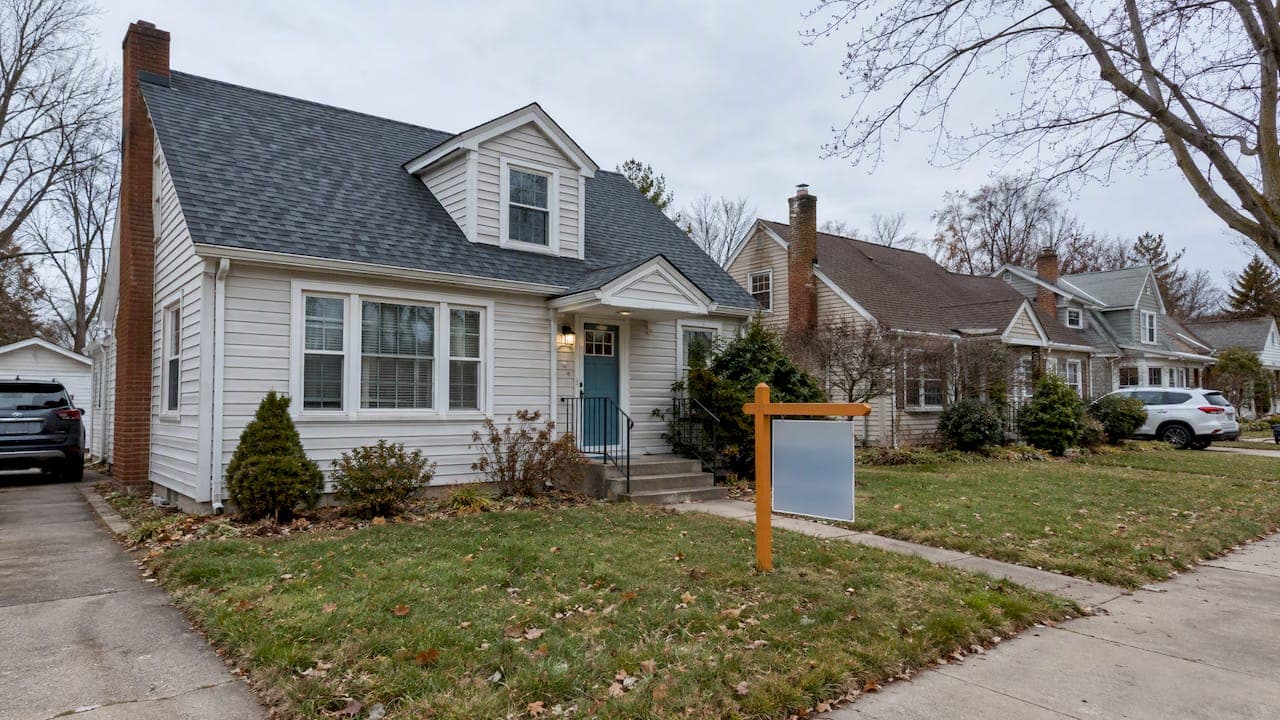
Crown Point is a seller-leaning but balanced market. The median listing price sits near $389,900, homes spend 29 days on the market on average, and closed sales are climbing. For buyers, that means preparing your financing before you tour. For sellers, it means pricing against recent sales, not last year's hopes.
TL;DR:
- The median sold price is about $374,500 against a $389,900 median listing price, but the figures cover different homes and date ranges.
- With mortgage rates above 6%, buyers should secure preapproval, set an offer ceiling before a tour, and retain inspection rights while checking flood zones and HOA rules.
- Sellers should price against recent nearby sales, not neighbors' asking prices, and prioritize cleaning, minor repairs, and fresh paint over major renovations.
- Traditional listings may bring more, but preparation and roughly 29 days before an offer extend the timeline; cash sales remove lender delays and allow flexible closing.
Table of Contents
- What are the core Crown Point housing numbers right now?
- Why did Crown Point prices move, and will it last?
- How do Crown Point neighborhoods and price tiers differ?
- What should buyers and sellers do right now?
- Which indicators will shape the near-term outlook?
- How do cash buyers affect the Crown Point market?
- When does selling to a cash buyer make sense?
- How do traditional and cash sale timelines compare?
- What costs and fees can you avoid with a direct cash sale?
- Where I land on all of this
- FAQ
- Sources
What are the core Crown Point housing numbers right now?
Start with the citywide figures, because they anchor every decision that follows. Realtor.com's June 2026 data for Crown Point shows these benchmarks:
- Median listing price: near $389,900, the number you see on yard signs and portal searches.
- Median sold price: near $374,500, which tells you buyers are closing slightly under asking on a typical deal.
- Active listings and days on market: the same Realtor.com report lists both, along with sale-to-list ratios that point to a seller-leaning market in mid-2026.
- Quarterly median sales price: about $397K in Q3 2026, with average days on market of 29, according to Sotheby's Northwest Indiana report.
- Closed sales: up 8% year over year in the same Sotheby's report, with inventory roughly flat compared with the prior year.
The gap between the listing price and the sold price is worth reading carefully. The gap between the two portals' medians does not mean one source is wrong. Listing prices reflect what sellers hope to get, while sold prices reflect what buyers agreed to pay, and the two sets are built from different homes and different date ranges.
Price per square foot and months of inventory vary by portal and by month, so check the live Realtor.com page before you write an offer. Treat the figures above as a starting frame, then confirm the latest week's data. A market where homes spend an average of 29 days on the market leaves little time to learn the basics after you find a house you love.

Why did Crown Point prices move, and will it last?
Prices here follow three forces: borrowing costs, how many homes reach the market, and how many buyers are chasing them. Mortgage rates are the biggest outside influence. Zillow Research expects national home values to rise only modestly in 2026, about 1.2%, with mortgage rates unlikely to fall below 6%. Rates that stay elevated cap how much a buyer can pay, which keeps price growth gentle instead of explosive.
Local supply matters just as much. Sotheby's reports inventory roughly flat against last year, so there is no flood of new listings giving buyers broad leverage. At the same time, closed sales rose 8%, meaning demand is still absorbing what comes to market. Flat supply plus rising sales is the recipe for firm prices, not a falling market.
Closed sales in Crown Point rose 8% year over year in Q3 2026, while inventory stayed roughly flat, so demand is keeping pace with supply.
What does that mean for negotiation? Because the typical sold price lands slightly under the typical list price, you can still ask for concessions on a well-priced home, but expect competition on the best properties. Multiple offers remain possible on clean, correctly priced listings, especially in the entry-level band. The pattern looks sustainable for now, since nothing in the data suggests a sudden surge of listings or a sharp drop in buyer demand.
How do Crown Point neighborhoods and price tiers differ?
A citywide median hides a wide range, so it helps to think in tiers. The bands below are working estimates, not published neighborhood statistics, so confirm them against live listings.
- Entry-level: older ranches, smaller townhomes and condos. These tend to sell fastest because the buyer pool is largest.
- Mid-market: the bulk of Crown Point's single-family homes, where the city medians live. Condition and updates drive the final price.
- Upper tier: larger, newer builds and homes on bigger lots. Fewer buyers qualify, so days on market usually run longer and pricing has to be sharper.
Neighborhood details matter more than the tier label. Two homes with the same square footage can sell for very different prices depending on school boundaries, lot size, nearby traffic and whether the street sits in a flood zone or an HOA. Price per square foot generally climbs as homes get newer and larger, but a well-kept older house in a quiet pocket can outperform it. When you compare, use recent sold homes on the same or neighboring streets, not citywide averages.
What should buyers and sellers do right now?
Here is a practical order of operations for both sides.
- Buyers: get a mortgage pre-approval first. With rates above 6%, the exact payment you qualify for sets your real budget.
- Buyers: set a top offer before you see the house. Decide your ceiling in advance so a competing bid does not pull you past it.
- Buyers: keep inspection rights. Waive nothing you cannot afford to fix, and check flood zone status and HOA rules before you commit.
- Sellers: price from recent sold comps. Use recent nearby sold homes, not neighbors' asking prices.
- Sellers: handle visible basics first. Deep cleaning, minor repairs and fresh paint return more than big renovations.
- Sellers: plan a closing timeline that accounts for financing and inspection steps. Average days on market is 29, and financing and inspection steps come after the accepted offer.
Pro Tip: Check new listings weekly and median price updates monthly. Watching just those two numbers shows you a shift in balance before it reaches the headlines.
If you are weighing offers or competing bids, this guide to handling multiple offers lays out seller options that apply anywhere.
Which indicators will shape the near-term outlook?
Watch these signals, because they change the balance first:
- Mortgage rates: Zillow Research and the Mortgage Bankers Association both point to rates staying elevated above 6% through 2026, with gradual moderation. Even a modest drop would widen the buyer pool.
- Inventory flow: new listings usually peak in spring and early summer, so expect more choice then and thinner selection in winter.
- Selling speed: if average days on market creeps well beyond the current 29, sellers are losing leverage.
- Local income and ownership: Census data puts Crown Point's median household income at $101,686 and its owner-occupied rate at 85.5%, a stable, ownership-heavy base that supports steady demand.
Crown Point's median household income is $101,686, with 85.5% of homes owner-occupied, which gives local prices a strong, stable base.
Putting it together, the most likely near-term path is modest price growth or stabilization, not a crash and not a boom. Elevated rates restrain buyers, while flat inventory and solid local incomes keep prices from sliding.
How do cash buyers affect the Crown Point market?
Cash buyers change the market in a few quiet but real ways. They remove financing risk from a deal, so a clean cash offer can beat a slightly higher financed one. That pressure is strongest on lower-priced and distressed homes, where investors and direct buyers compete with first-time buyers.
Cash buyers also keep otherwise hard-to-sell properties moving. A house with a failing roof, outdated systems or deferred maintenance often cannot pass a lender's appraisal, so a traditional buyer is out of reach. A cash purchase gives that home an exit, which keeps sales flowing in the neighborhood and stops a vacant property from dragging down nearby values.
For ordinary financed buyers, the effect shows up on the best entry-level listings, where you may see offers that waive financing contingencies. The answer is not to panic. Strengthen your pre-approval, shorten your response times and, where it makes sense, ask your lender about faster closings. For sellers, cash buyers are one more route to a sale, and they matter most when speed or condition is the main concern.
When does selling to a cash buyer make sense?
Some sellers need a result more than a top price, and we built our service around those situations. We buy houses for cash in Northwest Indiana, in any condition, so these scenarios are where our Sell Your House For Cash service fits:
- Foreclosure pressure: when payments have fallen behind, time is the scarce resource. Our guide to the Indiana foreclosure timeline and cash sale options explains how the clock runs.
- Inherited homes: heirs often live elsewhere and do not want to manage repairs, cleanouts and showings on a property they never planned to own.
- Relocation or divorce: a fixed move date or a settlement deadline makes a long listing period impractical.
- Rental headaches: landlords tired of vacancies, repairs and difficult tenants can sell the property as is.
- Heavy repairs: a house that needs more work than the owner can fund is hard to list successfully.
In each case we make a direct offer, cover closing costs, and let you choose a flexible move-out date. If you want a local starting point, our Crown Point page explains how we handle sales in your area. Our honest view is that a cash sale suits sellers who value certainty and speed, while a traditional listing suits those who can wait for the widest buyer pool.
How do traditional and cash sale timelines compare?
A traditional sale starts with preparation: cleaning, repairs, photos and pricing. After the listing goes live, the average Crown Point home spends about 29 days on the market before an offer is accepted. Then the buyer's financing, appraisal and inspection run their course before closing, so the full path from decision to funds is typically longer than the market-time figure alone suggests.
Each step can also slip. An appraisal that comes in low can send both sides back to the table. A buyer's lender can delay. An inspection can open a new round of repair requests. Every delay stretches your carrying costs, meaning the mortgage, taxes, insurance and utilities on a house you are trying to leave.
A cash sale skips most of that sequence. There is no listing period, no showings and no lender approval to wait on. We make an offer after reviewing the property, and closing timelines vary by seller and transaction. You can also pick a later closing date if you need time to move, so speed is optional, not forced. Our page on how our process works in Indiana lays out the steps and what to expect at each one.

The tradeoff is simple. A traditional sale may reach a higher headline price if you have time and a home in good shape. A cash sale gives you fewer moving parts. Match the route to your deadline.
What costs and fees can you avoid with a direct cash sale?
A traditional sale carries costs beyond the sticker price, and many of them disappear in a direct sale. Here is what sellers commonly face when they list:
- Agent commissions: typically paid by the seller out of proceeds. A direct cash sale with us carries no commissions.
- Repair and prep costs: roofing, flooring, paint and staging often come before a house is listing-ready. We buy as is, so you do not fund repairs or cleaning.
- Closing costs: in a standard sale, sellers usually absorb a share of title, transfer and settlement charges. We cover closing costs on our purchases.
- Carrying costs: every extra month on the market adds mortgage, tax, insurance and utility payments.
- Concession requests: after inspection, buyers frequently ask for credits or repairs that reduce your net.
There is also a legal and process difference worth knowing. In a financed sale, the buyer's lender controls timing through its appraisal and underwriting, and the deal can fall apart if approval fails. In a cash sale, the transaction depends on the buyer's own funds, so there is no lender condition to collapse. You still sign a purchase agreement and close through a title company, but with fewer contingencies. For deadline-driven sellers, that certainty has real dollar value even when the offer is below a full retail price.
Where I land on all of this
The most useful takeaway for locals is that Crown Point rewards preparation over speculation. Buyers who line up financing and know their ceiling do well, and sellers who price from sold comps avoid the stale-listing trap. Before you commit to anything, verify the unglamorous details for your specific street: flood zones, HOA rules and special assessments that national portals miss. For ongoing regional context, our blog's look at 2026 signals for the Northwest Indiana housing market is a good next read.
— Daniel
FAQ
Is Crown Point, Indiana a wealthy area?
Crown Point is a comfortably middle-to-upper-income community. Census data shows a median household income of $101,686 and a poverty rate of 6.9%. Most homes are owner-occupied, which points to a stable residential base.
Is it expensive to live in Crown Point, Indiana?
Housing costs are above the national comfort zone for some budgets but supported by local incomes. Median listing prices near $389,900 on Realtor.com mean you should check monthly payments at current rates before you tour.
Will the housing market crash in 2026?
Current forecasts point to a gentle path, not a crash. Zillow Research expects modest national home-value growth of about 1.2% in 2026. Elevated mortgage rates restrain buyers, but flat local inventory keeps prices supported.
How fast do homes sell in Crown Point?
Sotheby's reports average days on market of 29 in Q3 2026. Entry-level homes tend to move faster, while upper-tier homes can take longer.
Sources
- Census
- Crown Point - Northwest Indiana
- Realtor
- Zillow’s 2026 Housing Market Predictions | Zillow Research