
You have more options than a sheriff's sale, and most of them start with two phone calls. Contact your mortgage servicer today to request a formal loss mitigation review, and call the Indiana Foreclosure Prevention Network at 877-GET-HOPE for free HUD-certified counseling. From there, the realistic paths are loan modification or forbearance, a short sale, a deed in lieu of foreclosure, bankruptcy, or a fast cash sale to a local buyer. If you've already been served with a foreclosure complaint, ask the county clerk about requesting a settlement conference under Indiana law within 30 days.
TL;DR:
- Filing a complete loss mitigation package in writing is essential to protect your legal rights and initiate settlement negotiations in Indiana foreclosure cases.
- A short sale or deed in lieu can prevent foreclosure damage but requires written lender approval and a waiver of deficiency to avoid future debt collection risks.
- Bankruptcy, especially Chapter 13, can stop foreclosure and allow repayment over years, but it significantly impacts credit and must be carefully timed.
- Indiana homeowners have no post-sale redemption rights; all valuable options must be completed before the sheriff's sale date, which varies by case.
- Free resources such as the Indiana Foreclosure Prevention Network and legal services can assist, and avoiding upfront fees is crucial to avoid scams.
Table of Contents
- What Are the Main Indiana Foreclosure Options?
- How Do You Request Loss Mitigation in Indiana?
- What If You Can't Keep the House?
- Where Can You Get Free Help in Indiana?
- Federally Backed Loans vs. Private Loans: What's Different?
- Will a Foreclosure Alternative Create a Tax Bill?
- Does Indiana Give You Redemption Rights After Foreclosure?
- How Do You Actually Negotiate With Your Servicer?
- What Homeowners Get Wrong About Their Options
- How Dan Buys Houses Fits Into Your Decision
- Sources
What Are the Main Indiana Foreclosure Options?
Every alternative to foreclosure trades something for something else. Some buy you time, some erase the debt but not the credit hit, and some end the whole situation in a matter of days. Here's the quick breakdown before you commit to any path.
- Loan modification: Permanently changes your loan terms (rate, term, or principal deferral). Slow to process, requires servicer cooperation, but keeps you in the home and does the least damage to credit if approved before you miss payments.
- Forbearance: Temporary pause or reduction in payments. Fast to set up, but the missed amount usually comes due later unless rolled into a modification.
- Repayment plan: Spreads missed payments across future months. Works only if your income has recovered enough to cover the extra amount.
- Short sale: You sell for less than you owe with lender approval. Preserves more credit than foreclosure but requires a cooperative lender and a buyer willing to wait on approval.
- Deed in lieu of foreclosure: You hand the deed back voluntarily. Faster than foreclosure, but still a serious credit event, and it only works if the lender agrees in writing.
- Chapter 7 or Chapter 13 bankruptcy: Chapter 13 can stop foreclosure and let you catch up over three to five years; Chapter 7 can wipe out a deficiency judgment but won't save the house.
- Fast cash sale to a local buyer: Closes in days, avoids repairs and showings, but you're selling at a discount to get speed and certainty.
Across nearly every option, three legal issues keep surfacing: deficiency judgments if the sale doesn't cover the loan balance, 1099-C tax forms for forgiven debt, and junior liens (second mortgages, judgment liens) that can complicate a short sale or deed in lieu. Address those before you sign anything.
How Do You Request Loss Mitigation in Indiana?
There's a real difference between calling your servicer to "ask about options" and formally submitting a loss mitigation package. Only the second one starts the clock on your legal protections. A phone call gets you a form letter. A documented, complete submission gets you a review, a paper trail, and standing to request a settlement conference if you've been sued.
Here's the sequence that actually works:
- Call your servicer and request the loss mitigation packet by name, not just "help with my mortgage."
- Compile the required documents: a financial worksheet, a hardship letter explaining what happened, a signed 4506-T or 4506T-EZ (IRS transcript authorization), an authorization to release information, recent pay stubs, and two to three months of bank statements.
- Send the complete package by certified mail or trackable email, and keep copies of everything.
- Log every contact with the servicer, including names, dates, and reference numbers.
- Request written confirmation that your package was received and is under review.
- If you've been served with a foreclosure complaint, contact the county clerk's office to request a settlement conference.
Under Indiana Code IC 32-30-10.5-8, borrowers served with a foreclosure summons have the right to request a settlement conference within 30 days of service. The Indiana Judicial Branch's loss mitigation checklist requires that your complete packet reach both the lender and the court at least 30 days before that conference. Miss the deadline, and you may lose the chance to have your options considered before the case moves forward.
Pro Tip: Start a physical or digital folder labeled "Foreclosure Defense" the day you get a delinquency notice. Date every document, save every email, and note every call. That folder is what turns a settlement conference into a real negotiation instead of a formality.
What If You Can't Keep the House?
Sometimes the math doesn't work no matter how the servicer bends. If keeping the home isn't realistic, the goal shifts from saving it to exiting it without a lawsuit hanging over you for years afterward.
A short sale means listing the home for less than you owe and getting the lender to approve the sale price, or you could consider a fast cash sale to a local buyer to close quickly and avoid lengthy approvals. Lenders tend to agree when the alternative (a foreclosure sale) would net them less after legal costs and holding time. The critical piece: get a written waiver of deficiency before closing. Without it, Indiana law allows the lender to pursue you for the difference between what you owed and what the sale actually covered.
A deed in lieu of foreclosure works similarly but skips the sale. You sign the deed over, and the lender agrees not to foreclose. HUD guidance for FHA loans supports this option, but it only protects you from future debt collection if the agreement explicitly says the lender releases you from personal liability. Indiana courts have upheld properly worded deed-in-lieu releases as effective at extinguishing that liability, but a verbal promise or vague letter isn't enough.
Bankruptcy is the most drastic option, but it's sometimes the right one. Chapter 13 stops foreclosure immediately through the automatic stay and lets you repay missed amounts over three to five years. Chapter 7 won't save the house but can discharge a deficiency judgment entirely. Talk to a bankruptcy attorney before you fall further behind, because timing affects what you can protect.
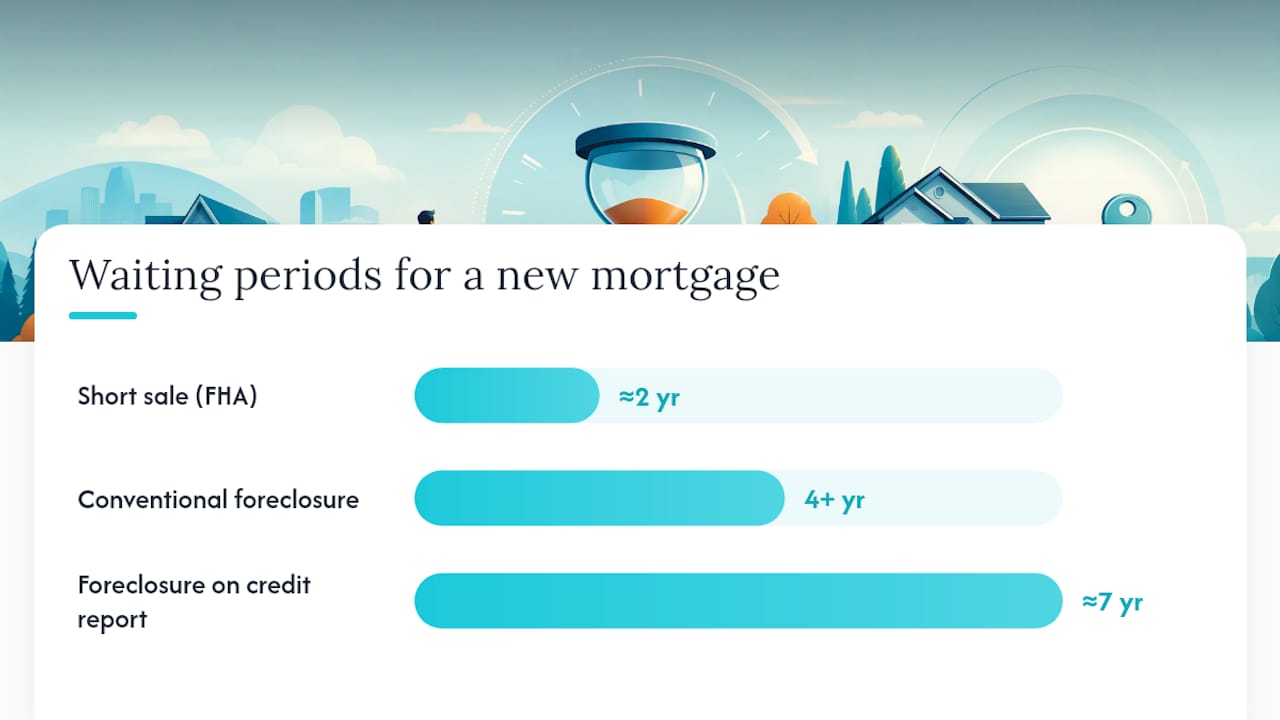
- Short sale: credit impact moderate, foreclosure typically shows for around seven years, short sale often less
- Deed in lieu: similar credit impact to short sale, faster resolution
- Bankruptcy: significant credit impact, but often the fastest way to stop active foreclosure
Waiting periods for a new mortgage after these events vary widely by loan type and lender, ranging from roughly two years after a short sale with an FHA loan to four or more years for a conventional loan after foreclosure. Confirm current requirements with a loan officer before assuming you're locked out for a fixed period.
Where Can You Get Free Help in Indiana?
You shouldn't pay anyone a dime for help avoiding foreclosure. Every legitimate service listed here is free, and any company demanding an upfront fee to "save your home" is running a scam the Indiana Attorney General's office actively warns homeowners about.
- Indiana Foreclosure Prevention Network (IFPN), reachable at 877-GET-HOPE: HUD-certified counselors will assess your finances, help prepare your loss mitigation package, contact your servicer on your behalf, and even sit with you through a settlement conference.
- Indiana Attorney General's Homeowner Protection Unit: files complaints against servicers for misconduct, dual-tracking violations, or predatory loan modification scams.
- Indiana Legal Services and law-school pro bono clinics: provide free attorneys for foreclosure defense, especially useful once a lawsuit is filed. Eligibility usually depends on income, but call first. Don't assume you're excluded.
- County trustee offices and local Community Action Agencies: offer emergency financial assistance for households behind on housing costs, with programs that vary by county.
Federally Backed Loans vs. Private Loans: What's Different?
Your loan type changes which rules apply and how much flexibility your servicer actually has. FHA, VA, and USDA loans come with federally mandated loss mitigation waterfalls, meaning the servicer must consider you for specific programs in a specific order before foreclosing. HUD's foreclosure prevention guidance sets baseline requirements servicers of federally backed loans must follow, including timelines for responding to complete applications.
Conventional loans backed by Fannie Mae or Freddie Mac have their own investor-specific modification programs, generally similar in spirit but with different documentation standards. Private loans, meaning loans held by a bank, credit union, or private lender with no government backing, have the least standardized process. That servicer sets its own rules for what qualifies for modification, and there's often more room to negotiate directly since no federal investor guideline dictates the outcome.
If you don't know your loan type, check your original closing documents or ask your servicer directly. It changes what leverage you have. FHA borrowers pursuing a deed in lieu get specific HUD protections around deficiency release that a private-loan borrower has to negotiate for individually, in writing, with no federal backstop if the lender refuses. That's the single biggest reason to know your loan type before you start negotiating anything.
Will a Foreclosure Alternative Create a Tax Bill?
Forgiven mortgage debt can be taxable income, and this catches people off guard more than almost anything else in this process. If your lender forgives $20,000 in a short sale, that $20,000 can show up on a 1099-C form as income you owe tax on, even though you never touched the money.
Congress has periodically extended exclusions for forgiven mortgage debt on a primary residence, but those exclusions have expiration dates and specific qualifying conditions tied to insolvency or the mortgage forgiveness debt relief provisions in the tax code. Whether you qualify depends on your specific financial situation the year the debt is forgiven, not the year you signed the original loan.
Deed in lieu and short sale transactions both carry this risk. Bankruptcy discharge is different. Debt eliminated through Chapter 7 or Chapter 13 generally isn't treated as taxable income the way a lender's voluntary forgiveness is.
Before finalizing a short sale or deed in lieu, ask a tax professional whether your situation qualifies for an exclusion, and don't wait until tax season to find out you owe money on debt you thought was gone. This is one area where a five-minute consultation with a CPA can save you thousands.
Does Indiana Give You Redemption Rights After Foreclosure?
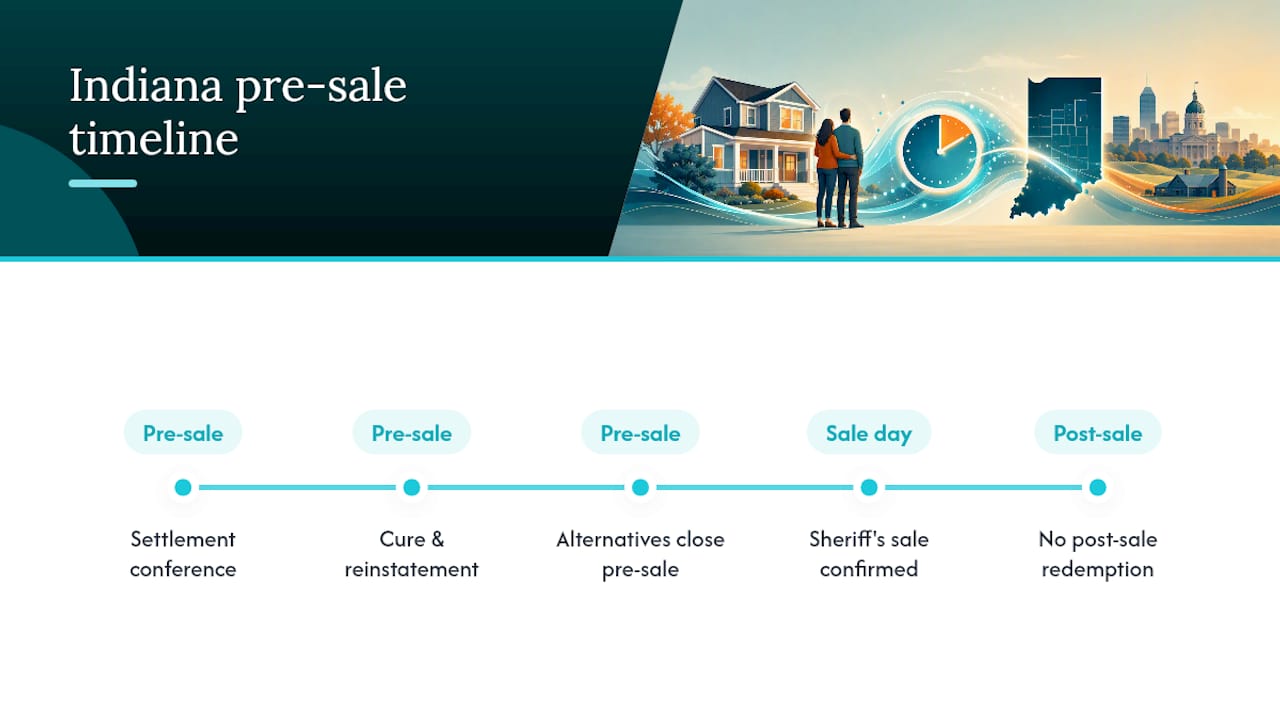
Indiana does not provide a statutory post-sale redemption period the way some states do. Once the sheriff's sale is final and confirmed by the court, the former owner generally has no right to reclaim the property by paying the balance owed. This is different from states like Texas or Michigan, where redemption windows stretch for months after the sale.
What Indiana does give homeowners is the pre-sale settlement conference right under IC 32-30-10.5-8, plus the general right to cure the default and reinstate the loan any time before the sale actually happens, if you can come up with the funds. That's the real leverage point in Indiana: everything meaningful has to happen before the gavel falls, not after.
This changes the calculus on every alternative discussed above. A short sale, deed in lieu, or cash sale all have to close before the sheriff's sale date. Once that date passes, your options collapse dramatically. If you're already deep into the foreclosure timeline, check your case number with the county clerk to confirm exactly how many days remain before the scheduled sale, because that number determines which alternatives are still on the table.
How Do You Actually Negotiate With Your Servicer?
Most homeowners either avoid the call entirely or go in apologizing. Neither works. Servicers respond to specific requests backed by documentation, not general pleas for mercy.
When you call, ask directly: "I want to request a loss mitigation review. Can you send me the packet requirements and confirm the deadline for submission?" Get the representative's name and a reference number for the call. If they can't answer basic questions about timelines, ask to speak with a loss mitigation specialist specifically, not general customer service.
Once your packet is submitted, follow up in writing: "I'm confirming receipt of my loss mitigation package submitted on [date]. Please confirm the review timeline and whether additional documents are needed." This creates a paper trail that matters if the case ends up in front of a judge at a settlement conference.
If the servicer offers a modification, read every term before agreeing verbally. Ask specifically whether the offer waives any deficiency, how it affects your credit reporting, and whether missed payments get added to the loan balance or forgiven outright. Never accept a verbal promise as final. Servicers change staff constantly, and the person who promised you something last month may not be the one processing your file next month. Get every commitment in writing before you rely on it.
What Homeowners Get Wrong About Their Options
Most homeowners wait too long because they assume the bank will work with them eventually, or they assume nothing can be done once a complaint is filed. Neither is true, and the gap between those assumptions and reality is where people lose the most ground.
Lenders cooperate fastest when the property has clean title, decent equity, and no junior liens complicating the payoff. Add a second mortgage or a contractor's lien, and even a willing lender's hands get tied. Homeowners with real equity have more paths open, including a short sale that pays off the debt in full. Homeowners underwater on the loan usually end up choosing between a deed in lieu, bankruptcy, or a fast cash sale, because a traditional listing rarely closes before the sale date.
The decision usually comes down to four things: how many days remain before a scheduled sale, how much equity exists, what the household actually needs next (a place to land, cash to move, time to plan), and whether the servicer is responding at all. When a servicer goes quiet, that's often the clearest sign it's time to stop waiting on a modification and start pricing a faster exit.
— Daniel
How Dan Buys Houses Fits Into Your Decision
If you've run the numbers and keeping the house isn't realistic, or the sheriff's sale date is too close for a short sale to close in time, a direct cash sale might be the fastest way out with the least additional damage. Dan buys houses purchases homes across Northwest Indiana as-is, no repairs, no cleaning, no owner-paid closing costs, and offers can move to closing in as little as five days when speed is the priority.

This isn't the right move for every homeowner. If you have time before your sale date and real equity, a short sale or modification may protect more of your net proceeds. But if your priority is certainty over maximizing price, and you need out before the calendar makes that decision for you, a fast cash sale removes the guesswork of finding a buyer, waiting on lender approval, and hoping the deal doesn't fall through. There are no commissions, no showings, and no waiting on a buyer's financing to clear.
Check your timeline against your sale date, then see how the process works or review this urgent action plan for selling before foreclosure to compare your options side by side. If a fast, certain sale fits your situation, reach out and get a no-cost offer before your sale date arrives.
This article is general information, not a substitute for advice from a qualified financial advisor. Consult a qualified financial professional about your own circumstances before acting on anything here.
Sources
- Indiana Judicial Branch — Mortgage foreclosure resources (IC 32-30-10.5)
- Homeowner's HOPE Hotline / IFPN
- Indiana Attorney General — Foreclosure prevention
- Nolo — Deficiency judgments after foreclosure in Indiana