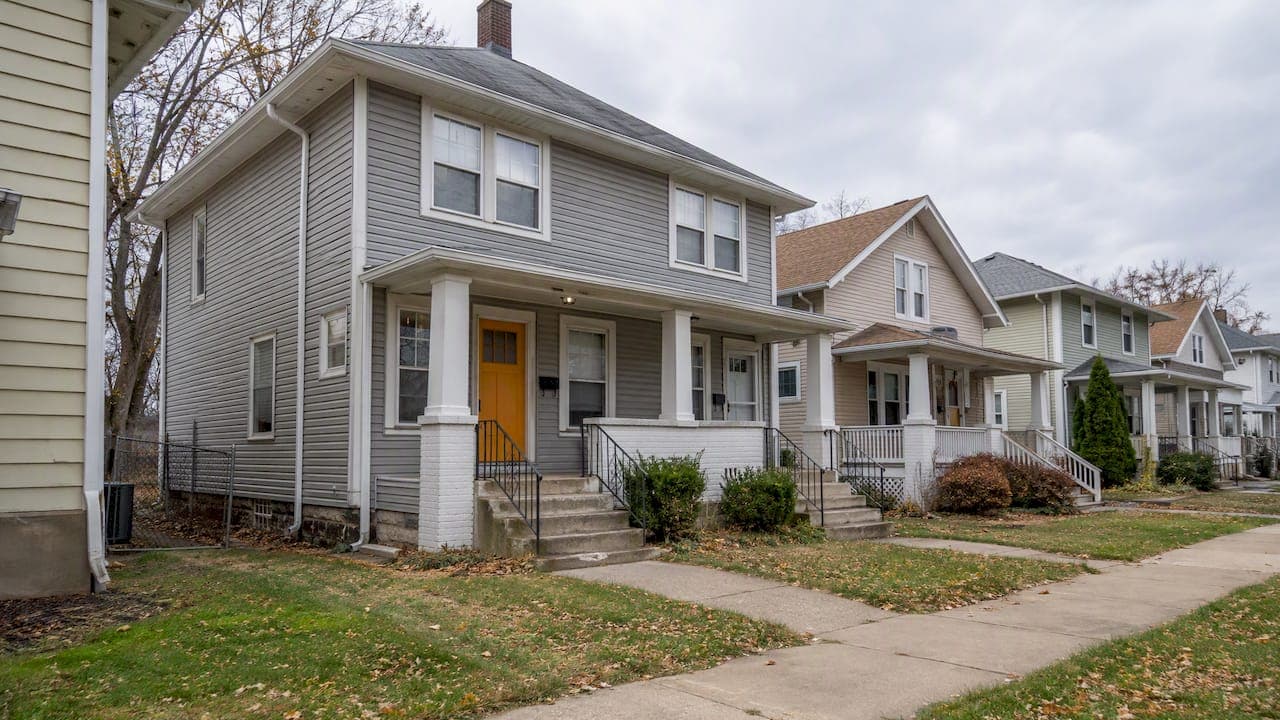
Northwest Indiana remains a seller's market in 2026, though a tightening one. Lake County medians sit in the high-$200,000s to low-$300,000s with months of supply near 2.5 to 3, a level still below the 5 to 6 months that defines balance. Porter County stays tighter still, while LaPorte County shows the most softening, with vacancy rates running well above its neighbors.
TL;DR:
- Buyers should focus on specific submarkets, since school boundaries, transit access, and nearby construction age can shift prices more than county averages.
- Many loan programs allow 3% to 5% down, while buyers should also budget for closing costs of roughly 2% to 4% of the purchase price.
- Municipal decisions to opt out affect whether recent approval changes apply; planners estimate the region needs about 50,000 new homes over 30 years.
- Owners with inherited homes or homes needing major repairs can consider a cash sale when relocation or foreclosure makes speed more valuable than maximizing price.
Table of Contents
- Current Median Prices, Inventory and Days on Market
- How Lake, Porter and LaPorte Counties Compare
- What's Driving Supply and Demand Right Now
- Affordability, Missing Middle Housing and Zoning Changes
- What Buyers, Sellers and Investors Should Watch Next
- What We're Seeing on the Ground in Northwest Indiana
- A Faster Path When You Need to Sell
- FAQ
- Sources
Current Median Prices, Inventory and Days on Market
Reading the regional numbers means separating county-level detail from the broader trend. Lake County's median sale price has settled into the high-$200,000s to low-$300,000s range through mid and late 2026, with homes typically moving in a median of 28 to 32 days. That pace, combined with months of supply hovering near 2.5 to 3, still favors sellers, though the gap to a balanced market (5 to 6 months of supply) has narrowed compared with the tighter conditions of recent years.
Vacancy data from regional planning work adds context inventory counts alone miss. The NIRPC 2050+ presentation shows LaPorte County carrying a vacancy rate near 13% as of 2024, compared to about 10% in Lake County and roughly 6% in Porter County. A higher vacancy rate generally signals softer demand relative to supply, which helps explain why LaPorte trades at a slower pace and lower price point than its two neighbors.
Several threads feed into this snapshot:
- Monthly brokerage and REALTOR association reports track median price, active listings and days on market on a rolling basis.
- County vacancy and permit figures come from regional planning data compiled through the NIRPC Economy and Place update.
- Academic and regional studies, including the Northwest Indiana Housing Market Study, provide longer historical baselines for comparison.
| Metric | Lake County | Porter County | LaPorte County |
|---|---|---|---|
| Vacancy rate | ~10% | ~6% | ~13% |
| Typical price band | High-$200,000s to low-$300,000s | Comparable or slightly above Lake | Below regional median |
| Days on market | ~28-32 days | Similar to Lake | Longer than Lake |
These figures move month to month, so treat any single snapshot as a point in a trend rather than a fixed rule.
How Lake, Porter and LaPorte Counties Compare
Northwest Indiana is not one market. It is three counties with different buyer pools, commute patterns and housing stock, and the differences show up directly in price and pace.
- Lake County carries the region's highest demand pressure, driven partly by proximity to Chicago and South Shore Line access; cities like Crown Point and St. John post higher medians, while entry-level stock clusters closer to $230,000 to $350,000.
- Porter County runs the tightest vacancy rate of the three, around 6%, and includes fast-growing communities such as Portage, where new construction and investor interest have picked up.
- LaPorte County shows the highest vacancy, near 13%, and generally the most affordable entry point, though days on market tend to run longer.
Move-up buyers typically shop the $350,000 to $550,000 band, concentrated in communities with stronger school ratings or shorter commutes to transit. Towns like Merrillville illustrate how local amenities and relocation appeal can push a community's pricing above the countywide median even when regional supply conditions stay flat. School district lines, commute time to a South Shore Line station and the age of nearby construction routinely matter more to an individual sale than the county average, which is why two homes a few miles apart can post very different outcomes.
What's Driving Supply and Demand Right Now
Supply in Northwest Indiana is constrained by a shortage of what planners call "missing middle" housing: duplexes, townhomes and small multifamily buildings that sit between single-family homes and large apartment complexes. Regional density sits at roughly 2 dwelling units per acre today, far below the 4 to 5 du/acre target set for 2050, according to the NIRPC Land Use & Housing update.

Closing that gap is a generational project. NIRPC's 2050 planning work projects the region's population approaching 900,000 by mid-century, which means the current pace of permitting and construction will need to accelerate well beyond recent years if supply is going to keep pace with demand.
A few forces stand out:
- Permit activity has lagged what regional growth targets require, concentrating pressure on existing inventory.
- Illinois spillover migration continues to push buyers toward Lake County, where commute access to Chicago remains a draw.
- South Shore Line expansion has made transit-adjacent neighborhoods more desirable, often commanding a price premium over comparable homes farther from a station.
- Vacancy concentration in LaPorte County signals where investor and rental opportunities may be more available than in tighter Lake or Porter submarkets.
Affordability, Missing Middle Housing and Zoning Changes
Affordability pressure in Northwest Indiana traces back to the same supply gap driving the broader market: there simply are not enough duplexes, townhomes and small-lot infill projects to serve buyers priced out of single-family homes but not interested in large apartment complexes. That missing middle tier is exactly what regional planners are trying to encourage as the area works toward its 2050 density targets.
Policy is starting to respond. House Bill 1001 and related municipal changes aim to streamline approvals for single-family and townhome projects and ease ADU (accessory dwelling unit) permitting unless a specific municipality opts out, based on planning materials summarized by NIRPC. Regional forecasts tied to that planning work estimate the area needs roughly 50,000 new housing units over the next 30 years to hit its density and population targets.
What this means in practice:
- Owner-occupiers in municipalities that have not opted out may find it easier to add an ADU for rental income or multigenerational living.
- Small developers eyeing infill lots should check local zoning before assuming House Bill 1001 applies uniformly, since adoption varies by city.
- Renters and first-time buyers stand to benefit most if missing-middle construction actually materializes near transit corridors.
Pro Tip: Check with your municipality's planning department directly before budgeting for an ADU: opt-out status and permitting timelines still vary block by block.
For buyers worried about down payment size, it is worth noting that closing-cost guidance for Indiana points out that many loan programs allow 3% to 5% down rather than the 20% figure many assume is required, with closing costs running roughly 2% to 4% of the purchase price.

What Buyers, Sellers and Investors Should Watch Next
The next six to 12 months will likely hinge on a handful of signals rather than any single dramatic shift. Mortgage rate movement, new listing volume and local permit activity will tell you more than the regional median alone.
Track these four indicators regularly:
- Active inventory and months of supply, watching for movement toward the 5 to 6 month balanced-market threshold.
- Mortgage rate trends, which directly affect buyer purchasing power.
- New listing volume, an early signal of whether sellers are regaining confidence.
- Local permit filings, which hint at where new supply will land first.
For buyers: get preapproved before touring, focus your search on specific submarkets rather than the whole region, build in contingency time for financing, consider lower-down-payment loan programs if cash reserves are tight, and stay ready to move quickly in Lake County's faster-moving pockets.
For sellers: price realistically against your specific submarket rather than the regional median, invest in basic staging if time allows, stay flexible on closing dates to widen your buyer pool, weigh repair costs against listing as-is, and consider a direct cash offer when speed or certainty matters more than maximizing price.
What We're Seeing on the Ground in Northwest Indiana
Numbers tell part of the story, but the calls we field tell the rest. Most sellers who reach out are not chasing the highest possible price. They are dealing with an inherited property, a job relocation on a tight timeline, or a home that needs more repair work than they have the time or money to handle.
Condition and timing shape outcomes more than any regional statistic. A home priced right for its actual condition sells fast in this market; one priced for its neighbor's renovated kitchen sits. For sellers who need certainty over maximum price, a cash sale is worth a look, which the next section covers directly.
— Daniel
A Faster Path When You Need to Sell

If repairs, timelines or distance are standing between you and a traditional sale, consider selling through a service that buys houses in as-is condition, with no repairs, fees or commissions, as detailed in The State of the Market for Buyers — ExitVest. We cover closing costs and work around your schedule, whether that means closing quickly or waiting until you are ready to move.
This approach tends to fit specific situations well:
- Inherited properties you need to settle quickly without managing repairs from out of state.
- Foreclosure timelines where speed matters more than squeezing out top dollar.
- Relocation on a deadline that a traditional listing process cannot accommodate.
- Homes needing major repairs you would rather not finance before selling.
If one of these sounds like your situation, you can sell your house for cash and get a straightforward offer without listing, showings or open houses.
FAQ
Are housing prices falling in Indiana?
Prices are not broadly falling across Northwest Indiana, though growth has slowed from recent peaks. Lake County medians remain in the high-$200,000s to low-$300,000s, with months of supply still below the 5 to 6 month threshold that typically signals a balanced market.
What is the best place to live in Northwest Indiana?
The right community depends on your priorities: commute access, school districts and budget all point in different directions. Lake County towns near the South Shore Line, such as Merrillville or Crown Point, suit commuters, while Porter County offers tighter vacancy and newer construction in communities like Portage.
Is Northwest Indiana growing?
Regional planning work from NIRPC projects the area's population approaching 900,000 by 2050, supporting continued housing demand. That growth target is also driving zoning and density changes meant to encourage more middle-tier housing supply.
What are the hottest real estate markets in Indiana?
Within Northwest Indiana, Lake County communities near Chicago commuter rail, including Crown Point and St. John, tend to see the strongest demand and fastest sales.
Sources
- NIRPC Economy and Place: Land Use & Housing update
- NWI 2050+ presentation — Economy and Place committee
- Northwest Indiana Housing Market Study (Draft)