
Most heirs and urgent sellers should sell as-is to a cash buyer, since severe hoarding cases often fail financed-buyer insurance requirements anyway. Sellers with time, a clear title, and enough budget can net more through a controlled cleanout and retail listing. The dividing line is simple: how much time, cash, and legal clarity you actually have right now, not what the house "deserves."
TL;DR:
- Selling as-is to a cash buyer is usually faster and simpler, especially for severe hoarding cases that often fail insured financed-buyer requirements.
- Full cleanup and retail listing can net more money but require significant time (one to several months) and costs into the tens of thousands, with higher health and legal risks.
- The severity of hoarding, from light to severe, determines safety concerns, cleanup costs, and whether licensed remediation is necessary before sale.
- Most buyers for hoarder houses are cash investors who base offers on estimated repair costs minus potential profit, making multiple offers vital for fair negotiation.
- Legal issues such as probate delays, liens, and undisclosed hazards often pose bigger obstacles than the clutter itself, so early legal and inspection steps are critical.
Table of Contents
- How Do You Sell a Hoarder House? Three Real Options
- How Bad Is the Hoarding, Really?
- What Does Cleanup Actually Cost and How Long Does It Take?
- What Legal Issues Can Derail the Sale?
- How Do Buyers Actually Evaluate a Hoarder House?
- What's the Right Move for Your Situation?
- How Dan Buys Houses Handles Hoarder-House Purchases
- Why the Emotional Weight Matters as Much as the Paperwork
- How Do You Market a Hoarder House Correctly?
- How Do You Negotiate a Fair Price on a Hoarder House?
- Are There Tax Implications When You Sell a Hoarder House?
- What Actually Matters When You're Selling a Hoarder House
- Ready to Sell? Here's What Happens When You Call
- Sources
How Do You Sell a Hoarder House? Three Real Options
Selling a hoarder house comes down to three strategies, and each one trades speed for money differently.
As-is cash sale means you sell the property exactly as it sits, contents and all, to an investor or direct buyer. Wholetail means a light cleanout and cosmetic pass, then a quick resale to another investor or a value-focused retail buyer. Full cleanup and retail listing means you clear everything, repair what's broken, stage it, and list with an agent for top dollar.
- As-is cash sale: closes in days to a couple of weeks, widest buyer pool among investors, often substantially below fully repaired comps, near-zero workload for you.
- Wholetail: closes in a few weeks, moderate buyer pool, price lands between as-is and retail, moderate labor and coordination required.
- Full cleanup and retail: takes one to several months, biggest buyer pool since financed buyers qualify, highest potential price, but the heaviest emotional and physical toll.
Realtor frames this same choice as the core decision every heir eventually faces: clean and list, or sell as-is and move on.
How Bad Is the Hoarding, Really?
Before you pick a strategy, walk the property with fresh eyes and a flashlight. Severity determines almost everything else, including whether you can safely enter certain rooms at all.
- Light hoarding: clutter blocks some pathways, but rooms are usable and there's no odor or pest activity. Usually needs a few days of hauling.
- Moderate hoarding: stacked items block doorways, one or two rooms are inaccessible, and you notice mild odor or evidence of rodents. Usually needs a professional crew for a week or more.
- Severe hoarding: structural damage, floor collapse risk, strong ammonia or decay odors, visible mold, or biohazard material. This tier almost always needs licensed remediation before anyone else safely enters.
Check for water stains on ceilings, exposed wiring, sagging floors, and pest droppings room by room. Realtor.com recommends bringing in a licensed inspector or contractor early, specifically before you commit money to any cleanup plan.
Pro Tip: Photograph every room before touching anything. Insurance disputes, probate inventories, and buyer negotiations all move faster when you have a timestamped record of the home's condition on day one.
What Does Cleanup Actually Cost and How Long Does It Take?
Cost scales directly with severity, and the range is wide enough to change your entire decision.
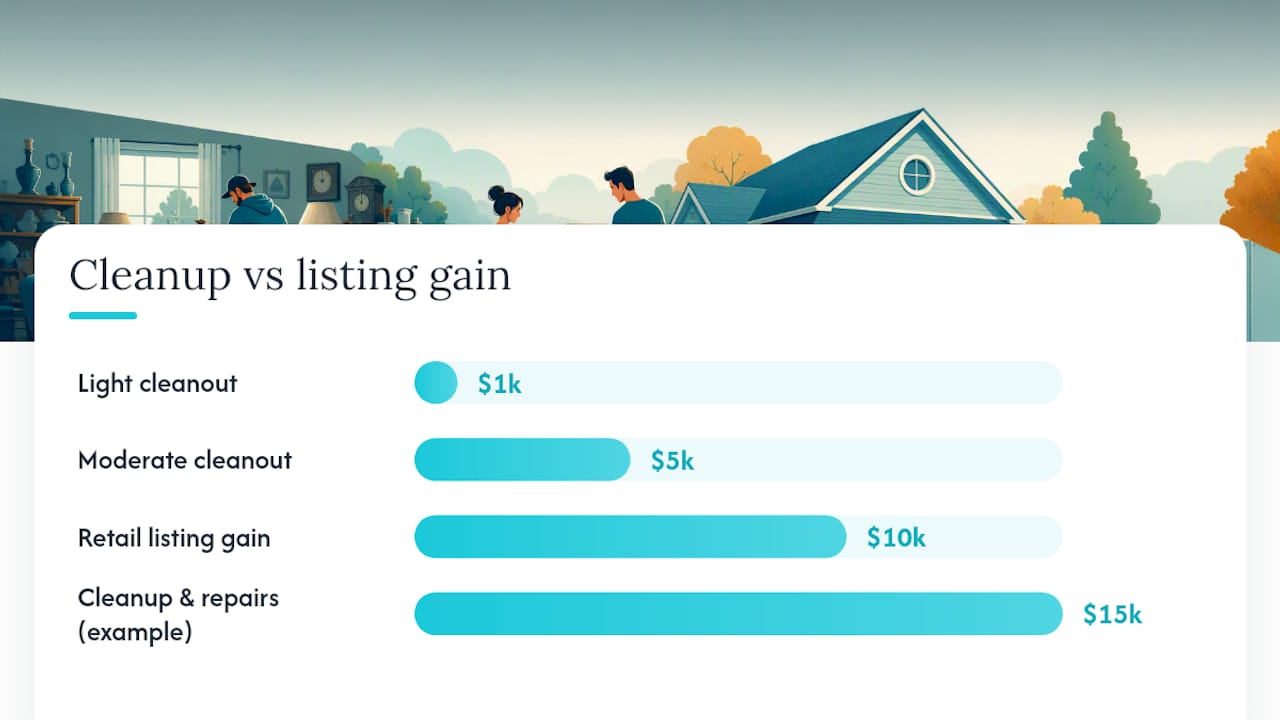
- Light cleanout: a few hundred to around $1,000, typically one to three days of labor.
- Moderate cleanout: roughly $1,000 to $5,000, usually spread over one to two weeks.
- Severe cleanout with biohazard or mold remediation: costs can climb into the tens of thousands, and HUD's property insurance guidance notes that this level of damage often affects basic insurability, which limits your buyer pool before you even list it.
DIY cleanup sounds like the cheap option until you factor in the real risk: discarding a will, a deed, or a shoebox of cash mixed in with decades of newspapers. Biohazard exposure (mold spores, rodent waste, sharp debris) is also a legitimate health issue, which is why professional crews trained to sort documents and valuables from trash are often worth the premium.
Run the math before committing. If cleanup and repairs cost $15,000 and retail listing only nets you $10,000 more than an as-is cash offer, the cleanup loses money, not counting your time.
What Legal Issues Can Derail the Sale?
Paperwork problems sink more hoarder-house sales than the mess itself, mostly because sellers discover them too late.
- Probate authority: if you inherited the house, you typically need letters of administration or executor authority before you can legally sell, and courts can take weeks to months to issue them.
- Disclosure obligations: mold, pest infestation, structural issues, and any code enforcement notices generally must be disclosed. Skipping this invites lawsuits after closing.
- Liens and unpaid taxes: back property taxes, contractor liens, or unpaid HOA dues attach to the title and must clear before closing.
- Code violations: cities sometimes issue nuisance citations for hoarder properties, and unresolved fines can stall or kill a sale.
An estate attorney or a title company can usually clear these issues faster than you'd expect, but only if you start the process before you have a buyer lined up.
How Do Buyers Actually Evaluate a Hoarder House?
Understanding buyer math explains why offers on hoarder homes look the way they do, and it helps you spot a lowball versus a fair number.
- Financed buyers mostly can't qualify. Lenders require insurable, code-compliant properties, and HUD's insurance policy guidance confirms that visible deferred maintenance or inaccessible systems can block coverage entirely. That's why cash buyers dominate this niche.
- Cash buyers work backward from ARV. They estimate the after-repair value, subtract cleanout and repair costs plus their profit margin, and land on an offer, which is why the same house can get wildly different numbers from different investors.
- Ask for proof of funds and contingency-free language. A serious buyer can show funds within a day and shouldn't need financing or inspection contingencies that let them retrade the price later.
Pro Tip: Get every offer in writing with a specific closing date and a contents clause. Verbal promises about "we'll take care of everything" mean nothing once you've signed.
What's the Right Move for Your Situation?
Four questions sort almost every seller into the right lane fast.
- Is there a deadline? Foreclosure, a probate court date, or a job relocation pushes you toward an as-is cash sale.
- Is the title and probate status clear? If not, call an estate attorney before anyone else.
- Do you suspect contamination? Mold, sewage backup, or heavy pest activity means calling a licensed inspector before a buyer walkthrough, not after.
- Do you have both funds and months of time? Only then does a full cleanup and retail listing make financial sense.
Before any walkthrough, gather the deed or probate letters, recent tax bills, and a rough list of items you want to retrieve. Match your first phone call to your scenario: attorney for probate questions, inspector for suspected damage, cleanup crew for moderate messes, or a direct buyer if speed matters more than maximizing price.
How Dan Buys Houses Handles Hoarder-House Purchases
Buying homes exactly as they sit, contents included, is standard practice at some cash home buying companies. A typical process might include a quick property assessment, a written cash offer with no repair demands, and a title closing scheduled around the seller's timeline rather than a lender's.
Sellers should ask any direct buyer for a specific, written retrieval window (commonly a few days post-closing) covering documents, photos, and family items, plus written confirmation that the crew will set aside anything that looks personal or valuable during cleanout. Dan Buys Houses's process is built around getting to a fair number fast without demanding the house be presentable first.
Why the Emotional Weight Matters as Much as the Paperwork
Hoarding disorder is a recognized psychiatric condition, not a character flaw, and the American Psychiatric Association notes that families frequently carry real shame and grief around it, whether the person is a deceased parent, an estranged relative, or the seller themselves. That emotional weight doesn't disappear because you signed a listing agreement.
Give yourself permission to feel overwhelmed without treating it as a personal failure. Heirs, in particular, often walk into a house holding decades of someone else's decisions and grief simultaneously, and the instinct to either save everything or burn it all down is normal. Neither extreme serves you well.
A practical middle path helps: set a firm daily time limit for sorting (two or three hours, not a marathon), bring a friend or professional organizer for emotional ballast, and separate "decide later" boxes from "decide now" piles instead of forcing every decision on day one. If the home belonged to someone with a hoarding disorder who is still alive, involve them in decisions where possible; removing their agency entirely can worsen the psychological distress tied to the condition.

Selling as-is to a cash buyer removes a huge chunk of this burden by design. You're not staging grief for an open house or explaining decades of clutter to strangers walking through with a real estate agent. That privacy alone is worth factoring into your decision, separate from the dollar figure on the offer.
How Do You Market a Hoarder House Correctly?
Marketing a hoarder house to the wrong audience wastes weeks. The retail buyer pool (people shopping for a home to live in) mostly can't or won't touch a property in this condition, so your marketing needs to target investors and cash buyers directly instead of running a standard MLS campaign.
Lead with honest framing rather than euphemism. "Investor special, needs full cleanout" attracts serious buyers immediately; vague listing language that hides the condition just invites wasted showings and eventual price renegotiation once buyers see the interior. Photograph exterior curb appeal, structural features, and lot size honestly, and either skip interior photos entirely or show them candidly.
Reach cash buyers through investor networks, local real estate investment associations, and direct buyers who already specialize in as-is purchases rather than general listing portals. If you do decide to go the wholetail or retail route after a partial cleanup, decluttering guidance aimed at preparing a home for property photography is useful for getting the space photo-ready without a full renovation budget.
Price the listing to reflect condition from day one. Overpricing a hoarder house and hoping for a retail buyer wastes 30 to 60 days before you drop the price anyway, and by then you've lost momentum and tipped off buyers that something's wrong.
How Do You Negotiate a Fair Price on a Hoarder House?
Negotiating a hoarder-house sale differs from a normal transaction because the condition itself becomes the entire conversation, not a side issue raised after inspection.
Get multiple cash offers before you negotiate seriously with any single buyer. Even two or three competing offers give you real leverage and a sense of the market rather than accepting the first number that arrives. Ask each buyer to show their math (estimated ARV minus cleanout and repair costs) so you can compare offers on the same logic instead of just comparing final numbers.
Resist the urge to defend the home's condition emotionally during negotiation. A buyer citing $8,000 in expected cleanup costs isn't insulting the deceased relative who lived there; they're pricing risk. Counter with facts instead of feelings: recent comps, your own inspection findings, or a competing offer.
Negotiate contents handling explicitly, in writing, before you sign anything. Specify a retrieval window (commonly three to seven days post-closing) for photographs, documents, and family items, and get written confirmation that the buyer's crew will set aside anything resembling jewelry, cash, or legal paperwork during cleanout rather than hauling it straight to a dumpster.
Push for contingency-free offers where possible. A buyer who still needs financing or a full inspection contingency after seeing the property in person is either not serious or planning to retrade the price down later. Ask directly whether the offer is truly firm, and get that answer before you take the house off the market for anyone else.
Are There Tax Implications When You Sell a Hoarder House?
Selling an inherited property usually comes with a tax advantage most heirs don't know about: the stepped-up basis rule. Instead of paying capital gains tax based on what the deceased originally paid for the house decades ago, your taxable basis resets to the property's fair market value at the date of death. That alone can eliminate most or all capital gains tax on a quick as-is sale, since the home's value likely hasn't moved much between the date of death and your closing date.
If you personally lived in the home as your primary residence for at least two of the last five years, you may also qualify for the standard home-sale capital gains exclusion, though inherited properties sold quickly by heirs usually don't meet that residency test.
Cleanup and repair costs generally aren't personally deductible the way a business expense would be, but they can sometimes be added to your cost basis if they count as capital improvements rather than routine cleanup, which reduces your taxable gain at sale. Selling costs, including any commissions or closing fees, also reduce your net gain for tax purposes.
None of this substitutes for advice from a tax professional or estate attorney who can look at your specific probate timeline and property value, since the rules shift based on how the property was titled and how long you held it before selling.
What Actually Matters When You're Selling a Hoarder House
The conventional advice on this topic spends too much time on cleanup checklists and not enough on the actual decision that determines everything else: do you have a deadline, and do you have cash to spare. Every article that opens with "declutter room by room" is writing for the seller who has neither pressure nor financial strain, and that's a smaller share of hoarder-house sellers than the industry pretends.
Here's the judgment the research actually supports: for probate heirs and anyone facing foreclosure or a hard relocation date, the math almost always favors an as-is sale, even before you factor in the emotional cost of months spent sorting a relative's belongings. The 20 to 40% discount on an as-is offer sounds steep until you price in cleanout costs, carrying costs, agent commissions, and the very real chance a financed buyer can't get insurance approved anyway.
What gets overlooked most is the contents question. Sellers fixate on the sale price and forget to negotiate a retrieval window for photos, documents, and family items until it's too late. Get that in writing before you sign anything, regardless of which route you choose.
— Daniel
Ready to Sell? Here's What Happens When You Call
If speed, privacy, and a no-cleanup exit matter more to you than squeezing out every last dollar, Dan buys houses gives you a way to close without ever renting a dumpster or hosting a stranger's walkthrough of your relative's belongings.

Before you call, gather a few basics: photos of the exterior and any rooms you're comfortable sharing, proof of probate authority or ownership if you're an heir, and a short list of items you want to retrieve before closing. The process itself is straightforward: a quick property assessment, a written cash offer with no repair demands attached, and a title closing scheduled on a timeline that works for you, sometimes in as little as five days. Contents stay confidential, and you can request a retrieval window in writing for documents, photos, or valuables before the property changes hands.
If foreclosure or a court deadline is part of your situation, stopping foreclosure with a fast cash sale is worth exploring right away rather than waiting to see how much you can clean up first. Otherwise, start with Dan Buys Houses's process page to see exactly what an offer and closing timeline would look like for your property.