Yes, you can sell your house without ever hosting an open house. Sellers regularly close deals using private showings, virtual tours, off-market listings, cash buyers, or FSBO with appointment-only viewings. Each path trades something: private showings protect your schedule but slow the buyer pool, cash sales sacrifice some price for speed and zero showings, and off-market listings trade exposure for privacy.
TL;DR:
- Private showings and virtual tours rely on screening buyers with proof of funds and pre-approval, reducing unqualified traffic and safety risks.
- Off-market and pocket listings offer privacy but can result in a 1.5% to 3.7% price discount compared to public listings, depending on the market.
- Cash buyers and iBuyers typically close within 21 to 60 days, providing speed and certainty but often at a lower sale price than market value.
- FSBO with flat-fee MLS listings and appointment-only showings allow sellers to control viewings without open houses, though pricing remains a critical challenge.
- Selling in winter may slow market activity, but cash or direct sale routes remain unaffected by seasonal foot traffic peaks or drops.
Table of Contents
- How to Sell a House Without Showings or Open Houses
- How Do You Screen Buyers for Private Showings?
- Do Virtual Tours Actually Replace Open Houses?
- Should You Consider an Off-Market or Pocket Listing?
- What's the Timeline for Selling to a Cash Buyer or iBuyer?
- Can You FSBO Without Hosting an Open House?
- How Does Skipping Open Houses Affect Price and Timeline?
- What Paperwork Do You Need to Close Without an Agent?
- How Dan Buys Houses Handles Sales Without Open Houses
- Which Route Fits Your Situation Best?
- Sell Fast Without the Showings: A Direct Cash Option
- Sources
- FAQ
How to Sell a House Without Showings or Open Houses
Skipping the open house doesn't mean skipping the sale. It means picking a different funnel to reach buyers. Here's the shortlist worth knowing before you commit to a strategy.
- Private, appointment-only showings. You screen buyers before they walk through the door, controlling both traffic and safety.
- High-quality photos and 3D or virtual tours. These do the heavy lifting an open house used to do, letting serious buyers self-select before they ever schedule a visit.
- Off-market or pocket listings. The home never hits public search portals, which appeals to sellers who value discretion over maximum exposure.
- Direct cash buyers and iBuyers. These companies purchase as-is, often skipping inspections, showings, and negotiations tied to financing contingencies.
- FSBO with flat-fee MLS. You list on the open market yourself, but you control every showing appointment instead of hosting a weekend crowd.
Each option below gets its own section because the mechanics, and the tradeoffs, differ enough to matter. A homeowner facing foreclosure has different priorities than someone quietly downsizing after a divorce, and the right method depends on what you're actually trying to protect: time, money, or privacy.
How Do You Screen Buyers for Private Showings?
Private showings work because you control who gets a key, literally and figuratively. The goal is fewer visitors who are more likely to buy, not a revolving door of curious neighbors.
Here's a practical sequence for running showings without turning your home into a public attraction:
- Require proof of funds or a mortgage pre-approval letter before you confirm any appointment. This single step eliminates most of the tire-kickers an open house typically attracts.
- Set a standard notice window, usually 24 hours, so you have time to tidy up and, if you're still living there, plan to be elsewhere during the visit.
- Use a lockbox or agent-accompanied entry rather than handing out keys, and log every visitor for your own records.
- Ask the buyer's agent to confirm their client's qualification in writing before the showing, not after.
- Run showings back-to-back on select days instead of spreading them across the week, which limits disruption to your routine while still giving buyers flexibility.
Staging for a private walkthrough is different from staging for a crowd. You're not managing traffic flow through a living room. You're giving one buyer, or one family, a reason to picture themselves there. Clear countertops, neutral scents, and good lighting still matter, but you can skip the cookie-in-the-oven theatrics that open houses rely on.
Pro Tip: Keep a simple sign-in log with names, phone numbers, and agent affiliation for every private showing. If anything ever feels off about a visitor, that paper trail is the first thing a real estate attorney or the police will ask for.
Do Virtual Tours Actually Replace Open Houses?
Largely, yes. Professional photography and 3D walkthroughs now do most of the pre-qualifying work that open houses used to handle in person. Buyers browse a Matterport tour at midnight, rule out homes that don't fit, and only book in-person visits for places they're genuinely considering.
What's worth ordering:
- A full professional photo shoot, ideally with a wide-angle lens and twilight exterior shots.
- A 3D or Matterport-style tour that lets buyers "walk" every room on their own schedule.
- A short video walkthrough, 60 to 90 seconds, built for social platforms rather than a real estate site.
- A neighborhood clip highlighting schools, parks, or walkability, especially useful for out-of-town buyers relocating for work.
Professional photography and 3D tours increase online engagement and let buyers pre-qualify themselves before ever requesting an in-person showing. That's the real value: fewer wasted visits, more serious buyers. If you're prepping the home for these digital assets, a service like interior styling and staging can make the difference between photos that get scrolled past and ones that get saved.
Should You Consider an Off-Market or Pocket Listing?
Off-market makes sense in specific situations: security concerns for high-profile sellers, probate sales where family privacy matters, or ultra-high-net-worth properties where public listing photos invite unwanted attention. For most sellers, though, it's a tradeoff worth measuring carefully before committing.
Ask yourself three questions before going this route:
- How real is the privacy need? A busy executive avoiding public scrutiny has a stronger case than someone who's simply uncomfortable with strangers in their home.
- Who actually benefits from reduced exposure? Sometimes it's the seller, sometimes it's a listing agent trying to double-end the commission. Know which one you're getting.
- What's the dollar cost? Off-market sales can close for 1.5% to 3.7% less than comparable public listings in some markets, though the discount varies widely by location and property type.
Variants include a coming-soon MLS status, an office-exclusive listing shared only within one brokerage, or a true pocket listing never entered into any database. If you go this route, document the tradeoff in writing and negotiate an exit clause that lets you pivot to full MLS exposure if the private pool doesn't produce a serious offer within a set window.
What's the Timeline for Selling to a Cash Buyer or iBuyer?
Cash buyers and iBuyers eliminate showings entirely because there's no buyer pool to manage. You're negotiating with one entity, not fielding competing offers from strangers walking through your kitchen.
The typical sequence looks like this:
- Submit basic property details online or by phone, usually address, condition, and reason for selling.
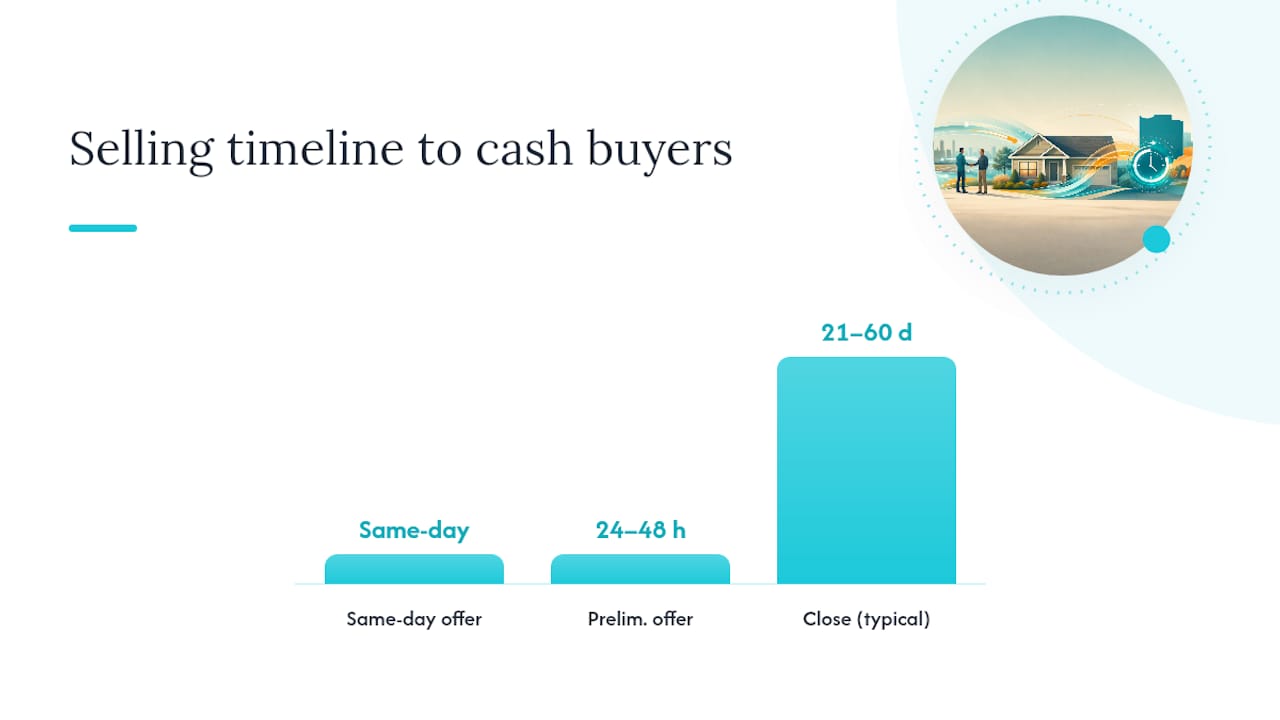
- Receive a preliminary offer, often within 24 to 48 hours, sometimes same-day for straightforward properties.
- Schedule a walkthrough to confirm condition, which replaces the inspection contingencies typical of financed buyers.
- Review the final offer and closing costs, then pick your closing date.
- Close and receive funds, with iBuyer and cash-sale paths typically closing in 21 to 60 days, sometimes faster with local direct buyers.
Before accepting anything, verify the buyer's credentials and ask for proof of funds in writing. A legitimate cash buyer won't hesitate to provide it. The tradeoff here is straightforward: you give up some equity in exchange for speed, certainty, and zero showings. That math works well for anyone facing foreclosure, an inherited property they don't want to manage, or a job relocation on a tight clock.
Can You FSBO Without Hosting an Open House?
You can, and plenty of sellers do it by combining a flat-fee MLS listing with strict appointment-only showings. Flat-fee services get your home into the MLS and onto major portals for a set price, usually a few hundred dollars, instead of a full listing commission.
- List with a flat-fee MLS service so your home shows up on Zillow, Realtor.com, and buyer-agent searches without paying a traditional commission.
- Set appointment-only viewing hours and require the same pre-approval or proof-of-funds standard you'd use for private showings.
- Price the home using a paid appraisal or a defensible comparative market analysis, not a guess based on what the neighbor sold for.
- Bring in a real estate attorney or a transaction coordinator once an offer lands, especially for contract review and disclosure paperwork.
FSBO sellers accounted for roughly [5% to 7% of U.S. home sales](https://www.nar.realtor/news/real-estate-news/fsbos-reach-all-time-low-more-sellers-rely-on-agents) in recent years, and every one of those sellers handled pricing, marketing, and showings themselves.
How Does Skipping Open Houses Affect Price and Timeline?
That 5% to 7% FSBO share tells you something important: most sellers still lean on agents partly because pricing and negotiation without one is harder than it looks, not because open houses are essential to a good outcome.
Here's how the major paths typically compare on the things that matter most:
If your home sits unsold for more than a few weeks with no showings booked, that's usually a pricing problem, not a marketing problem. Buyers who see a listing linger tend to assume something's wrong, which pushes offers even lower than a simple price correction would have.
What Paperwork Do You Need to Close Without an Agent?
Selling without a listing agent doesn't mean selling without professional help. A real estate attorney should draft or review the purchase agreement, confirm required disclosures, and make sure the closing timeline holds up. Attorney fees for a full FSBO transaction commonly run $500 to $1,500, which is a fraction of a traditional commission.
- Property disclosure forms, including lead paint disclosures for homes built before 1978 and any state-specific material defect requirements.
- A title search and escrow setup, usually handled by a title company even in an agent-free sale.
- Proof of earnest money deposit and confirmation of how it's held.
- A documents checklist covering deed, mortgage payoff statement, tax records, and HOA documents if applicable.
Getting these ready before you accept an offer shaves days off closing and prevents last-minute scrambling.
How Dan Buys Houses Handles Sales Without Open Houses
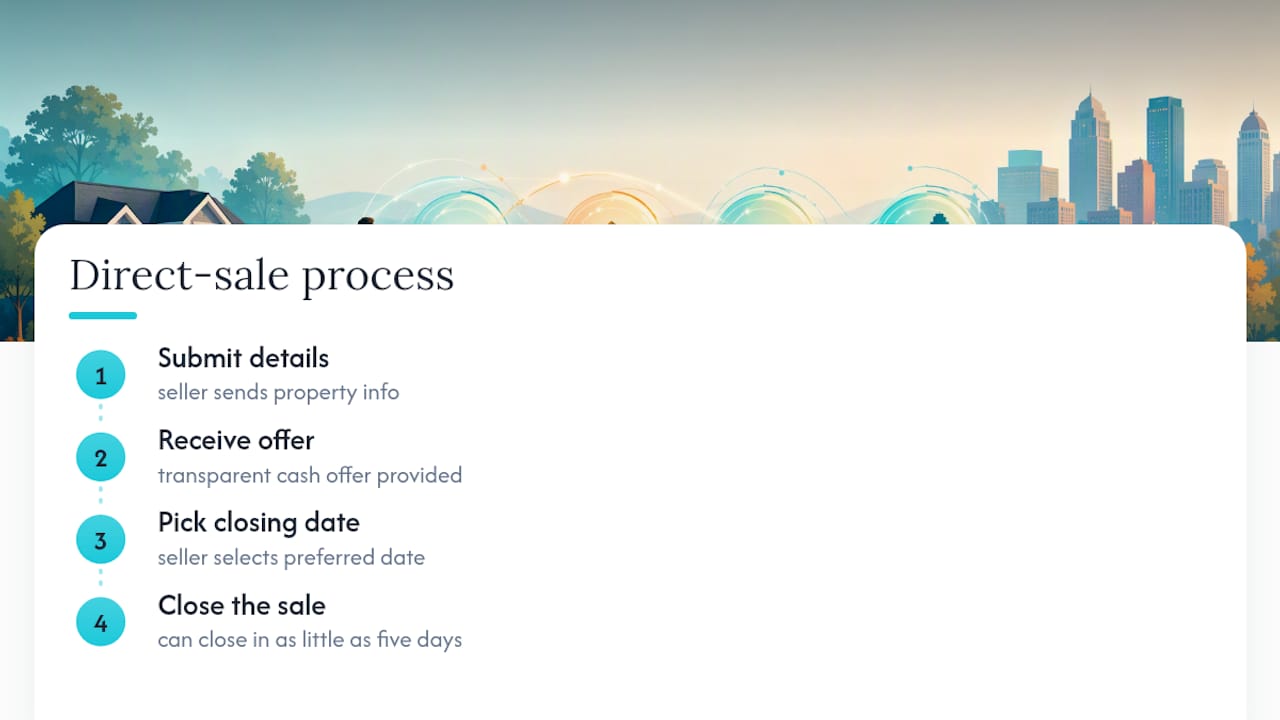
Some companies buy properties directly, in as-is condition, for cash, which can remove the entire showings-and-open-house question from the equation. Sellers submit property details, receive a transparent cash offer, and pick a closing date. Some sellers report closing in as little as five days.
This route tends to fit sellers dealing with foreclosure, an out-of-state relocation, or a property they inherited and don't want to manage or repair. There's no staging, no lockbox schedule, no strangers walking through on a Saturday afternoon. The process itself is built around speed and clarity rather than maximizing every last dollar through public market exposure.
Which Route Fits Your Situation Best?
If you're still living in the house and want top dollar, appointment-only showings paired with strong photos and a 3D tour usually deliver the best balance of privacy and price. If you're handling an estate or a property in rough shape, a direct cash buyer often solves the speed-and-convenience problem better than any marketing strategy could.
For sellers who care most about discretion, off-market works, but only if you go in with a documented sense of the price tradeoff. Know what privacy is costing you before you sign anything.
— Daniel
Sell Fast Without the Showings: A Direct Cash Option
Dan buys houses is the alternative to open houses and traditional listings for homeowners in Northwest Indiana who want out without the showings, the staging, or the waiting. Instead of ordering 3D tours and screening a rotation of pre-approved strangers, you request one offer, review it, and pick your own closing date.

The process starts with basic property information, whether it's a single-family home, a duplex, or a property you inherited and never wanted to manage. There may be no repair list or owner-paid closing costs, and no commission fees. Sellers facing foreclosure, divorce, or a fast relocation sometimes find this route solves the timeline problem that private showings and FSBO listings can't.
If your situation calls for speed over maximum market exposure, request your cash offer and see what a no-showing sale looks like for your property.
Sources
- NAR: FSBOs reach all-time low; more sellers rely on agents
- RealtyTimes — Selling without open houses: a different approach that works
FAQ
Why Would a Seller Not Have an Open House?
Sellers skip open houses to avoid safety risks from unscreened visitors, protect their privacy, and cut down on the disruption of preparing a home for public traffic every weekend. Many also find that private showings and digital marketing produce more qualified buyers than a public open house ever does.
Is There a Benefit to Selling a House Off-Market?
The main benefit is privacy and reduced exposure, which matters for high-profile sellers, probate situations, or anyone who doesn't want their sale publicly visible. The tradeoff is a possible price discount, sometimes 1.5% to 3.7% below comparable public listings.
Is Selling to an iBuyer Worth It?
It depends on what you value most. iBuyers offer speed and certainty, often closing in 21 to 60 days with no showings, but the offer typically comes in below full market value to cover the service charge. For sellers facing a tight deadline or a property in rough condition, that tradeoff often makes sense; for sellers with time to market the home traditionally, it usually doesn't maximize proceeds.
What Is the Hardest Month to Sell a House?
Winter months, particularly December and January, tend to see fewer buyers actively house hunting, which can slow down a sale. That said, urgent sellers, especially those working with a direct cash buyer, can close year round regardless of seasonal buyer traffic since there's no dependence on foot traffic or open house attendance.