The fastest reliable way to get cash for your Northwest Indiana property is to sell directly to a vetted local cash buyer who purchases as-is and closes in days to a few weeks. Dan Buys Houses (NWI Buyers) does exactly that: no repairs, no agent commissions, no lender-ordered appraisals slowing things down.
Two concrete next steps right now:
- Request a cash offer from Dan Buys Houses at Nwibuyers — offers can come within 24 hours.
- Gather your deed, mortgage payoff statement, and recent tax bill before the call so you can close faster once an offer is accepted.
One legal note: selling as-is is fully legal in Indiana, but you must disclose known defects using the Indiana Seller's Residential Real Estate Sales Disclosure form. Pre-1978 homes also require the EPA lead-based paint disclosure pamphlet under federal law.
Key Takeaways
Selling to a vetted local cash buyer in Northwest Indiana is the fastest, most certain path to closing — especially for inherited, distressed, or time-sensitive properties.
| Point | Details |
|---|---|
| Cash buyers close fastest | Some cash-offer programs close in as few as 7 days by removing appraisals and financing contingencies. |
| Net proceeds, not gross price | A $295,000 cash offer can net close to a $295,000 MLS sale once repairs, commissions, and holding costs are subtracted. |
| Disclosure still required | Indiana sellers must complete the Seller's Residential Real Estate Sales Disclosure even on as-is sales; pre-1978 homes need the EPA lead pamphlet. |
| Short sales take 60 to 120 days or more | Lender approval requirements make short sales one of the slowest routes — a cash buyer is the practical alternative when time is short. |
| Dan Buys Houses | Purchases as-is across Northwest Indiana with no seller fees, local title partners, and closings in days to a few weeks. |
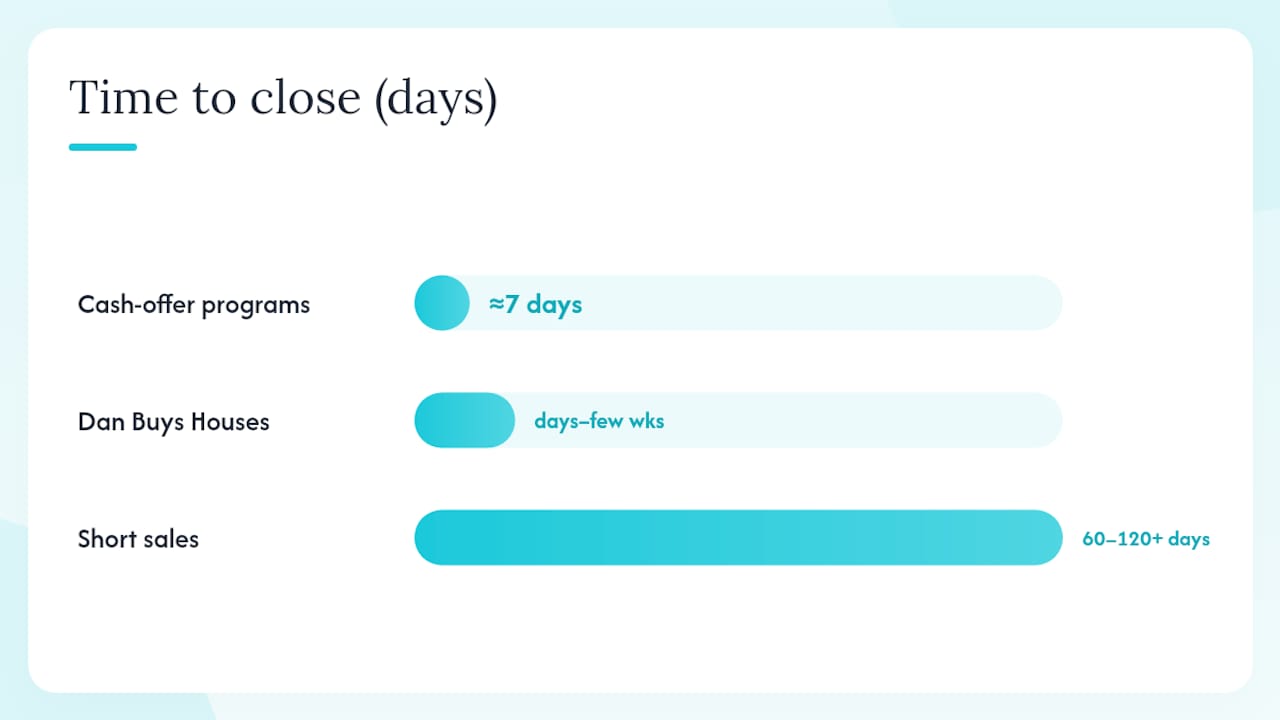
Table of Contents
- How do the fast-sale options in Northwest Indiana compare?
- How to sell your house fast for cash: a step-by-step checklist
- How do you calculate what you actually keep from each offer?
- What legal disclosures does Indiana require for a fast sale?
- How does property condition affect what cash buyers offer in Northwest Indiana?
- A note from someone who closes fast in Northwest Indiana
- Dan Buys Houses makes fast cash closings simple in Northwest Indiana
- Local documents and links you'll need
- Sources
How do the fast-sale options in Northwest Indiana compare?
Every route trades something. The table below puts the six main paths side by side so you can see exactly where a local cash buyer fits.
The core trade-off: speed and certainty almost always cost some price. Short sales in Indiana commonly take several months or more because the lender must review hardship documentation, order its own valuation, and approve final numbers. A cash buyer skips all of that. Some cash-offer programs report offers within 24 hours and closings as soon as seven days. The MLS sits in the middle: better price, but 30–60+ days and real contingency risk, according to common market experience.
How to sell your house fast for cash: a step-by-step checklist
Following these steps in order will maximize both speed and certainty.
- Gather documents first. Deed, mortgage payoff statement, most recent property tax bill, utility bills, HOA documents if applicable, and any existing title insurance policy. Having these ready cuts days off the closing timeline.
- Run a quick valuation. Pull recent sold comps from the Lake or Porter County assessor portal, or ask Dan Buys Houses for a drive-by comp check. You need a realistic number before evaluating any offer.
- Decide: as-is or targeted repairs. Modest repairs like paint, lighting, and a minor bath refresh can outperform the discount taken on an as-is investor sale when comps support it. If you have two weeks and $2,000–$3,000, run the numbers. If you don't, skip it.
- Solicit 2–3 cash offers. Include Dan Buys Houses. Having two offers in hand takes less than 48 hours and gives you real leverage.
- Vet proof of funds. Ask every buyer for a current bank statement or letter from a financial institution showing available funds. No proof, no deal.
- Confirm title and closing arrangements. Your buyer should use a licensed Indiana title company or real estate attorney. Confirm who is handling escrow before you sign anything.
- Sign the purchase agreement. Make sure it states the closing date, possession terms, and that no repairs are required of you.
- Complete escrow steps. Title search, payoff coordination with your lender, and prorated tax calculations happen here. A good title company handles most of this.
- Close and receive funds. Cash closings typically fund same-day via wire or cashier's check.
Pro Tip: A pre-listing inspection — usually $300–$400 — identifies deal-killers before a buyer does. It lets you price more confidently and prevents last-minute renegotiations that kill speed. A pre-listing inspection helps sellers identify issues early and can improve negotiation outcomes even when selling to a cash investor.
Special-case flags:
- Probate/inherited property: You may need court approval before signing a purchase agreement. Consult a probate attorney early — see the estate home selling guide for a full checklist.
- Foreclosure: Contact your lender immediately and review the urgent foreclosure action plan — selling before the sheriff sale preserves more of your equity.
- Short sale: Call your lender's loss mitigation department before listing. The lender controls approval and timeline.
How do you calculate what you actually keep from each offer?
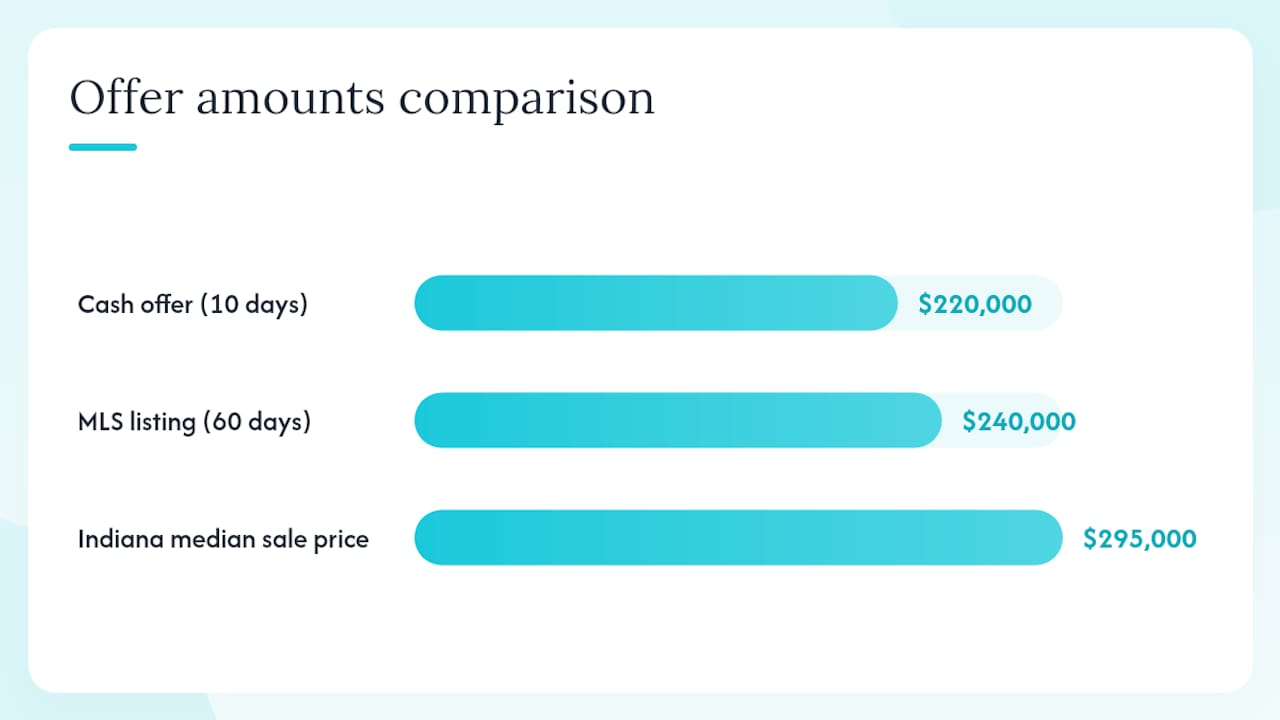
Net proceeds on your move date matter more than the headline offer price. A $220,000 cash offer that closes in 10 days may often beat a $240,000 MLS listing that closes in 60 days once you account for carrying costs, commissions, and repairs.
Here is a simple framework using Indiana's median sale price of $295,000 as a reference point:
The MLS may net roughly $3,950 more — but only if the home sells in 60 days with no price reductions, no failed financing, and no repair surprises. Add one price reduction or one failed buyer and the cash offer wins outright.
When vetting any cash offer, ask for:
- Current proof of funds (bank statement or institutional letter, dated within 30 days)
- Name of the title company or closing attorney handling escrow
- Written confirmation of the closing date and any extension rights
- Confirmation that no assignment clause lets them flip the contract to a third party without your consent
- A clear statement of which fees, if any, the seller pays
Local cost items to watch include recording fees, title insurance premiums (typically $500–$1,500 depending on sale price), and any outstanding municipal liens or water/sewer assessments. Cash purchases close faster by removing financing contingencies and appraisals, but a clean title is still required. If you have a complicated lien situation, consult a real estate attorney before accepting any offer.
What legal disclosures does Indiana require for a fast sale?
Indiana law requires sellers to complete the Seller's Residential Real Estate Sales Disclosure form before or at the time of accepting an offer. This covers known defects in the structure, systems (HVAC, plumbing, electrical), roof, foundation, and environmental conditions. "As-is" does not waive this requirement — it means the buyer accepts the condition, not that you can hide known problems.
Federal law adds one more layer for homes built before 1978: you must provide the EPA's Protect Your Family from Lead in Your Home pamphlet and disclose any known lead-based paint or hazards. Cash buyers are still entitled to a 10-day inspection period for lead unless they waive it in writing.
For inherited or estate properties, the executor or personal representative signs disclosures on behalf of the estate, typically with a note that personal knowledge of the property's condition may be limited.
How does property condition affect what cash buyers offer in Northwest Indiana?
Northwest Indiana's housing stock skews older. Many homes in Gary, Hammond, Many homes in East Chicago and parts of Merrillville were built between the 1940s and 1970s, which means cash buyers routinely price in specific condition issues:
- Knob-and-tube or aluminum wiring — insurers often won't cover it, so buyers factor in a full rewire.
- Cast-iron or clay sewer laterals — common in pre-1960 homes; a camera inspection often reveals cracks or root intrusion.
- Asbestos insulation or floor tiles — present in many homes built before 1980; abatement costs vary but buyers price it conservatively.
- Permit gaps — additions or finished basements without permits create title and resale complications that buyers discount heavily.
Selling as-is shifts the buyer pool to investors who price repairs into their offer but accept the property in its current state. The practical effect: the worse the condition, the larger the discount, but the sale still happens. A home with $40,000 in deferred maintenance that would sit on the MLS for months can close in two weeks with a cash buyer.
Buyer pools also vary by submarket. Places like Hobart often attract financed retail buyers, while parts of Gary and Merrillville see more cash investor activity, which directly affects as-is pricing expectations.
A note from someone who closes fast in Northwest Indiana
Speed without transparency is just pressure. When I look at a property, I want the deed, the mortgage payoff, and any inspection notes the seller has — not to find reasons to lower the offer, but to confirm I can actually close on the date I promise. Most delays I've seen come from title surprises: an old lien, a probate that wasn't fully resolved, or a payoff that's higher than the seller expected.
Older homes in this area — the ones with the original cast-iron plumbing or a basement addition that never got permitted — don't scare me. They're priced accordingly, and I'd rather know upfront than discover it at the title company. If a seller is in probate or facing a sheriff sale date, the timeline gets tighter, but the process is the same: clean title, confirmed payoff, licensed title partner, and a closing date both sides can count on.
Dan Buys Houses makes fast cash closings simple in Northwest Indiana
When you need to sell quickly and can't afford a failed financing contingency or a typical 60-day MLS wait, Dan Buys Houses is one direct alternative. No repairs, no commissions, no seller-paid closing costs — and closings that can happen in as few as five days using local title partners.

How it works:
- Submit your property details at Nwibuyers.
- Receive a no-obligation cash offer, often within 24 hours.
- Review and sign the purchase agreement with a clear closing date.
- Close with a licensed Indiana title company — funds arrive at closing.
Dan Buys Houses purchases houses, condos, duplexes, mobile homes, and even commercial properties across Lake and Porter counties — as-is, regardless of condition. Proof of funds is available on request, and every closing goes through a licensed title company. See how the process works or request your offer today.
Local documents and links you'll need
- Indiana Seller's Residential Real Estate Sales Disclosure — available through the Indiana Association of Realtors and required for all residential sales.
- Lake County Assessor (lakecountyassessor.com) — property tax records, parcel details, and recent sale comps.
- Porter County Assessor (portercounty.org/assessor) — same resources for Porter County properties.
- EPA Lead Disclosure Pamphlet (epa.gov) — required for all pre-1978 homes; your buyer should acknowledge receipt in writing.
- Inherited property guide — the inherited home selling guide walks heirs through probate steps and disclosure requirements specific to estate sales.
When to call an attorney: probate sales requiring court approval, short sales where the lender is negotiating a deficiency waiver, properties with multiple liens or contested ownership, and any situation where a buyer presents an assignment clause in the purchase agreement. A real estate attorney in Lake or Porter County typically charges a flat fee for a straightforward closing review — money well spent before you sign.
This article is general information, not a substitute for advice from a qualified financial advisor. Consult a qualified financial professional about your own circumstances before acting on anything here.
Sources
- Types of Home Sales in Northwest Indiana | Realest Realty
- Sell As-Is or Renovate in Hobart? A Local Seller Guide