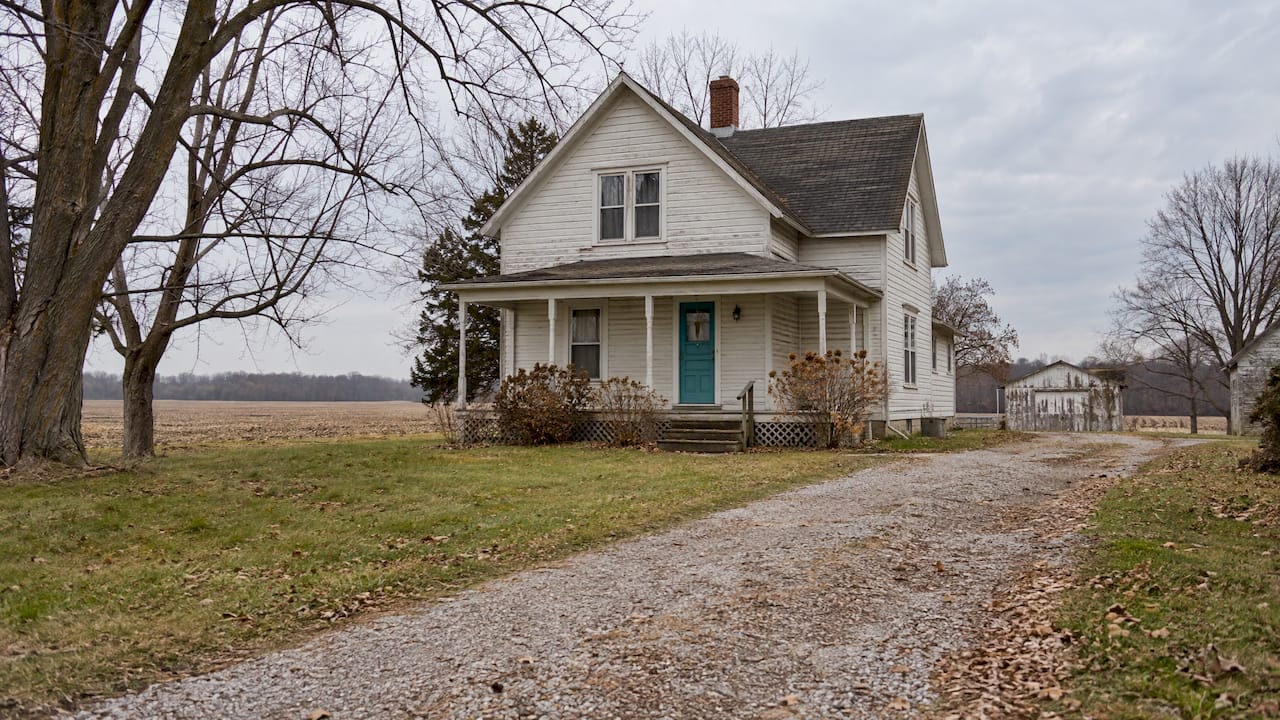
The fastest way to sell a rural house in Indiana is to sell it directly to a local cash buyer, as-is. You skip the listing, the showings, the repair list and the wait for a buyer's financing. Rural homes are harder to sell the traditional way because the pool of buyers is smaller and the questions are harder: well, septic, a gravel lane, a barn that may or may not add value. If you are facing foreclosure, relocating, settling an estate or done with a rental, those questions cost you time you may not have.
We buy houses in Northwest Indiana for cash, in any condition, with no repairs, no cleaning and no closing costs paid by you. Some sellers report closing in as little as five days. The rest of this guide covers what a rural property is worth, what paperwork Indiana requires, and how to handle foreclosure, inheritance and tenants.
TL;DR
- A cash sale to a local direct buyer skips listing, repairs and buyer financing, which is where rural sales usually stall.
- Rural value depends on acreage, well and septic, access and outbuildings, so a quick, honest as-is offer saves you from guessing.
- Indiana sellers of 1 to 4 unit homes generally must give buyers a signed disclosure form, with exceptions for estates, foreclosures and divorce decrees.
- Foreclosure, probate and tenants each have their own Indiana rules and clocks. Start early, because options narrow as dates approach.
- Our service charges sellers no fees or commissions and covers closing costs.
Table of Contents
- Why rural houses are slow to sell the traditional way
- How the quick sale methods compare
- What a rural house is actually worth
- What Indiana requires you to disclose
- What you may owe when you sell
- If you are facing foreclosure
- If you inherited the house
- If you are a landlord with a troublesome tenant
- If you are relocating
- What the cash sale process looks like
- Our perspective: speed matters most on rural property
- Get a cash offer for your Indiana house
- FAQ
- Sources
Why rural houses are slow to sell the traditional way
A suburban three-bedroom competes with dozens of similar listings. A farmhouse on eight acres competes with almost nothing, which sounds good until you realize buyers are scarce too. Many need a mortgage, and lenders look hard at rural properties: private wells, septic systems, shared driveways and older outbuildings all get scrutiny. A deal that falls apart at appraisal or inspection can cost you weeks, and you start over.
The traditional route also asks you to do work before you sell: clean out the house, fix the roof, mow the acreage, stage the photos, keep the place showable. If the house was inherited, is vacant, or has deferred maintenance, that is real money and time spent before you see a dollar.
A direct cash sale reverses this. The buyer takes the property as it stands, so you do not repair, clean out or negotiate against an inspection report. That is the core of what we do: we purchase houses, mobile homes, duplexes, land and other property types in as-is condition for cash, and the seller pays no closing costs. Our model is simple: we buy the property ourselves and earn our return on resale or rental, which is why sellers pay no commission or fees.
How the quick sale methods compare
There are three broad ways to sell a rural house, and they differ mostly in speed and in how much work lands on you.
| Method | Typical effort for you | Speed driver | Main risk |
|---|---|---|---|
| Direct cash sale to a local buyer | Share the address, acreage and condition; pick a closing date | Cash, no financing contingency | None of the usual repair or showing work |
| Agent listing | Repairs, cleaning, showings, negotiation | Waiting for a qualified buyer | Financing or inspection can collapse a contract |
| Auction | Prepare the property and the marketing period | Fixed auction date | Price depends on who attends that day |
If your reason for selling is urgent, the first row is the one built for it. Our process starts with a conversation about the property, and you can see the steps on how our process works in Indiana. We also offer flexible closing dates, so if you need a week or need to stay in the house for a while after the sale, the closing can be set around that.
What a rural house is actually worth
Price is where rural sellers feel least certain. Indiana's own assessment method shows why. The state's Department of Local Government Finance teaches assessors a cost approach: land value, plus the replacement cost of the buildings, minus depreciation. It treats up to one acre per residential dwelling as the homesite and values any extra acreage at a separate rate.
That gives you a useful way to think about your own property in three pieces:
- The homesite. The house and about an acre around it.
- The excess acreage. Land beyond the homesite, valued differently from the yard.
- The improvements. Well, septic, driveway, barns, sheds and other outbuildings.
The state's assessment guidelines also value improved land as the cost of vacant land plus the depreciated cost of a water well and septic system, or utility hook-up fees where public utilities exist, plus items like the driveway and walkways. In plain terms, a working well and septic are part of the value, and a property without them is worth less to a buyer who has to install them.
Two things commonly change a rural number:
- Access. A property reached by a private easement or shared lane is easier to finance and sell when the right to cross that land is written down and recorded.
- Outbuildings. A sound barn that a buyer can use is worth something. A leaning pole barn may be worth nothing, or may cost money to remove. Value comes from what a buyer would actually pay for the building, not what it cost to build.
Condition also matters at the margin. Fresh exterior work such as driveways, fencing and landscaping, the kind of thing exterior remodeling and site work contractors handle, can shape a buyer's first impression of a property. In a traditional sale you would weigh whether that spending pays back. In an as-is cash sale you do not have to make that bet, because the offer already accounts for the property's condition.
A tax assessment is a starting reference, not a market price. Your best read comes from comparing the assessment, the acreage and the condition with an offer from a buyer who knows your county.
What Indiana requires you to disclose
Indiana sellers of one to four unit residential property must complete the state's Seller's Residential Real Estate Sales Disclosure (State Form 46234) under IC 32-21-5. The owner signs it and gives it to a prospective buyer before an offer is accepted. The form covers the condition of items such as the structure, water and sewage systems, and known defects.
It is not required for certain transfers: court-ordered transfers including estate administration, foreclosure sales, bankruptcy trustee transfers, eminent domain, divorce decrees, and transfers by a lender that acquired the property at foreclosure or by deed in lieu.
For rural houses, the well and septic answers matter most. Answer honestly and completely. For a plain-language walk-through of what to say and what happens if you leave something out, see our guide to seller disclosure in Indiana. When you sell to us as-is, you are not asked to repair anything you disclose.
What you may owe when you sell
Selling through a traditional agent usually brings commission, title and closing fees, prorated property taxes and payoff of any mortgage. With us, you pay no fees or commissions and we cover closing costs. Your mortgage balance and any unpaid property taxes still come out of the sale proceeds, as with any sale.
Taxes depend on your situation, and a tax professional can confirm your numbers. Two federal rules cover most sellers:
- Main home exclusion. Under IRS Publication 523, you may exclude up to $250,000 of gain ($500,000 if married filing jointly) on a main home if you owned and lived in it for at least 24 months of the 5 years before the sale, and have not used the exclusion in the prior 2 years. This edition is from 2016, so check the current publication on irs.gov for any updates.
- Inherited homes. The same publication says an heir's basis is generally the property's fair market value on the date of the owner's death. Because your starting figure is the value at death, a sale soon after inheriting often produces little taxable gain. A CPA can confirm this for your estate.
A rural house with acreage may not meet the "main home" test if it was a rental, a vacation property or an inherited farm. That is a reason to talk to a tax professional before closing, not a reason to wait on the sale.
If you are facing foreclosure
A rural house in foreclosure is a time problem. Indiana's Attorney General explains that lenders must tell homeowners about their right to request a settlement conference at the start of foreclosure proceedings. If you request one, the judge cannot sign the foreclosure order until it has taken place. The Indiana Foreclosure Prevention Network offers free guidance at 1-877-438-4673 (1-877-GET-HOPE).
Use that time. Request the conference, call the hotline, and in parallel find out what a cash sale would bring. If the offer covers your payoff, selling before the sheriff's sale can protect your credit and keep any equity in your pocket rather than leaving it to the auction.
Two of our guides lay out the clock in detail: the Indiana foreclosure timeline and the foreclosure process. If the date is close, read about an emergency home sale to stop foreclosure. For legal advice about your case, including whether to file for bankruptcy or contest the foreclosure, speak with an Indiana attorney or a HUD-approved housing counselor.
Liens complicate things, because a buyer wants clean title. If you have a second mortgage, contractor lien or judgment attached to the property, see how it works to sell a house with liens in Indiana.

If you inherited the house
Inherited rural houses are often vacant, full of belongings, and years behind on repairs. Heirs live in other cities and want to close the chapter. Two Indiana rules help you plan.
The small estate affidavit lets heirs skip full probate when the estate is small. Under Indiana Code 29-1-8, it applies 45 days after death when the probate estate, less liens, encumbrances and reasonable funeral expenses, does not exceed $100,000 for deaths after June 30, 2022. That threshold was $50,000 before that date. No personal representative can be pending or appointed. The same chapter allows an affidavit with the legal description and each heir's share to be recorded with the county recorder when the estate includes real property.

Because a house, especially one with acreage, often pushes an estate past that limit, many heirs need probate. Our guides cover small estate affidavits versus probate and the Indiana probate process. Which route applies to your family is a question for a probate attorney, who can also tell you what the title company will need to see before closing.
While that gets sorted, the house still costs you: taxes, insurance, utilities and mowing. A cash buyer who takes the house as it stands, with the belongings and the deferred maintenance, ends that spending and spares you the cleanout.
If you are a landlord with a troublesome tenant
A rural rental with a tenant who does not pay or does not leave can feel impossible to sell, because showings are hard and buyers want vacant property. We buy rental properties, and the process can be set around your situation, including the move-out schedule. If the property is already in foreclosure and has tenants, federal law protects bona fide tenants: the new owner must generally give at least 90 days' notice, so confirm the lease terms with your attorney before you commit to a closing date.
If you are relocating
Relocation sales fail when the house sells slower than the job starts. A cash sale with a closing date you choose lets you line up the move: you can pick a date days out, or later if you need time to finish the school year. You are not carrying two housing payments while a listing waits for a qualified buyer, and you do not need someone local to host showings on a property you have already left.
What the cash sale process looks like
- Tell us about the property. Address, acreage, condition, any liens or mortgage, and your deadline.
- Receive a cash offer. It reflects the property as-is, including well, septic, access and outbuildings.
- Choose your closing date. We offer flexible dates, and some sellers have closed in as little as five days.
- Close with no cost to you. No commission, no fees and no closing costs paid by the seller.
We buy houses, condos, duplexes, townhomes, mobile homes, commercial property, apartment buildings and land. If you own an apartment building, see how to sell an apartment building in Indiana.
Our perspective: speed matters most on rural property
We started buying houses because we saw how much pressure a slow sale puts on people. A rural house multiplies it. The buyers are fewer, the driveway is long, the well and septic raise questions, and the family or owner is often hours away.
We are a local buyer, not a hedge fund or a national investor. We buy directly, we explain the offer plainly, and we do not charge sellers commissions or fees. We cover closing costs. A fair cash offer on an as-is house lets you skip the repairs, the cleanout and the open houses.
If you tell us the address, the acreage and your timeline, we will tell you honestly what we can do. Speed and honesty are what we are built around.
Daniel
Get a cash offer for your Indiana house
If you own a house in Northwest Indiana and want to sell without repairs, showings or fees, we can make you a cash offer. Tell us about the property and your timeline, and we will work to a closing date that suits you. Start at our Sell Your House For Cash page.

We also buy in local markets such as Highland and Hammond. Visit our home page for more on how we work.
FAQ
What is the quickest way to sell a rural house in Indiana?
A direct cash sale is the quickest route because there is no listing period, no buyer financing to wait on and no repairs. Some of our sellers report closing in as little as five days. You also choose the closing date, so the sale can match your timeline.
Do I have to repair my rural house before selling?
Not when you sell to us. We buy houses in as-is condition, with no repairs, no cleaning and no closing costs paid by the seller. You still complete Indiana's seller disclosure form where it applies, and you should answer it honestly.
Do I pay taxes when I sell my house in Indiana?
Possibly, depending on your gain and how you used the property. Federal rules let many sellers exclude up to $250,000 of gain ($500,000 for married couples filing jointly) on a main home, and inherited homes generally start with the value at the date of death. A tax professional can confirm your figures.
Can I sell a house that is in foreclosure?
Yes, if you sell before the sheriff's sale. Request your settlement conference and call 1-877-438-4673 for free guidance. Then find out what a cash sale would bring, ideally with enough time to close before the sale date.
Can I sell an inherited rural house before probate is finished?
It depends on how title passes and what the title company requires. Small estates under $100,000 may use an affidavit, but larger estates usually need probate. Talk to an Indiana probate attorney, then contact us about timing.
Sources
- Seller's Residential Real Estate Sales Disclosure, State Form 46234
- Indiana DLGF: Cost Approach and Real Property Assessment
- Indiana DLGF: Assessment Guidelines, Chapter 1
- IRS Publication 523
- Indiana Attorney General: Homeowner Protection
- Indiana Code 2026, Title 29, Article 1, Chapter 8