
Selling a furnished home means transferring ownership of the property along with its furniture, creating a turnkey experience that can accelerate closing and attract a specific pool of motivated buyers. Understanding how selling furnished home works gives you a real edge, whether you are relocating fast, selling an inherited property, or offloading a vacation rental. The right approach can command a meaningful price premium, but it also requires honest furniture assessment, clear contract documentation, and a strategy matched to your timeline. This guide covers every stage of the furnished home sale process, from pricing to paperwork to negotiation.
How does selling furnished versus unfurnished affect price and timeline?
Selling a furnished property is not simply about convenience. It is a financial decision with measurable consequences for both price and time on market.
Well-furnished properties in investor and vacation rental markets can command a 15–25% price premium over comparable unfurnished homes. That premium holds only when the furniture is quality and the income documentation is clean. Buyers paying above market expect the property to be genuinely turnkey, not a collection of worn pieces they will need to replace.

The timing difference is equally significant. Furnished homes in high-demand markets sell in 10–20 days on average, while empty homes may take 45–60 days. Faster sales reduce carrying costs, including mortgage payments, insurance, and utilities, which adds real money back to your net proceeds.
Furnished sales work best in three situations:
- Vacation rental markets where investors want immediate income without setup costs
- Relocation scenarios where the seller cannot transport furniture and the buyer wants a move-in-ready home
- Inherited properties where clearing the home is impractical and the estate needs a fast resolution
Unfurnished listings can attract a broader pool of primary homebuyers who want to bring their own furniture and personalize the space. If your timeline is flexible and your target buyer is a family or first-time purchaser, selling unfurnished may generate more competing offers. The furnished home sale process is a strategy, not a universal rule.
What legal and contractual steps protect you when selling furnished?
Furniture is legally personal property. It does not attach to the real estate, and mortgage lenders do not finance it. That distinction creates a documentation requirement that many sellers overlook, and overlooking it causes closing delays or appraisal problems.
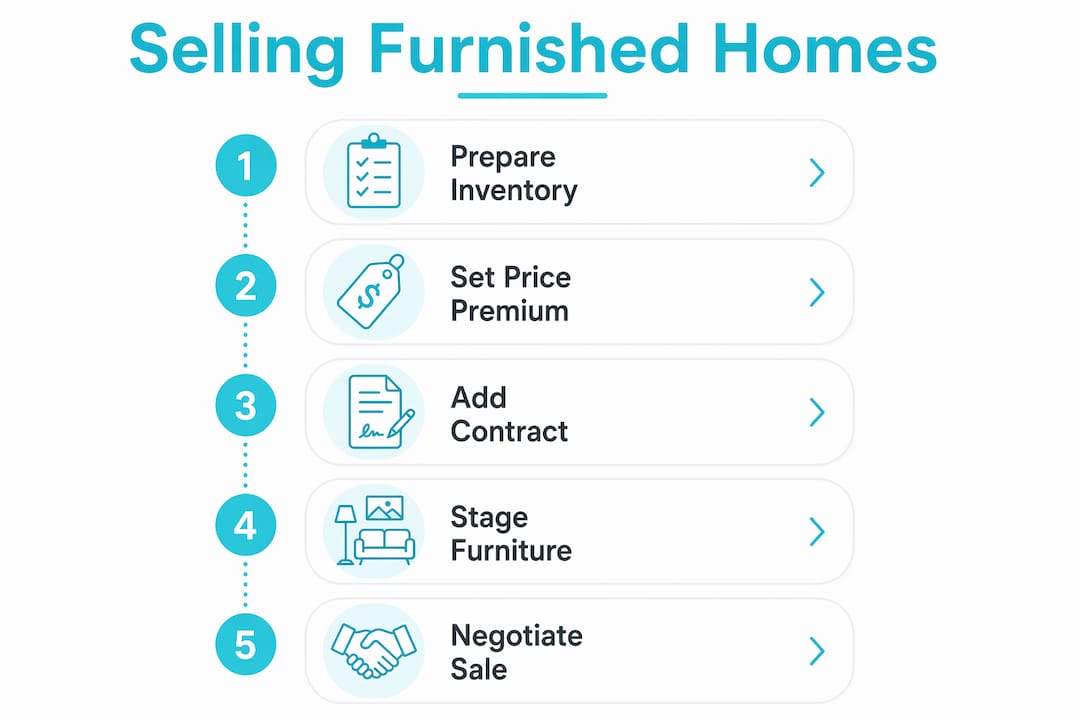
The correct approach follows four steps:
- Create a personal property addendum. List every piece of furniture included in the sale by room, description, and condition. A detailed personal property addendum prevents disputes at closing and sets clear buyer expectations from the start.
- Separate furniture value from real estate value in the contract. Lenders appraise real estate only. If the contract bundles furniture into the purchase price without separation, the appraisal may come in low and the deal can fall apart.
- Allocate the sale price between real estate and personal property. This matters for tax purposes. Allocating the price correctly can minimize taxable gain on the real estate portion and requires a detailed furniture inventory to support the allocation.
- Have an attorney or title company review the addendum. Furnished sales add a layer of complexity that standard purchase agreements do not always address. A quick legal review costs far less than a failed closing.
Pro Tip: Keep a spreadsheet of every included furniture item with photos, estimated age, and replacement value. This document supports your addendum, your tax allocation, and any buyer negotiation about what stays or goes.
Sellers who skip the addendum often face buyers who assume everything in the house is included, then dispute specific items at closing. The paperwork is straightforward. The disputes are not.
How can you stage and present furniture to maximize buyer appeal?
The quality of your furniture matters more than the quantity. Including worn or dated furniture causes buyer objections and price reductions. Buyers mentally calculate what it will cost to replace pieces they do not want, and they subtract that estimate from their offer.
A calm, simplified staging approach is the most effective method. The goal is to show function and scale without clutter or over-personalization. Buyers need to picture themselves in the space, not feel like they are walking through someone else's home.
Practical furnished home selling tips for presentation:
- Remove personal items. Family photos, collections, and personalized decor make rooms feel occupied rather than inviting. Pack them before listing.
- Edit the furniture count. A living room with two sofas, four chairs, and three side tables reads as crowded. Remove pieces that block sightlines or make rooms feel smaller.
- Replace or remove visibly damaged pieces. A scratched dining table or a stained sofa signals neglect to buyers. Either replace the item or remove it from the sale.
- Keep bedrooms neutral. Bright or heavily themed bedding reduces buyer imagination. Neutral linens photograph better and appeal to more people.
- Highlight functional spaces. A well-set dining table or a clean home office setup helps buyers see how they would actually use the home.
Pro Tip: Hire a professional photographer after staging. Furnished homes photograph well when staged correctly, and listing photos drive the first impression for most buyers searching online.
The best furnished home presentations balance warmth and scale. They show a livable space without making buyers feel the home is cluttered or hard to maintain. Sellers who sell directly often skip staging entirely, which is one reason cash buyers are attractive for furnished properties in any condition.
What negotiation strategies work best for furnished home sales?
The most effective negotiation approach for a furnished sale is the hybrid listing. Listing as turnkey with furniture negotiable attracts both investors who want everything included and primary buyers who may prefer to bring their own pieces. This flexibility preserves your maximum price potential while widening your buyer pool.
Three negotiation tactics that work in practice:
- Price the real estate at full market value. Do not discount the home to account for furniture. Instead, list the furniture as an included bonus or a negotiable add-on. Buyers who want it will pay for it. Buyers who do not want it will negotiate its removal, which costs you nothing.
- Know your timeline before you negotiate. Sellers needing to close in under 60 days almost always benefit from selling furnished. Liquidating furniture separately through estate sales or online marketplaces can maximize recovered value, but liquidating separately typically requires 4–6 months. If your timeline is tight, the furnished sale is the practical choice.
- Match your pitch to the buyer type. Investor buyers respond to income potential and turnkey readiness. Second-home buyers respond to lifestyle appeal and move-in convenience. Primary homebuyers often prefer flexibility. Tailor your furniture conversation to what each buyer actually values.
| Buyer type | What they value | Best furniture approach |
|---|---|---|
| Investor | Immediate rental income | Full turnkey, all furniture included |
| Second-home buyer | Move-in convenience | Turnkey with negotiable exclusions |
| Primary homebuyer | Personalization | Furniture optional or removed |
Sellers with unwanted properties or inherited homes often find the investor buyer the fastest path to closing. Investors are accustomed to furnished purchases and rarely object to furniture quality the way primary buyers do.
Key Takeaways
Selling a furnished home works best when furniture quality, contract documentation, and buyer type alignment are all handled deliberately before listing.
| Point | Details |
|---|---|
| Price premium potential | Well-furnished properties can command a 15–25% premium over comparable unfurnished homes in the right markets. |
| Faster closing timeline | Furnished homes sell in 10–20 days on average versus 45–60 days for empty properties. |
| Legal documentation required | A personal property addendum listing every included item protects both seller and buyer at closing. |
| Staging quality matters | Worn or dated furniture causes price reductions; simplified, neutral staging drives stronger offers. |
| Hybrid listing strategy | Listing as turnkey with negotiable furniture attracts more buyer types and preserves maximum price. |
What I have learned from watching furnished home sales go wrong
Sellers consistently underestimate how much furniture condition affects buyer psychology. A home priced at $350,000 with a worn sectional and a scratched dining set does not feel like a $350,000 home to a buyer walking through it. The furniture becomes the story, and the story is "this place needs work." That perception costs sellers far more than the furniture is worth.
The second mistake I see regularly is skipping the personal property addendum. Sellers assume the buyer understands what is included. Buyers assume everything they saw during the showing is part of the deal. When those assumptions collide at closing, the transaction stalls or falls apart. A one-page addendum eliminates that risk entirely.
The third thing most articles do not tell you: the furnished versus unfurnished decision should be made based on your local comparable sales data, not on general advice. What works in a vacation rental market in Florida may not work in a Northwest Indiana neighborhood where buyers are primarily families. The furnished real estate market behaves differently by location, buyer type, and price point. Know your market before you decide.
My honest recommendation for sellers who need speed above all else: skip the staging debate and contact a cash buyer directly. Dan buys houses handles furnished properties in any condition, which means you avoid the furniture quality conversation entirely. That is not always the highest-dollar path, but for sellers facing foreclosure, relocation, or an inherited property with a full house of furniture, it is often the fastest and least stressful one.
— Daniel
Selling your furnished home fast with Dan buys houses
Figuring out how to price furniture, stage rooms, and negotiate inclusions takes time most sellers do not have. Dan buys houses makes the process straightforward for homeowners in Northwest Indiana who need to sell quickly, regardless of what is inside the home.

Dan buys houses purchases furnished properties in any condition, with no repairs, no open houses, and no drawn-out negotiations. Some sellers close in as little as five days. The process is simple: you describe the property, receive a cash offer, and choose your closing date. There is no cost to you and no obligation to accept. If you are ready to skip the furniture debate and move forward, get a cash offer today and see what your home is worth.
FAQ
Does furniture increase a home's sale price?
Quality furniture can add a 15–25% premium in investor and vacation rental markets. Worn or dated furniture typically reduces the final price through buyer concessions.
Do I need a separate contract for furniture when selling?
Yes. Furniture must be documented in a personal property addendum separate from the real estate contract. Lenders do not finance personal property, and mixing the two can cause appraisal and financing problems.
How long does it take to sell a furnished home?
Furnished homes in active markets sell in 10–20 days on average. Empty homes in the same markets typically take 45–60 days, making furnished sales the faster option for sellers with tight timelines.
Can I sell my furnished home as-is to a cash buyer?
Yes. Cash buyers like Dan buys houses purchase furnished homes in any condition, which eliminates the need for staging, repairs, or furniture removal before closing.
Should I remove furniture before listing my home?
It depends on the furniture quality and your target buyer. Neutral, quality furniture staged simply helps most listings. Worn, cluttered, or heavily personalized furniture is better removed before listing to avoid buyer objections and price reductions.