
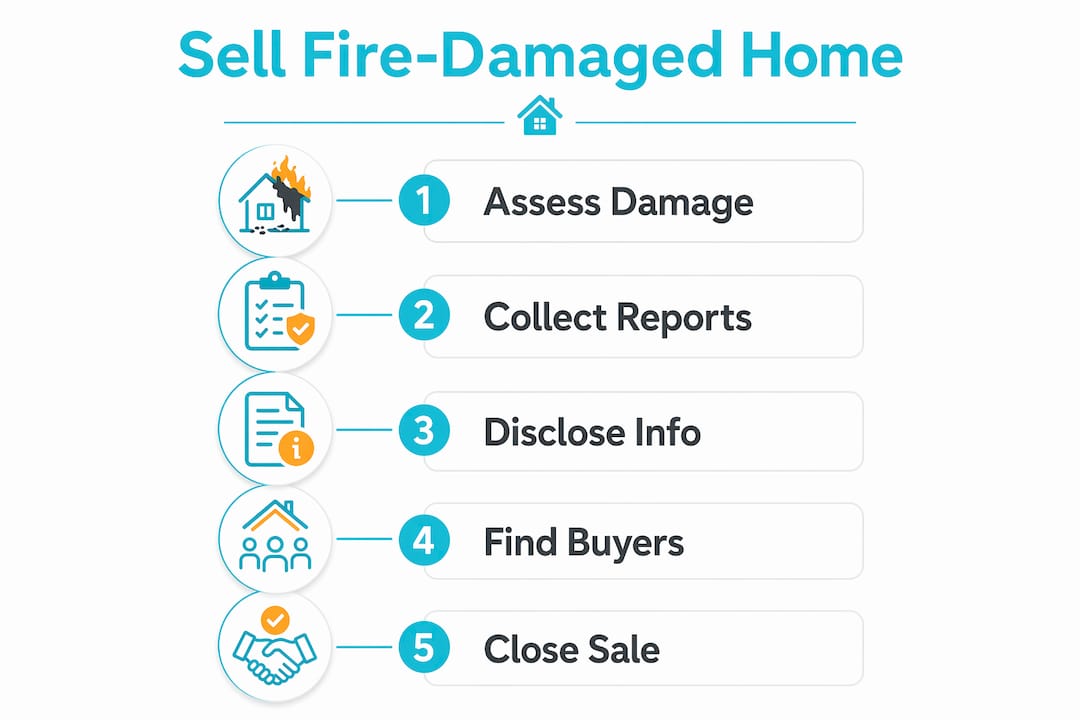
Selling a fire-damaged home as-is means transferring the property in its current damaged state, without making any repairs, directly to a cash buyer who can close in as little as 7 to 21 days. The industry term for this transaction is an "as-is distressed property sale," and it is the fastest exit available to homeowners after a fire. Mortgage lenders almost universally refuse to finance severely fire-damaged homes, which means traditional buyers are rarely an option without costly repairs first. Cash buyers fill that gap. You can even sell fire damaged home as-is while your insurance claim is still open, since the sale and insurance settlement are completely separate transactions.
What must you disclose when selling a fire-damaged home?
Fire damage disclosure is mandatory in every U.S. state. Skipping it is not a gray area. Hiding damage risks failed sales and serious legal consequences, including lawsuits after closing. Buyers will conduct inspections and pull fire department reports, and those reports can take 2–4 weeks to be released. Transparency is not just a legal requirement. It is the fastest path to a closed deal.
What you are required to disclose typically includes:
- Known structural damage from fire, heat, or smoke
- Water damage caused by firefighting efforts
- Mold or air quality issues that developed after the fire
- Any insurance claims filed on the property
- Prior fire incidents, even if repairs were made
Buyers who specialize in fire-damaged properties expect damage. They price it in. What kills a deal is discovering undisclosed damage during due diligence, which forces renegotiation or cancellation. For a detailed breakdown of your legal obligations in Indiana, the real estate disclosure guide from Dan buys houses covers exactly what sellers must provide.
Pro Tip: Request a copy of the fire department incident report yourself before listing. Giving it to buyers upfront signals honesty and speeds up their due diligence process.
How do you prepare a fire-damaged property for a quick sale?
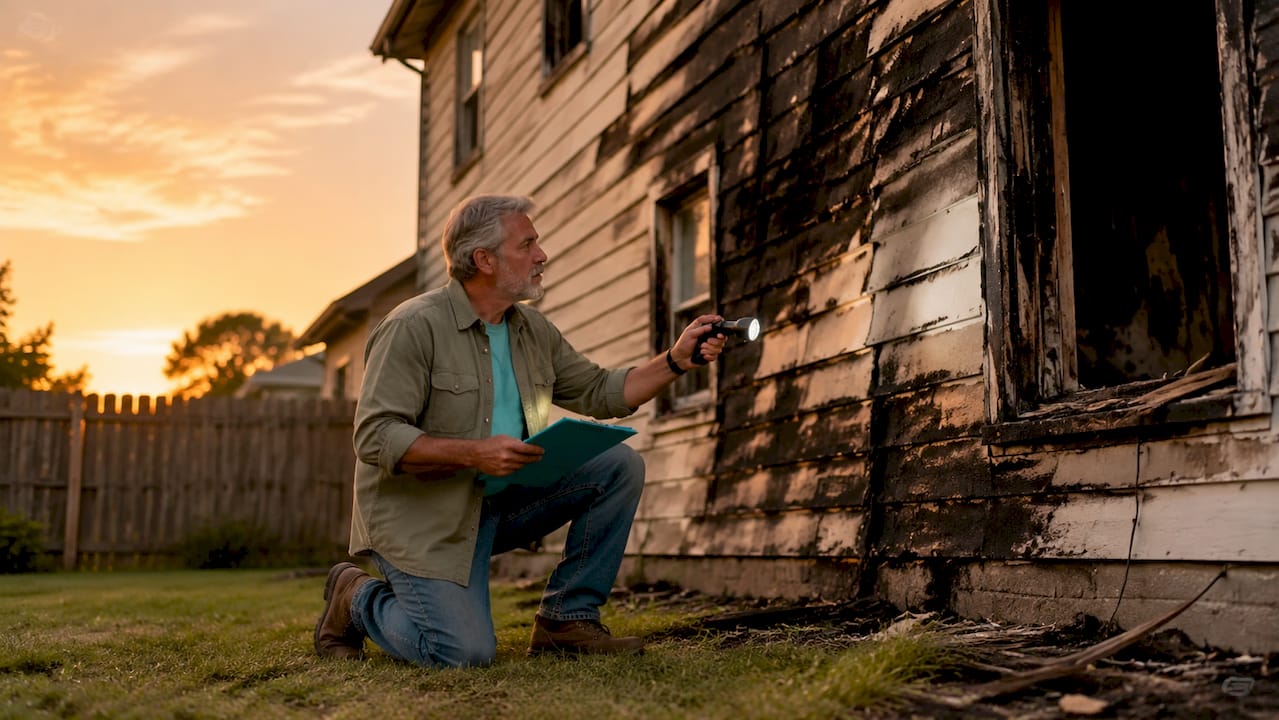
Preparation for an as-is fire damage home sale does not mean repairs. It means organizing your paperwork and making the property accessible. Buyers need information more than they need a clean house. Immediate action after fire damage is critical because delays increase costs and reduce buyer interest.
Follow these steps to get ready fast:
- Gather your insurance documents. Collect your policy, any claims filed, and the adjuster's damage estimate. Buyers want to know what the insurer assessed.
- Obtain the fire incident report. Contact your local fire department. This report documents cause, scope, and responding units.
- Clear accessible debris if it is safe. You do not need a full cleanup, but removing loose debris helps buyers assess the structure. Never enter areas with compromised ceilings or floors without professional clearance.
- Prepare your seller disclosure forms. Complete these honestly before any buyer walks the property. Your real estate attorney or a cash buyer like Dan buys houses can provide the correct forms for Indiana.
- Document the damage with photos and video. A thorough visual record protects you legally and gives remote buyers enough information to make preliminary offers.
- Communicate condition clearly and early. State the damage scope in your first conversation with any buyer. Surprises during inspection kill deals.
Understanding what as-is home sale paperwork looks like before you start saves time and prevents last-minute delays at closing.
Pro Tip: Ask your insurance adjuster for a written scope of loss document. It lists every damaged item and system in the home, and cash buyers treat it like a blueprint for their offer.
Selling as-is vs. repairing first: which makes financial sense?
The financial case for selling as-is is stronger than most homeowners expect. Typical repair costs after fire damage range from $3,107 to over $51,000 depending on severity, and that figure does not include carrying costs like property taxes, utilities, and insurance during the repair period. Those monthly costs add up fast when repairs take three to six months.
Cash offers for fire-damaged homes typically range between 55% and 75% of the property's after-repair value. That discount sounds steep until you subtract what you would spend to reach that after-repair value in the first place. Cash sales also eliminate broker commissions of 5–6%, staging costs, and months of carrying expenses that eat into equity during a traditional sale.
Here is a direct comparison:
| Factor | Sell As-Is for Cash | Repair and List Traditionally |
|---|---|---|
| Sale timeline | 7–30 days | 3–6 months |
| Repair costs | $0 | $3,107–$51,000+ |
| Broker commission | $0 | 5–6% of sale price |
| Staging and prep | $0 | $1,000–$5,000+ |
| Carrying costs | Minimal | Months of taxes, utilities, insurance |
| Buyer pool | Cash buyers only | Broader, but financing-dependent |
| Offer price | 55–75% of ARV | Closer to full ARV |
The math often favors the as-is route. A homeowner with a $200,000 after-repair value property might receive $130,000 to $150,000 from a cash buyer. After $40,000 in repairs, a 6% commission, and four months of carrying costs, the net from a traditional sale can land in the same range or lower. Selling a burnt house quickly removes the financial uncertainty entirely.
For a deeper look at how selling directly benefits homeowners in Northwest Indiana, the numbers are consistent with this pattern.
How do you find cash buyers for fire-damaged homes?
Not all cash buyers are equal. Some are individual investors with limited capital. Others are professional buying companies with established processes and the ability to close on your schedule. The right buyer for a fire damaged property sale understands distressed homes, moves fast, and does not retrade the offer after inspection.
Where to find qualified cash buyers:
- Local real estate investment groups. Search for REIA (Real Estate Investors Association) chapters in your area. Members actively seek distressed properties.
- Specialized cash buying companies. Companies like Dan buys houses focus specifically on buying homes in any condition in Northwest Indiana. They have the experience to assess fire damage accurately and close without delays.
- Online platforms. Sites that connect sellers with investors can generate multiple offers, though vetting buyers for credibility takes extra time.
Cash buyers assess properties based on land value, remaining structure, and rehab or demolition costs before making offers. Understanding this helps you evaluate whether an offer is fair. A low offer on a property with a strong land value and minimal structural damage is worth pushing back on.
What to watch for when working with cash buyers:
- Proof of funds. Any serious buyer provides a bank statement or proof of funds letter before you accept an offer.
- No-fee agreements. Legitimate cash buyers do not charge sellers fees or commissions.
- Clear closing timelines. Get the expected closing date in writing before signing anything.
- Inspection terms. Understand whether the buyer will inspect and whether the offer can change after inspection.
The home conditions cash buyers accept vary by buyer, so confirming fire damage experience upfront prevents wasted time on both sides.
Key takeaways
Selling a fire-damaged home as-is to a cash buyer is the fastest and often most financially sound option when repair costs, carrying expenses, and a limited buyer pool make traditional sales impractical.
| Point | Details |
|---|---|
| As-is means no repairs required | Cash buyers purchase fire-damaged homes in current condition, closing in 7–30 days. |
| Disclose everything upfront | Full disclosure is legally required and speeds up closings by preventing inspection surprises. |
| Cash offers reflect real math | Offers of 55–75% of ARV often net sellers more than repairing and listing traditionally. |
| Insurance claims do not block sales | You can sell while a claim is pending; the sale and settlement are separate transactions. |
| Vet buyers carefully | Require proof of funds, no-fee agreements, and a written closing timeline before signing. |
What i've learned from buying fire-damaged homes directly
I have sat across the table from homeowners who just watched their house burn. The emotional weight of that moment is real, and I respect it. But I have also seen what happens when homeowners wait too long, hoping the insurance payout will cover everything or that a traditional buyer will appear. It rarely works out that way.
The homes that sell fastest are the ones where the seller leads with honesty. Every detail disclosed upfront, every document ready, every question answered before it is asked. That transparency does not just build trust. It removes the friction that slows closings. Buyers who specialize in fire damage real estate are not scared off by damage reports. They are scared off by sellers who seem to be hiding something.
The financial reality is also more favorable than most homeowners realize when they first call me. They assume they are going to take a massive loss. When we actually run the numbers together, factoring in repair bids, commission, carrying costs, and the time value of money, the as-is cash offer often comes out ahead. Not always, but more often than people expect.
My honest advice: get at least two or three cash offers before deciding. A single offer gives you no reference point. Multiple offers show you the real market for your property in its current condition. And if you are in Northwest Indiana, I am one of those calls worth making.
— Daniel
Get a cash offer on your fire-damaged home in indiana
If you are ready to sell your fire-damaged property without repairs, fees, or months of waiting, Dan buys houses makes the process straightforward. We buy homes in any condition across Northwest Indiana, including Hammond, Hobart, and Highland.

The process is simple. You share details about your property, we assess it honestly, and we present a no-obligation cash offer. If you accept, we handle the paperwork and close on your schedule. Some sellers close in as little as five days. There are no commissions, no repair demands, and no surprises. See exactly how we buy houses in Indiana, or go straight to request your offer and get the process started today.
FAQ
Can i sell a fire-damaged home without making any repairs?
Yes. Cash buyers purchase fire-damaged properties in their current condition, with no repairs required before closing. The buyer takes on the cost and responsibility of repairs after the sale.
How long does it take to sell a fire-damaged home for cash?
Cash buyers can close in as little as 7 to 21 days, compared to 3–6 months for a traditional sale that requires repairs and mortgage financing.
Do i have to wait for my insurance claim to settle before selling?
No. You can sell a fire-damaged home while a claim is still pending. The insurance settlement and home sale are separate transactions, and you may keep or assign remaining claim proceeds.
What percentage of value will a cash buyer offer for a fire-damaged home?
Cash offers typically range between 55% and 75% of the property's after-repair value. That discount often nets sellers a comparable or better outcome once repair costs, commissions, and carrying costs are subtracted from a traditional sale.
Is it legal to sell a house with fire damage without disclosing it?
No. Disclosure of known fire damage is legally required in all U.S. states. Concealing damage exposes sellers to lawsuits and can void the sale after closing.