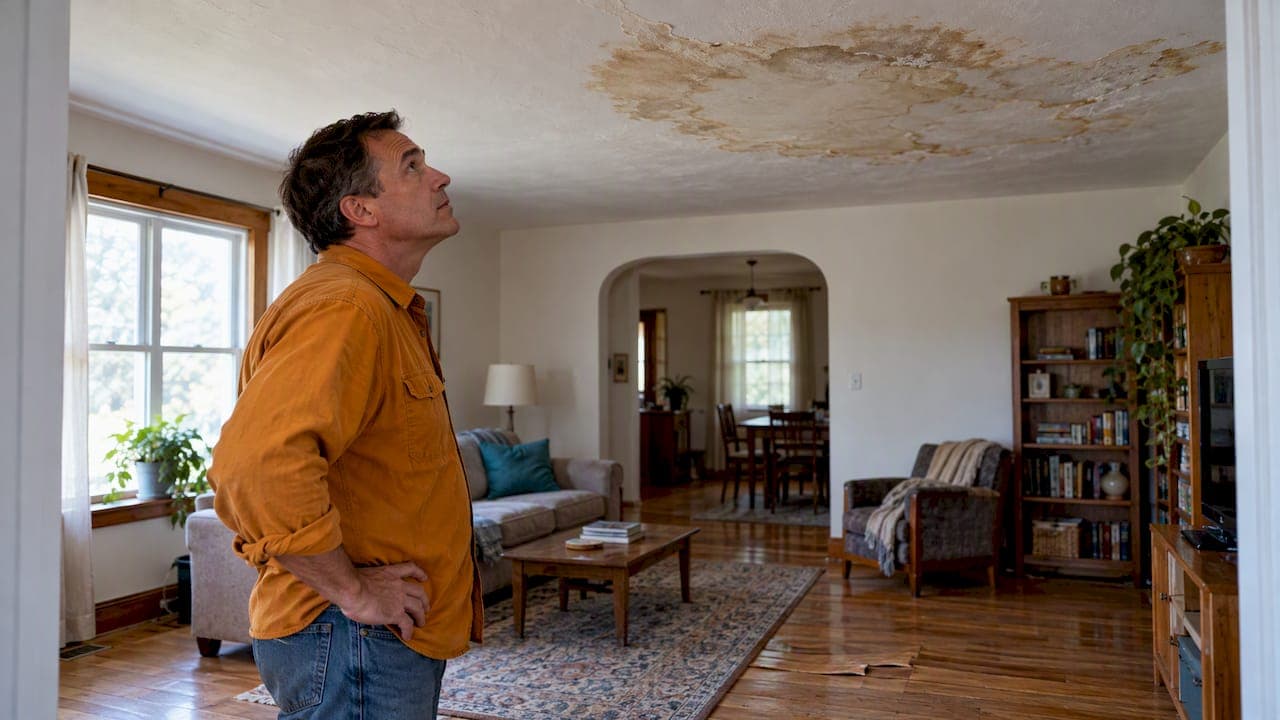
Yes, you can sell a home with water damage, but the route you pick decides your price, your timeline, and who's even allowed to buy it. Repair first and you keep the traditional buyer pool open. Sell as-is and you trade some price for speed. Either way, stop active leaks, document the damage, and call your insurer before you do anything else.
TL;DR:
- Disclosure rules vary by state, but sellers should report known flooding, leaks, claims, unfinished remediation, or active moisture problems and support statements with dated records.
- Dry wet materials within 24 to 48 hours; mold covering more than 10 square feet, larger jobs, or contaminated water call for professional remediation.
- Financed buyers face inspection, appraisal, lender repair, and insurance hurdles, while cash buyers may accept homes as they stand and close within days.
- Get a contractor’s estimate, compare repair costs with likely net proceeds and insurance payments, and fix the moisture source before cosmetic work.
Table of Contents
- Can you sell a house with water damage? The buyer paths you should expect
- Disclosure duties: what you must (and should) tell buyers and how to record it
- Inspections, appraisal and insurance: what can block a financed sale
- Repair-first vs as-is sale: cost, timeline and which buyers each route reaches
- Documenting fixes and mitigation: exact evidence buyers want to see
- Seller step-by-step checklist from discovery to closing
- Author perspective: when a fast cash sale is the practical choice
- How Dan Buys Houses can help sellers of water-damaged homes
- FAQ
- Sources
Can you sell a house with water damage? The buyer paths you should expect
Selling is legal and common; the real question is which buyer pool fits your situation. Three practical paths exist, and each one changes your timeline, your net proceeds, and who's willing to sign a contract.
- Repair-first: you fix the damage, then list for traditional financed buyers who need a clean appraisal and inspection.
- As-is cash sale: you sell to an investor or cash buyer who accepts the current condition and prices in the repair risk.
- Hybrid approach: you offer seller concessions, a repair credit, or seller financing to widen your buyer pool without finishing the work yourself.
Financed buyers almost always trigger a lender-ordered appraisal and a home inspection, and both can stall or kill a deal when water damage shows up unresolved. Cash buyers skip most of that friction because they're not relying on a lender's underwriting standards. According to the Consumer Financial Protection Bureau, a water-damaged home can still sell, but the buyer pool and sale path shift: financed buyers face appraisal and insurance hurdles, while cash buyers may purchase as-is at a discounted offer.
If you can't front repair costs, need to close within weeks rather than months, or are managing an inherited or vacant property you can't maintain, the as-is route is often the realistic choice rather than a compromise.
Disclosure duties: what you must (and should) tell buyers and how to record it
There's no single nationwide law requiring every seller to disclose flood or water damage history. Disclosure duties come from state law and from what you actually knew at the time of sale, not from a universal federal form. The CFPB notes that many states require sellers to share condition information, and that FEMA's model disclosure language is a proposal, not a binding nationwide rule.
That said, most states expect you to disclose material facts you know about, and water damage almost always qualifies. Common items buyers and their agents will expect you to address:
- Any history of flooding, burst pipes, roof leaks, or sewer backups, even if repaired.
- Insurance claims filed for water or mold damage, settled or pending.
- Remediation work that was started but never finished or verified.
- Active mold growth or ongoing moisture problems you're aware of.
Honest disclosure protects you from post-sale litigation and builds trust with a buyer who's already nervous about water history. Pair every disclosure statement with paperwork, because a claim without documentation reads as a red flag rather than reassurance. Build a file that includes dated photos of the damage and the repair, mitigation and remediation invoices, contractor scope-of-work reports, permits pulled for structural or electrical fixes, any warranties issued on the work, and your insurance claim records. Our disclosure checklist for Portage sellers walks through a concrete example of how to organize this material before you list.
Inspections, appraisal and insurance: what can block a financed sale
A standard home inspection catches visible damage: stained ceilings, warped flooring, musty odors, and visible mold. It won't always catch what's inside walls, under subflooring, or in HVAC ductwork, which is why inspectors sometimes recommend a specialist when they see signs pointing to hidden moisture. The EPA advises drying wet materials within 24 to 48 hours when possible, and recommends bringing in a professional once mold coverage exceeds 10 square feet, a threshold inspectors and remediation contractors use when deciding how serious a job is.
Appraisals add another layer. Some loans and higher-priced transactions require a full interior inspection, while others may allow a desktop or exterior-only appraisal when the lender has enough other information to support the value, according to interagency appraisal guidance. Lenders can also impose repair conditions before closing, which means an unresolved leak or visible mold can delay funding even after the buyer is fully approved.
Insurance underwriting matters too. A history of flood claims can affect a buyer's ability to get coverage, and thorough documentation of what was repaired and how helps smooth that process:
- Prior claims history can raise questions during a buyer's insurance application.
- NFIP policy details and claim records help establish what was actually fixed.
- Clear remediation paperwork reduces back-and-forth during underwriting.
Repair-first vs as-is sale: cost, timeline and which buyers each route reaches
Deciding between fixing the damage and selling as-is comes down to money, time, and how much risk you're willing to carry.
- Identify the repair category. Roofing leaks, drywall replacement, mold remediation, and structural or flooring repairs each carry different costs and different timelines, and a contractor estimate is the only reliable way to know what you're facing.
- Weigh repair cost against net proceeds. Every dollar spent on repairs comes out of your eventual profit unless the market supports a price increase that covers it, so run the math before committing.
- Fix the source, not just the symptom. The EPA states plainly that the key to mold control is moisture control, and that cleanup has to include fixing the source. A repainted ceiling over an unresolved roof leak will fail inspection again, and likely fail the next buyer's inspection too.
- Factor in insurance proceeds. If a claim already covered part of the repair, your out-of-pocket exposure drops and repair-first becomes more attractive.
- Consider your timeline. A repair-first sale typically takes longer from contractor scheduling to permit approval to re-listing, while an as-is sale to a cash buyer can close in a matter of days once terms are agreed.
- Match the buyer to the condition. Traditional financed buyers expect move-in-ready homes; investors and cash buyers are built to absorb repair risk and price it into their offer, which is often the faster, lower-friction path when time or funds are limited.
Our guide to what conditions cash buyers accept breaks down what kind of damage investors typically take on without requiring repairs first.
Documenting fixes and mitigation: exact evidence buyers want to see
Buyers and their lenders want proof the problem is actually gone, not just painted over. Assemble a file before you list:
- Mitigation invoices and a contractor's written scope of work.
- Moisture readings taken before and after drying, with dates and device readings.
- Before-and-after photos with visible timestamps.
- Permits pulled for structural, electrical, or plumbing repairs.
- A remediation clearance report, especially for larger jobs.
- Correspondence with your insurance adjuster, including the claim number and settlement details.
The EPA's remediation guidance divides mold jobs by size: under 10 square feet is usually manageable without a professional, 10 to 100 square feet is a medium job, and anything larger, or any contact with contaminated water, calls for a remediation manager and professional containment. For medium or large jobs, or Category 3 contamination, independent clearance testing gives buyers confidence that the work actually resolved the issue.
Pro Tip: Keep every receipt and report in one folder, labeled by date, so you can hand a buyer's agent the full history in one email instead of piecing it together under deadline pressure.

Seller step-by-step checklist from discovery to closing
A clear sequence keeps a water-damage sale from stalling at the worst possible moment.
- Stop the active leak and mitigate further damage immediately.
- Photograph everything before any cleanup begins.
- Notify your insurer and open a claim if coverage applies.
- Get at least one contractor estimate for full repair costs.
- Decide between repair-first, as-is, or a hybrid approach based on budget and timeline.
- Gather your documentation file: invoices, permits, photos, and claim records.
- Talk to a real estate agent or a cash-buyer option to compare realistic offers.
- Prepare an honest, written disclosure statement.
- Confirm what inspection and appraisal contingencies the buyer's financing requires.
- Negotiate repair credits or price adjustments if issues surface during due diligence.
- Finalize paperwork and close.
Skipping steps, especially the documentation step, tends to resurface later as a renegotiation or a delayed closing, so it's worth doing in order.
Author perspective: when a fast cash sale is the practical choice
A repaired home usually nets more at closing, but that math only works if you have the time and cash to do it right. When a seller is facing foreclosure, an inherited property they can't maintain, or a repair bill they can't front, an as-is cash sale isn't a shortcut. It's the option that actually fits the circumstances. Documentation still matters here: even a buyer who doesn't require repairs will pay more confidently for a house with a clear mitigation history than one with an unexplained water stain and no paperwork.
— Daniel
How Dan Buys Houses can help sellers of water-damaged homes
If repairs aren't realistic on your timeline or budget, we buy homes in Northwest Indiana as-is, water damage included, without asking you to fix anything first. We offer cash purchases with no fees or commissions, cover closing costs, and base offers on the home's actual condition rather than a hoped-for post-repair price.

- You contact us with basic property details.
- We review the home and the damage, often without requiring you to clean up first.
- We present a cash offer with no obligation to accept.
- You pick the closing date, and in some cases, closings can occur quickly.
This path is often suitable for homeowners facing urgent timelines, inherited properties they can't maintain, landlords managing difficult rentals, or those who prioritize certainty over potentially higher but slower offers. You can see the full process on our Sell Your House For Cash page, or review how our process works in Indiana before reaching out.
FAQ
Can you fix water damage in a house?
Yes, most water damage is repairable, from drying and mitigation through drywall replacement, mold remediation, and structural repairs where needed. The EPA recommends drying wet materials within 24 to 48 hours and bringing in a professional once mold covers more than 10 square feet. For larger or contaminated jobs, a licensed remediation and restoration firm like Ready 2 Inspect can handle both assessment and reconstruction.
What is the hardest month to sell a house?
This varies by local market conditions, inventory, and buyer demand rather than following one fixed national pattern. Winter months, particularly around major holidays, tend to see fewer buyers actively shopping in many markets, but local data for your area is the only reliable way to judge timing.
What not to say when selling a house?
Avoid vague or misleading statements about known issues, since inaccurate claims about condition can create legal exposure under your state's disclosure rules. Stick to documented facts: what happened, when it was repaired, and what paperwork supports the repair, rather than downplaying or guessing at the extent of past damage.
How to get a house declared uninhabitable?
Habitability determinations are typically made by local code enforcement or building officials after an inspection finds hazards like structural failure, active mold contamination, or unsafe electrical and plumbing conditions. Contact your local building or health department to request an inspection, and keep any resulting report as part of your disclosure and documentation file.
Sources
These are the core references worth checking if you want the underlying guidance directly rather than secondhand:
- Mold cleanup in your home | US EPA
- What questions should I ask about flood and disaster risk when buying a house? | Consumer Financial Protection Bureau