
What does "buy ugly houses" actually mean, and are these companies legit?
Companies that buy ugly houses purchase distressed, run-down, or fixer-upper properties quickly, usually for cash and below market value. The trade-off is simple: sellers skip repairs, open houses, and months of waiting in exchange for a faster, discounted sale. That's the pitch. Whether the company delivering it is trustworthy is a different question entirely.
The industry is real and, in many cases, legitimate. HomeVestors of America, which operates under the "We Buy Ugly Houses" brand, is the largest franchise operation in this space. Dan Buys Houses, operating in Northwest Indiana, is a local example of a buyer focused on transparent, ethical transactions. But the industry also has a documented predatory side, and sellers need to know the difference before signing anything.
Here's what legitimacy looks like in this market:
- Licensed and verifiable: Reputable buyers hold real estate licenses or work with licensed professionals and can be verified through state licensing boards.
- No upfront fees: Ethical buyers charge sellers nothing. Fees come from the deal margin, not from the homeowner's pocket.
- Written, clear offers: A trustworthy buyer puts the offer in writing with no hidden contingencies buried in the fine print.
- No pressure to sign immediately: Legitimate companies give sellers time to review offers and consult an attorney or family member.
- Transparent about their profit model: Honest buyers acknowledge they're purchasing below market value and explain why, rather than inflating repair estimates to justify a lowball number.
The "buy ugly houses" concept fills a real gap in the market. Not every homeowner can afford to renovate before selling, and not every seller has the time for a traditional listing. The problem isn't the concept. It's that some companies have exploited that gap at the expense of vulnerable people.
How do "We Buy Ugly Houses" franchises actually operate?
HomeVestors of America calls itself the "largest homebuyer in the United States," and its franchise model is built around high-volume acquisition of distressed properties. Franchisees operate independently under the brand umbrella, running local marketing campaigns and negotiating deals on their own. The corporate brand provides training, systems, and the nationally recognized "We Buy Ugly Houses" advertising machine.
The acquisition strategy centers on finding homeowners in financial or personal distress, then moving quickly to lock in a contract before the seller has time to shop competing offers. Franchisees are trained to identify motivated sellers through targeted advertising, direct mail, and referral networks. The pitch is speed and certainty: no repairs, no agents, no waiting.
A ProPublica investigation found that some HomeVestors franchisees used deception and targeted elderly sellers, including those with diminished mental capacity, to secure contracts at prices far below market value.
The demographic reality is striking. Nearly a third of sellers to HomeVestors franchises are aged 65 or older, according to ProPublica's investigation, with a smaller percentage over 70. That concentration of elderly sellers in a market built on fast, below-market deals creates obvious risks when franchisees prioritize volume over ethics.
Common operational features across the industry include:
- Cash offers with no financing contingencies, allowing fast closings that traditional buyers can't match
- "As-is" purchases with no repair requirements placed on the seller
- Aggressive marketing targeting homeowners facing foreclosure, probate, divorce, or financial hardship
- Below-market pricing justified by repair cost estimates, which are sometimes inflated
- Quick contract execution, often within 24–48 hours of the first visit
The franchise model creates an accountability gap. Corporate HomeVestors sets standards on paper, including a written prohibition against buying from sellers with diminished mental capacity. But enforcement is inconsistent. ProPublica documented more than 50 franchisees clouding titles or filing breach-of-contract lawsuits across more than a dozen states when sellers tried to back out of deals.
What should homeowners expect when selling a house "as-is"?
Selling a home "as-is" means the seller transfers the property in its current condition, with no obligation to make repairs before closing. The buyer accepts the property knowing its flaws. What that doesn't mean is that the seller can hide known defects. Most states still require sellers to disclose material issues they're aware of, even in an as-is transaction. Skipping that disclosure can expose sellers to legal liability after the sale.
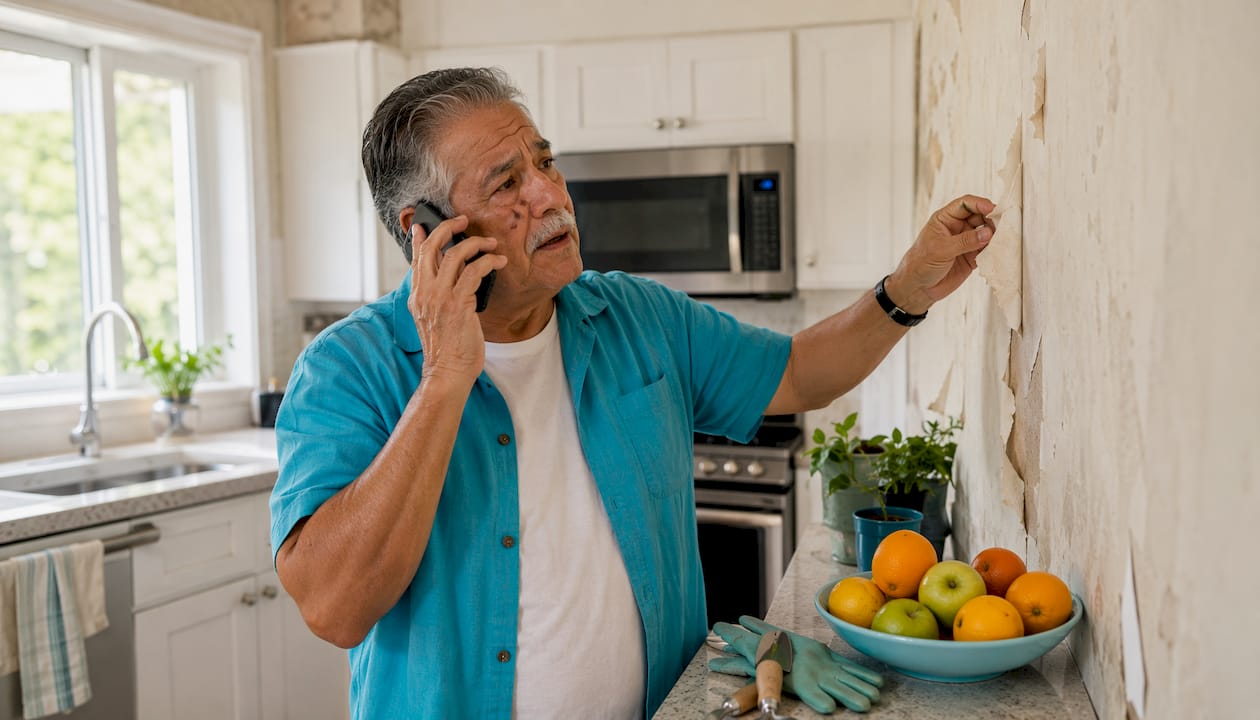
On pricing, the math is straightforward: sellers trade a discount for speed and convenience. A property that might fetch $300,000 on the open market after $30,000 in renovations might draw a cash offer of $210,000–$240,000 from an investor buyer. That gap reflects the buyer's renovation costs, carrying costs, and profit margin. Whether that trade-off makes sense depends entirely on the seller's situation.
The ProPublica investigation documented cases where that discount went far beyond reasonable. One California homeowner's property was appraised at $440,000; the franchisee offered $275,000, citing repair needs that a subsequent sale proved were largely fabricated. After the seller's son fought the contract in court, the home eventually sold for $510,000 with none of the repairs the franchisee had insisted were necessary.
What sellers should watch for and expect:
- Disclosure requirements still apply. An as-is sale doesn't waive your legal duty to disclose known defects in most states.
- Repair estimates can be inflated. Get an independent inspection before accepting a buyer's repair-cost justification for a low offer.
- Title clouding is a real tactic. If you try to back out, some buyers will file a lis pendens, making it nearly impossible to sell to anyone else until the dispute resolves.
- Closing speed varies. Reputable buyers can close in 5–14 days. Pressure to sign before you've had time to think is a red flag, not a feature.
- Wholesaling happens. Some buyers flip the contract to another investor for a profit without ever making improvements, meaning equity leaves the seller's pocket twice.
Pro Tip: Before signing any purchase agreement with a cash buyer, ask a real estate attorney to review the contract. Most charge a flat fee for this service, and it can save you from a title dispute or a contract you can't legally exit.
How do you evaluate and choose a trustworthy ugly house buyer?
The single most useful filter is whether the buyer is willing to slow down. Predatory buyers create urgency. Reputable ones give you time to think, ask questions, and get a second opinion. If a buyer is pushing you to sign the same day they walk through your door, that pressure itself is the answer.

Beyond that gut check, distinguishing between a distressed property and a motivated seller matters from the buyer's side too. Experienced investors know that a run-down house doesn't automatically mean the owner is ready to sell at a steep discount. A legitimate buyer will ask about your timeline and goals rather than assuming urgency and pricing accordingly. If a buyer seems to be manufacturing your urgency rather than responding to it, walk away.
Practical evaluation criteria:
- Check state licensing. Real estate investors don't always need a license, but buyers who also act as agents do. Verify through your state's real estate commission.
- Request references. Ask for contact information for two or three recent sellers. A buyer who hesitates on this is telling you something.
- Look up court records. Search the buyer's company name in your county's court database. A pattern of breach-of-contract suits against sellers is a serious warning sign.
- Get the offer in writing before any site visit ends. Verbal offers that shift after you've signed a letter of intent are a common manipulation tactic.
- Verify the buyer's funding. Ask for proof of funds or a bank letter confirming they can close without a financing contingency.
Red flags that should stop the conversation:
- Pressure to sign within hours of the first meeting
- Repair estimates that seem wildly high with no supporting documentation
- Reluctance to let you have an attorney review the contract
- No physical office address or verifiable business history
- Offers that drop significantly between the initial call and the in-person visit
Confirmed seller motivation and timeline pressure are what legitimate buyers look for. A buyer who understands your actual situation, whether that's a pending foreclosure date, a relocation deadline, or an inherited property you can't maintain, will price accordingly and transparently. One who guesses at your desperation and prices to exploit it is a different animal entirely.
Pro Tip: Pull your own comparable sales data from Zillow or Redfin before any buyer visit. Knowing your home's rough market value gives you a baseline to evaluate whether a cash offer is reasonable or predatory.
How Dan buys houses operates in Northwest Indiana
Dan buys houses offers a concrete example of what the ethical end of this market looks like in practice. Operating in Northwest Indiana, the company purchases homes in any condition, with no repair requirements and no fees charged to sellers. The process is designed for homeowners who need to move fast, whether due to foreclosure, relocation, divorce, or an inherited property they simply can't manage.
The company's model centers on transparency from the first contact. Sellers receive a written cash offer with a clear explanation of how the number was reached. There are no bait-and-switch tactics where the offer drops after inspection. Closing can happen in as few as five days, which matters enormously when a foreclosure auction date is approaching or a job relocation can't wait.
What sets Dan buys houses apart from the franchise operations discussed earlier:
- No franchise pressure to hit volume targets, which removes the incentive to push sellers into below-fair deals
- Local market knowledge in Northwest Indiana, meaning offers reflect actual regional comparable sales rather than generic formulas
- No upfront costs of any kind charged to the seller
- Educational resources through their blog, covering topics like as-is sale paperwork and what to expect from cash buyers, so sellers arrive informed
- Support for sellers in difficult situations, including foreclosure, probate, and relocation scenarios where speed is the priority
The contrast with the ProPublica-documented franchise practices is direct. Dan buys houses doesn't file lis pendens to trap sellers in contracts, doesn't inflate repair estimates to justify lowball offers, and doesn't target elderly homeowners for their vulnerability. The business model works because sellers who genuinely need speed and certainty find fair value in the trade-off, not because sellers are pressured into accepting less than they should.
What are your alternatives to "We Buy Ugly Houses" franchises?
Selling to a cash buyer isn't your only option when a property needs work. The right alternative depends on how much time you have, how much equity you're willing to trade for convenience, and how much involvement you want in the process.
Traditional listing with an investor-friendly agent. Some real estate agents specialize in distressed properties and can list your home as-is on the MLS, attracting both retail buyers willing to renovate and investors competing for the deal. More competition typically means a better price than a single cash buyer's offer, though the timeline is longer, usually 30–90 days to close.
Auction. Real estate auction platforms allow distressed properties to sell quickly, often within 30–45 days, with buyers competing in real time. Reserve prices protect sellers from giving the property away. The trade-off is auction fees and uncertainty about the final price.
Hard money lender bridge. If you have equity but need cash fast, a short-term bridge loan against the property can give you time to list traditionally rather than selling under pressure. This works best when the distress is financial rather than physical.
iBuyers. Algorithmic cash buyers operate in select markets and can close quickly, though they typically require homes in better condition than a true fixer-upper. Their offers are generated by automated valuation models, which can miss local nuance.
Selling to a local independent investor. Independent investors, as opposed to national franchise operations, often offer more flexibility on terms and timeline. Understanding what conditions cash buyers accept helps you identify which buyers are worth approaching for your specific property type.
The key question is whether you're selling under genuine time pressure or just assuming you have to. If you have 60–90 days, a traditional listing or auction will almost always net you more money. If foreclosure is two weeks away, a cash buyer who can close in five days is worth the discount.
How to prepare your ugly house for sale to maximize offers
"As-is" doesn't mean "do nothing." A few targeted actions before you invite buyers through can meaningfully improve the offers you receive, without spending money on full renovations.
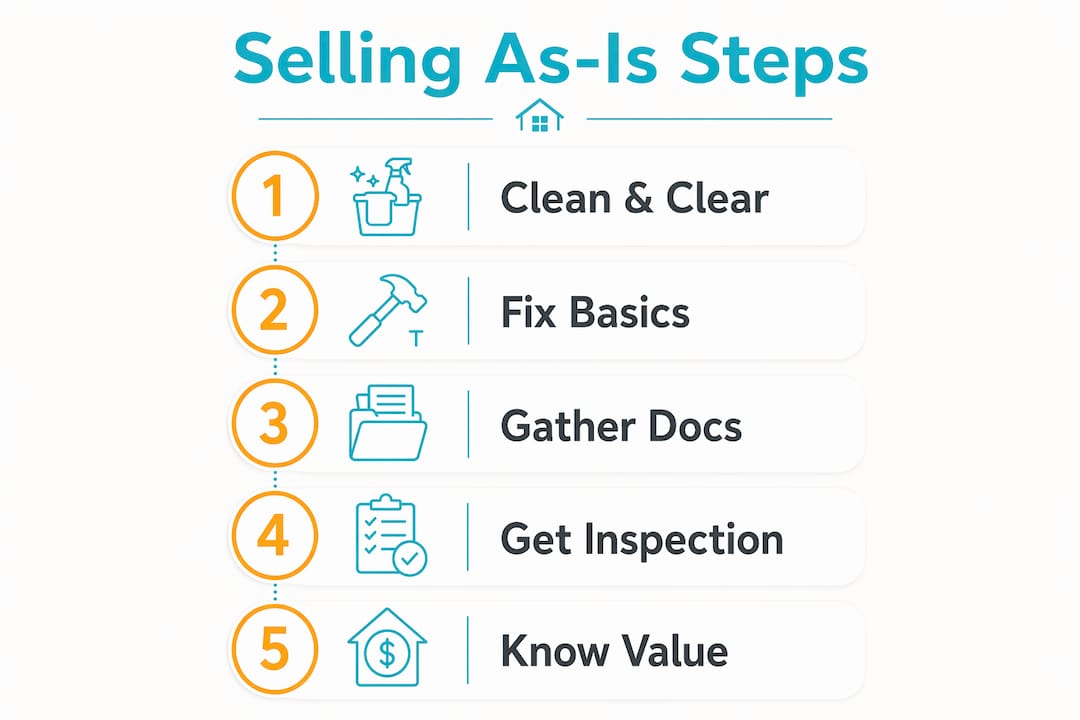
Clean and clear the property. Buyers price what they can see. A house full of old furniture, debris, or personal belongings looks like more work than it is. A clean, empty property lets buyers focus on the structure, not the clutter. Junk removal typically costs a few hundred dollars and can shift a buyer's perception significantly.
Fix what's cheap and obvious. A broken window, a leaking faucet, or a door that won't close properly signals deferred maintenance throughout the house. Fixing these small items costs little but removes easy justifications for lowball offers. You're not renovating; you're removing objections.
Gather your documentation. Pull together any permits, inspection reports, utility bills, and records of work done on the property. Buyers who can see the property's history make more confident offers. Uncertainty about what's behind the walls gets priced into the discount.
Get your own inspection. A pre-listing inspection from a licensed home inspector costs $300–$500 and gives you an accurate picture of the property's actual condition. When a buyer's inspector or the buyer themselves claims $80,000 in repairs on a house your inspector assessed at $30,000 in issues, you have documentation to push back.
Know your number before the first call. Pull comparable sales in your area from public records or real estate sites. You don't need to be exact, but knowing that similar homes in your neighborhood sold for $180,000–$210,000 gives you a floor for evaluating any offer you receive.
What are the legal and financial implications of selling a house "as-is"?
The legal framework for as-is sales varies by state, but a few principles apply broadly across the United States. Sellers cannot use "as-is" language to escape liability for known defects they deliberately conceal. Courts have consistently held that material misrepresentation, or active concealment, survives an as-is clause in a purchase contract.
Disclosure laws still apply. Most states require sellers to complete a property disclosure form listing known issues: foundation problems, roof condition, water intrusion history, pest damage, and similar material defects. Failing to disclose a known issue can expose you to a lawsuit after closing, even if the contract says "as-is."
Tax implications of a distressed sale. If you sell below market value to a family member, the IRS may treat the difference as a gift, with potential gift tax consequences. Sales to unrelated third-party investors at arm's length don't trigger this issue. Capital gains tax applies to any profit above your cost basis, though primary residence exclusions ($250,000 for single filers, $500,000 for married couples filing jointly) often eliminate the tax burden for long-term homeowners.
Title issues can complicate closing. Distressed properties sometimes carry liens, unpaid taxes, or unresolved ownership disputes that must be cleared before a sale can close. A reputable cash buyer will conduct a title search and work with a title company to resolve these issues. Be wary of any buyer who wants to close without a proper title search, as that risk transfers to you if a lien surfaces later.
The lis pendens risk. As documented in the ProPublica investigation, some buyers file a lis pendens, a legal notice of a pending ownership claim, when sellers try to back out of a contract. This clouds the title and prevents the seller from completing a sale to anyone else until the dispute resolves. Understanding this tactic before you sign a purchase agreement is the best protection against it. As-is sale paperwork is worth reviewing carefully with an attorney before any signatures.
How does buying ugly houses fit into real estate investment strategies?
Distressed property acquisition is one of the oldest strategies in real estate investing, and it remains active in 2026 because the fundamentals haven't changed. Properties that need work sell at a discount. Investors who can accurately estimate renovation costs and execute reliably can capture that discount as profit. The strategy works in both rising and flat markets, which is part of why it's durable.
Experienced investors use public records including tax delinquencies, probate filings, and code violations to identify distressed properties before they hit the MLS. Finding a motivated seller before a property goes public means less competition and more room to negotiate. That's the core advantage of the direct-to-seller model that companies like HomeVestors have built entire franchise systems around.
The investment thesis has two primary exit strategies. Fix-and-flip investors renovate and resell, capturing the spread between purchase price plus renovation costs and the after-repair market value. Buy-and-hold investors rent the property, building cash flow and long-term equity. The right strategy depends on local market conditions, the investor's capital position, and their operational capacity to manage renovations or tenants.
What separates successful investors from those who overpay is the discipline to confirm actual seller motivation rather than assuming it from property condition alone. A run-down house with an owner who has no urgency to sell is not a deal. A well-maintained house with an owner facing a foreclosure date in 30 days often is. The physical condition of the property matters less than the seller's timeline and circumstances.
The ethical dimension of this strategy is worth naming directly. Buying at a discount from someone in distress is legal and, when done transparently, fair. The seller gets speed and certainty; the investor gets a margin. That exchange breaks down when the buyer manufactures or exploits the seller's distress rather than simply responding to it.
Dan buys houses: a straightforward path to a cash offer in Northwest Indiana
If you're a homeowner in Northwest Indiana facing a situation where speed matters, Dan buys houses offers something the national franchise model often doesn't: a local buyer with no volume quota, no pressure tactics, and a process built around your timeline.

The process is direct. You contact Dan buys houses, they assess your property, and you receive a written cash offer with no obligation to accept. If the offer works for you, closing can happen in as few as five days. No repairs, no agent commissions, no fees of any kind charged to you as the seller. For homeowners dealing with foreclosure, an inherited property, or a relocation that can't wait for a traditional sale, that speed has real dollar value.
What makes Dan buys houses worth considering after reading about the industry's documented problems is exactly what distinguishes it from those problems: transparency about the offer, no title-clouding tactics, and a business model that depends on repeat referrals rather than one-time extraction. Get a cash offer today and see what your Northwest Indiana property is worth to a buyer who will tell you exactly how they reached that number.
Key Takeaways
Companies that buy ugly houses offer speed and certainty in exchange for a below-market price, and the difference between a fair deal and a predatory one comes down to the buyer's transparency, tactics, and willingness to let you walk away.
| Point | Details |
|---|---|
| Legitimacy varies widely | Some buyers operate ethically; others use pressure tactics and target vulnerable sellers, as documented by ProPublica. |
| Seller demographics skew older | Nearly a third of sellers to HomeVestors franchises are aged 65 or older, with a smaller percentage over 70, making elder-focused scrutiny especially important. |
| As-is sales carry legal obligations | Sellers must still disclose known defects in most states; "as-is" does not eliminate disclosure liability. |
| Title clouding is a documented risk | Over 50 HomeVestors franchisees have been documented filing suits or clouding titles when sellers tried to exit contracts. |
| Dan buys houses | Offers cash purchases in Northwest Indiana with no fees, no repairs required, and closing in as few as five days. |