
The fastest realistic way to sell a duplex as-is is a direct sale to a cash buyer or investor. These buyers typically close in a matter of days because they skip financing contingencies, inspections tied to repair demands, and the back-and-forth that comes with listing on the open market. The trade-off is real: you'll usually net less than a fully renovated retail sale would bring. Selling with tenants still in place is not a dealbreaker, either. Investors often prefer occupied units because rent starts flowing the day they close.
Some sellers report closing in as little as five days once paperwork is in order.
Before you request an offer, line up:
- Current lease copies and a rent roll
- Recent maintenance or repair records
- Proof of property tax payments and utility bills
Key Takeaways
Selling a duplex as-is comes down to one trade-off: a direct cash sale closes fast but nets less, while an MLS listing nets more but takes months longer.
| Point | Details |
|---|---|
| Fastest path | Direct cash buyers or investors commonly close in 7 to 21 days when title and paperwork are clean. |
| Tenants aren't a barrier | Leases typically transfer to the new owner, and investors often value occupied units for immediate cash flow. |
| Paperwork speeds everything | A rent roll, lease copies, and maintenance records shorten offer review and reduce closing delays. |
| Discounts reflect risk | As-is offers price in deferred maintenance, vacancy risk, and tenant quality, not arbitrary lowballing. |
| Dan buys houses | Buys duplexes as-is for cash with no repairs or commissions, and some sellers close in as little as five days. |
Table of Contents
- How to Sell a Duplex As-Is: Comparing Your Three Real Options
- Do Tenants Make a Duplex Harder to Sell?
- What Paperwork Do You Need to Sell a Duplex As-Is?
- How Much Less Will You Get for an As-Is Duplex?
- How Long Does It Take to Close on a Duplex Sale?
- Should You Take a Fast Cash Offer or List Traditionally?
- Your Checklist to Get a Fair As-Is Cash Offer
- What Duplex Sellers Get Wrong About Speed vs. Price
- Sell Your Duplex As-Is to Dan Buys Houses
- Sources
How to Sell a Duplex As-Is: Comparing Your Three Real Options
Every duplex owner facing repairs, a tenant headache, or a tight deadline lands on one of three paths. Each one trades speed for price differently.
- Direct cash buyer or investor purchase. This route fits sellers dealing with foreclosure, an inherited property, or a job relocation on a short clock. You skip repairs, showings, and financing contingencies entirely, and closing typically happens in days rather than months.
- Traditional investor purchase with financing. Some investors still finance their purchase rather than paying cash. Because they're not owner-occupants, they usually face stricter down payment requirements and a smaller pool of available loan products, which narrows your buyer pool and can slow the timeline even when the buyer is investment-minded rather than retail-minded.
- Listing as-is on the MLS. This can produce a higher sale price if your market is strong and the property shows reasonably well, but it takes longer. As-is MLS listings for multi-family properties often take 60 to 180 days to close, and you'll still face showings, buyer inspections, and price renegotiations after the fact.
Owner-occupant buyers and investors behave differently in this market. When financing tightens for owner-occupants, investor demand tends to fill the gap, which is exactly why duplex sales lean on two distinct buyer pools rather than one.
Do Tenants Make a Duplex Harder to Sell?
Not necessarily. What matters more is the type of lease you're passing along. A fixed-term lease binds the next owner to its terms until expiration, which can eliminate certain buyers from consideration. Someone hoping to move into one unit themselves won't want to inherit a tenant with eight months left on a lease. A month-to-month arrangement offers more flexibility for everyone involved.
Investors, on the other hand, often see an occupied duplex as a plus. It means cash flow from day one instead of a vacancy gap while they find new renters. Leases generally transfer to the new owner automatically, so buyers know exactly what they're stepping into.
A few things help tenants cooperate during a fast sale:
- Give proper notice before any showing, even for a quick investor walkthrough.
- Offer a modest move-out incentive if you need the unit vacant for an owner-occupant buyer.
- Have estoppel certificates ready. They confirm lease terms and rent amounts directly from the tenant, which reassures buyers fast.
Pro Tip: If you're targeting investor buyers specifically, lead with the rent roll instead of hiding it. A clean twelve-month payment history often does more to justify your price than fresh paint ever could.
What Paperwork Do You Need to Sell a Duplex As-Is?
Buyers move faster when they don't have to chase you for documents. Gathering everything up front is one of the highest-leverage moves you can make before requesting offers, and it's a step worth prioritizing over cosmetic repairs.
Have these ready:
- Current lease agreements for both units
- A rent roll showing payment history
- Maintenance and repair records
- Title information and any existing liens
- Recent property tax statements
- Utility bills for common areas or shared systems
- Municipal code violation notices or past inspection reports
Disclosure requirements vary by state and sometimes by city, particularly around known code violations or lead paint in older buildings. A quick consultation with local counsel or a title company before listing saves you from a surprise that stalls closing later.
A complete document packet does two things: it shortens the buyer's offer-review window, and it gives the title company fewer questions to chase down during escrow. Sellers who show up organized routinely move through underwriting faster than those who scramble for records mid-negotiation. For a fuller breakdown of what a jurisdiction might require, see this as-is paperwork checklist.
How Much Less Will You Get for an As-Is Duplex?
As-is offers come in below retail value because the buyer is pricing in risk you're choosing not to solve yourself. Deferred maintenance, code compliance gaps, vacancy risk, and tenant quality all factor into how an investor calculates their number. A duplex with a leaky roof and an unreliable tenant will draw a lower offer than one with clean records and steady rent, even if the physical damage is similar.
Investor margins exist because cash buyers take on the repair costs, the resale timeline, and the carrying costs you'd otherwise absorb. That's the mechanical reason cash offers land below what a fully renovated retail sale might fetch, not a sign you're being lowballed.
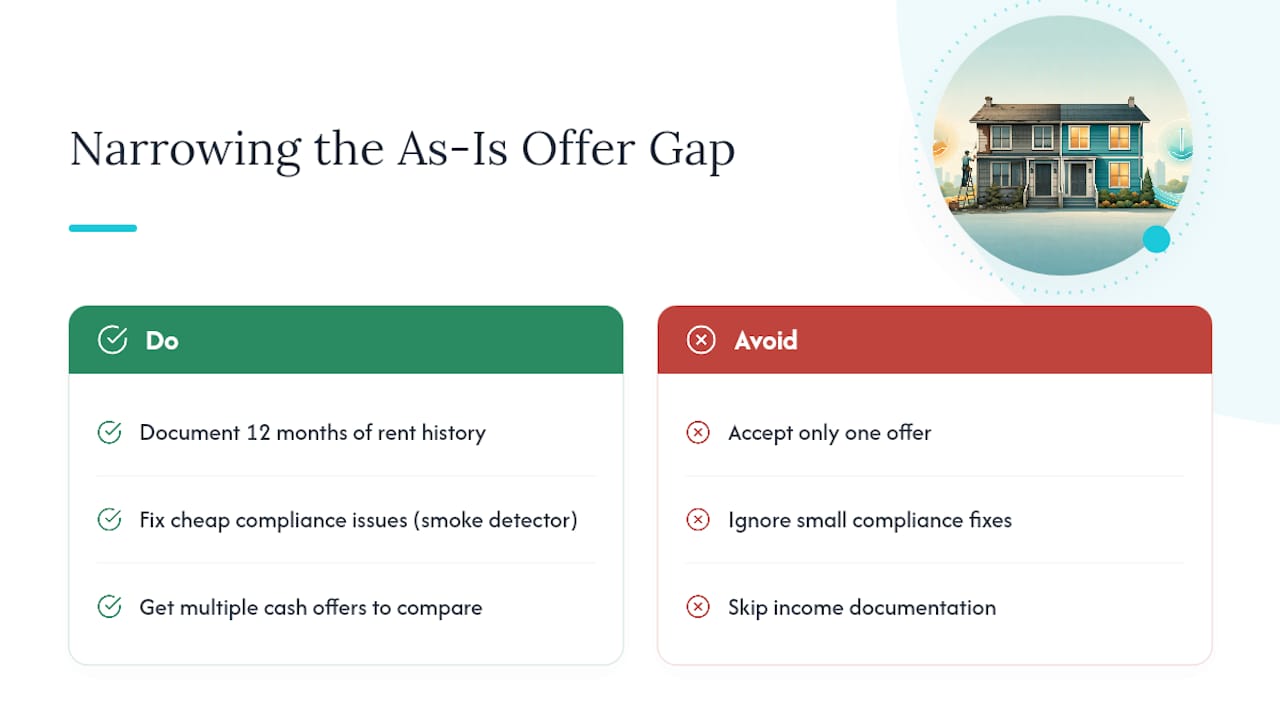
You can narrow that gap. Document twelve months of rent history to prove income stability. Knock out the cheapest compliance fixes, like a smoke detector violation, that cost little but signal a well-kept property. And get more than one offer. Comparing bids from multiple duplex cash buyers is the single best way to confirm you're not leaving money on the table.
How Long Does It Take to Close on a Duplex Sale?
Cash buyers typically close in 7 to 21 days once title work and paperwork are clean. Financed buyers take considerably longer, often 30 to 90 days or more, depending on underwriting, appraisal timelines, and whether the lender flags anything during inspection.
Delays usually trace back to a handful of predictable culprits:
- Title defects. An old lien or an unresolved ownership question can stall closing for weeks.
- Tenant access issues. If a tenant refuses entry for inspection or appraisal, the buyer's timeline slips.
- Appraisal or inspection contingencies. Financed deals live and die by these, especially on a property with visible deferred maintenance.
You can keep your closing on schedule by clearing any title questions before you list, offering flexibility on the closing date, and handing over requested documents the same day they're asked for rather than the same week.
Should You Take a Fast Cash Offer or List Traditionally?
The right call depends on how much your timeline is actually worth to you.
- Pros: speed, zero repair costs, no showings, no financing contingency to fall through.
- Cons: a lower net price, and possible tax consequences worth reviewing with an accountant before you sign anything.
Ask yourself three questions. Is your timeline genuinely urgent, or just inconvenient? Would repairs cost more than the equity you'd gain by fixing them first? Are your tenants cooperative enough to support a smooth sale process either way?
If none of those pressures apply and your duplex shows well, a traditional as-is MLS listing might net you more over a longer runway. If any one of them is a firm "yes," a direct cash sale usually makes more sense than waiting out the market.
Your Checklist to Get a Fair As-Is Cash Offer
- Gather leases, rent roll, maintenance records, and current photos of both units.
- Note any known code violations, unpaid liens, or title issues upfront.
- Request at least one direct cash offer, and if time allows, a comparative agent estimate for context.
- Build a simple net proceeds worksheet comparing each offer after fees, repairs, and closing costs.
- Verify the buyer's proof of funds and confirm their proposed closing timeline in writing.
Pro Tip: Ask every cash buyer for proof of funds before you take their offer seriously. A real buyer produces it within a day. One who stalls on that request usually isn't ready to close on yours.
What Duplex Sellers Get Wrong About Speed vs. Price
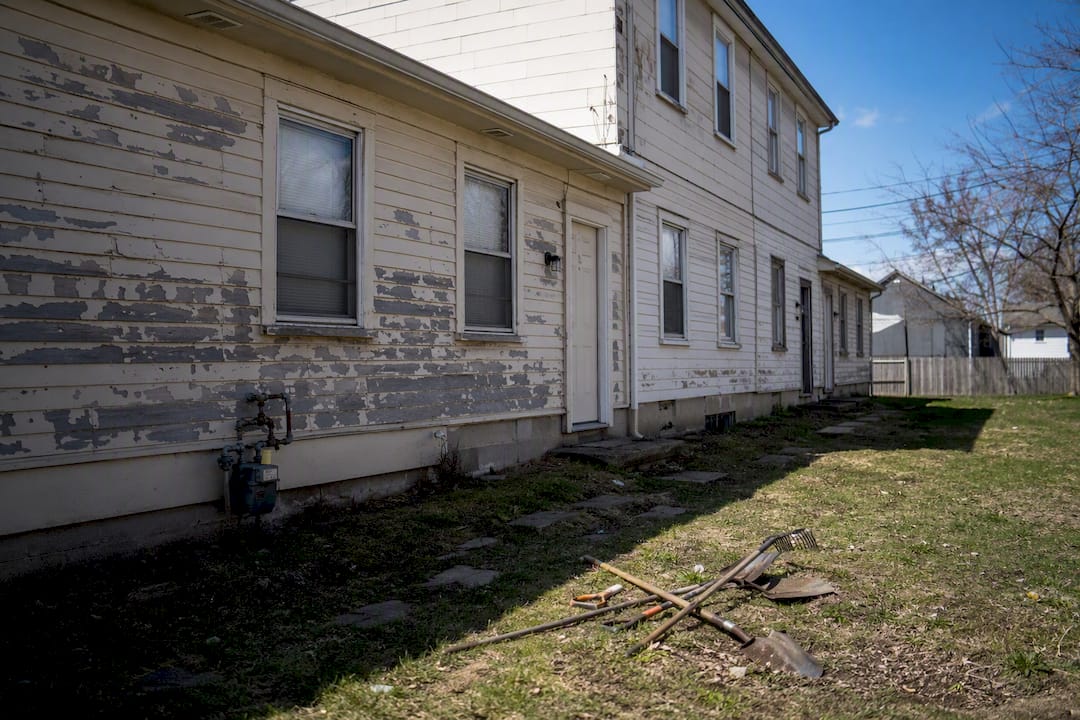
Most advice on selling a duplex treats speed and price as if they're independent variables you can optimize separately. They're not. Every week you hold onto a duplex with a leaking roof or an unreliable tenant costs you money in ways that don't show up on a simple net-proceeds worksheet: continued carrying costs, the risk of a code violation notice, the chance a good tenant leaves and a bad one moves in.
The conventional wisdom says "get multiple offers and negotiate hard for the highest number." That's fine advice if you have six months and no urgent pressure. It's bad advice if you're facing foreclosure or you inherited a property three states away that you can't manage. In those cases, the seller who fixates on maximizing price often ends up worse off than the one who took a fair cash offer in week one.
What I'd prioritize first: be honest with yourself about your actual timeline before you price anything. A rent roll and clean lease documentation will do more for your offer than any cosmetic fix. Speed has a dollar value. Most sellers just never calculate it.
— Daniel
Sell Your Duplex As-Is to Dan Buys Houses
Dan buys houses buys duplexes in as-is condition, no repairs, no cleaning, and no commissions taken out of your proceeds. That's the core difference between this route and listing with an agent or fielding investor offers that come with financing contingencies attached: you get one straightforward cash number, and the closing date is yours to set.

Requesting an offer takes about the same prep work covered above: your lease copies, rent roll, and basic property details. From there, expect a cash offer within a day or two, and a closing date as flexible as you need. Some sellers close in as little as five days; others take longer if that fits their situation better. There's no obligation attached to getting a number. Read through how the process works to see each step, then head to the sell your house page to request your no-cost offer today.