
Selling a condo as-is means listing it in its current condition and letting the buyer handle every repair after closing, with no promise from you to fix anything first. The tradeoff is straightforward: you typically net less money than a fully renovated sale, but you close faster and skip the stress of contractors and open-house prep. If speed matters more than maximizing price, start by getting a comparative market analysis or reaching out to a cash buyer; if price matters more, focus on targeted repairs before you list.
TL;DR:
- Selling a condo as-is typically results in an 8% to 20% discount below market value, especially if major structural issues are present.
- Accurate HOA disclosure and documentation, including resale certificates and pending assessments, are critical to avoid delays and deal-breakers.
- Cash buyers and investors offer quick closing within days or weeks, while traditional sales with financing take 30 to 60 days or longer.
- Targeted repairs, such as fixing leaks or HVAC issues, can expand the buyer pool but may diminish the overall savings of an as-is sale.
- Preparation like deep cleaning, neutral painting, and honest listing descriptions can significantly improve buyer perception without altering the property's condition.
Table of Contents
- What Does Selling a Condo As-Is Actually Involve?
- Is Selling a Condo As-Is Worth It? Weighing the Tradeoffs
- Who Actually Buys As-Is Condos?
- How Much Will You Actually Lose Pricing As-Is?
- Disclosures and HOA Paperwork You Can't Skip
- Step-by-Step: Selling Your Condo As-Is From Start to Close
- Simple Prep Work That Still Pays Off As-Is
- What Happens During Inspections and Negotiations?
- How Long Does an As-Is Condo Sale Take, and What Will It Cost You?
- When Selling As-Is Actually Makes Sense
- Ready to Sell Your Condo Without the Repair List?
- Sources
What Does Selling a Condo As-Is Actually Involve?
Four practical paths exist for offloading a condo you don't want to fix up, and each fits a different set of priorities.
- List it as-is through a real estate agent. You price it below comparable renovated units, disclose known issues, and market to buyers who expect a project. Best if you have some time and want to test the open market.
- Get a pre-inspection, disclose everything, then list. This route builds buyer confidence before they even make an offer, which can reduce renegotiation friction later. Best when you suspect hidden problems and want to avoid surprises mid-contract.
- Sell to a cash buyer or direct investor. You skip the MLS, financing contingencies, and most negotiation. Best for estate sales, foreclosure timelines, or landlords who are done managing tenants.
- Make a few targeted repairs, then list normally. You fix the two or three things that scare off financed buyers (a leaking window, a broken HVAC unit) and leave the cosmetic stuff alone. Best when a small investment could open up a much bigger buyer pool.
If you're working against a deadline, foreclosure notice, or probate court schedule, the direct-buyer path removes the most variables. If you have breathing room, a pre-inspection paired with an honest disclosure packet tends to produce the smoothest traditional sale.
Is Selling a Condo As-Is Worth It? Weighing the Tradeoffs
The upside is real: you save on repair costs, you can close in weeks instead of months, and you avoid the slow bleed of showings, feedback forms, and price cuts. You also transfer the guesswork to the buyer. Anyone who has started a "quick fix" and watched it become a full kitchen tear-out knows how a small repair job can spiral into a much bigger, costlier project. Selling as-is ends that risk the moment you sign.
The downside is just as real. You'll likely accept a lower sale price, your buyer pool shrinks because many lenders won't finance a condo with deferred maintenance, and negotiations can stall if a buyer's inspector finds something you didn't disclose.
Statistic Callout: Market data on as-is sales shows discounts commonly ranging from around 8% to 20% below market value, with the higher end reserved for units with structural, water, or mold damage.
Condos carry a few extra wrinkles that single-family sellers don't deal with:
- HOA financial health matters as much as the unit itself. A buyer's lender may reject the loan if the association's reserve fund is underfunded.
- Pending special assessments can tank a deal. If the HOA board has already voted on a costly roof or elevator repair, that liability often follows the unit, not just the seller.
- Resale documentation requirements add a layer traditional single-family sales don't have. Buyers and their lenders usually want to see the HOA's financials before closing.
Who Actually Buys As-Is Condos?
Three buyer types dominate the as-is condo market, and each comes with a different offer structure and closing speed.
Investors and flippers buy based on after-repair value (ARV) math. They estimate what the unit will sell for once renovated, subtract renovation costs, financing costs, and their target margin (often 10 to 20 percent of ARV), and offer accordingly. Their offers tend to look low compared to a renovated comp, but they close fast and rarely ask for repairs.
Cash buyers and direct home-buying companies move quickly because they skip mortgage underwriting entirely. They typically:
- Make an offer within days of seeing the property, sometimes without a full walkthrough
- Waive financing and appraisal contingencies
- Cover or negotiate HOA resale fees as part of the deal
Owner-occupants looking for a project exist, but they're rarer in the condo market than in single-family homes. Many mortgage programs, including FHA and most conventional loans, require the condo project itself to meet condition standards, and a unit with visible deferred maintenance can trigger a lender-ordered inspection that kills the deal before it closes. That financing bottleneck is the single biggest reason as-is condo sellers end up talking to investors and cash buyers instead of traditional retail buyers.
How Much Will You Actually Lose Pricing As-Is?
Two pricing methods apply depending on which buyer you're targeting, and mixing them up is the most common mistake sellers make.
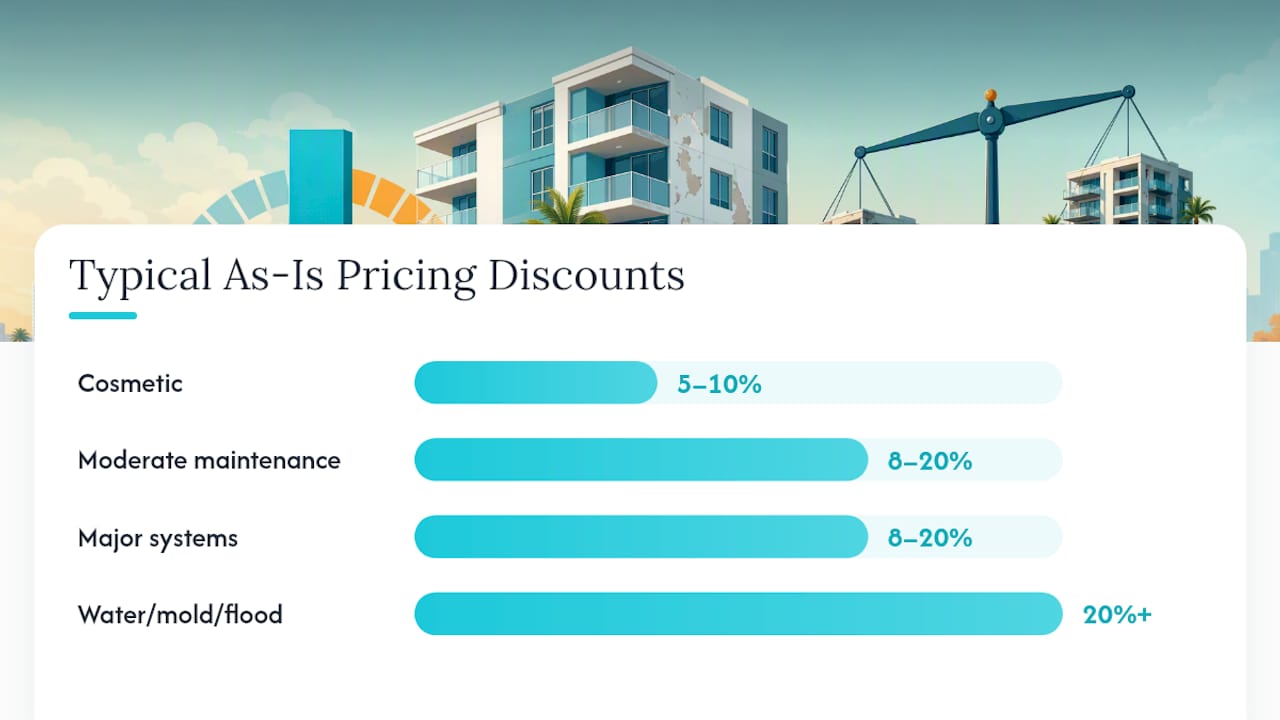
For investor offers, expect ARV-based math: the investor prices backward from the finished value. For a traditional listing, your agent should build a comparative market analysis (CMA) using recently sold comps, then discount for condition.
Here's how the discount tends to shake out based on defect severity:
| Condition issue | Typical discount off market value |
|---|---|
| Cosmetic only (paint, flooring, dated fixtures) | 5–10% |
| Moderate deferred maintenance (HVAC, appliances, minor plumbing) | 8–20% |
| Major systems or structural concerns | 8–20% |
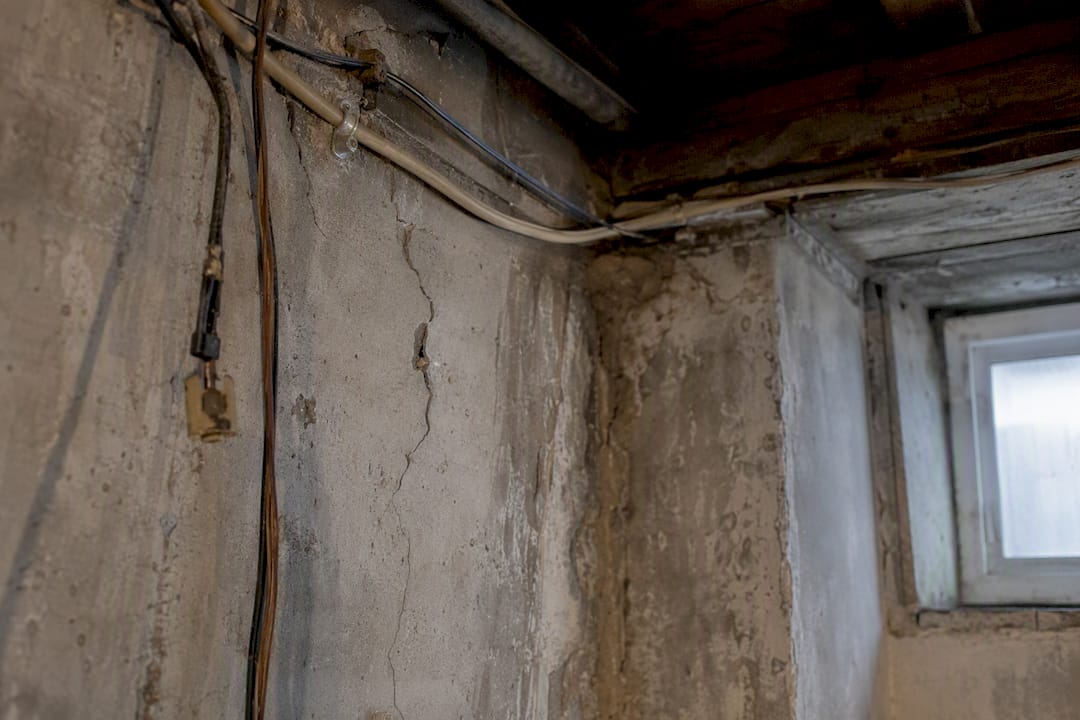
| Water damage, mold, or flood history | 20% or more |
A quick example: if comparable renovated units in your building sell for $220,000, and your unit has moderate deferred maintenance, expect offers in the $187,000 to $198,000 range before any HOA fee deductions. Industry pricing strategy also suggests pricing slightly below your target and setting an offer deadline, which can generate competing bids from investors and push your net closer to the top of that range instead of the bottom.
Disclosures and HOA Paperwork You Can't Skip
Selling as-is changes your repair obligations, not your disclosure obligations. Chase's guidance on as-is sales is blunt about this: an as-is clause tells the buyer you won't fix anything, but it doesn't excuse you from disclosing known material defects, and disclosure rules vary by state, so check your state's specific requirements or ask a local agent before you sign anything.
Condo sales add a paperwork layer single-family sales skip entirely:
- Resale or estoppel certificates. These documents, issued by the HOA or its management company, confirm the unit's dues status, any violations, and pending litigation. They commonly cost a few hundred dollars and can take one to three weeks to process depending on the association.
- Special assessment history. Pull board meeting minutes and reserve study reports before you list. A pending assessment for a roof or elevator repair can push as-is discounts toward the higher end of the range if buyers discover it mid-negotiation instead of upfront.
- HOA governing documents. Bylaws, CC&Rs, and financial statements typically get requested by the buyer's lender or attorney.
- Who pays the resale fee. This is negotiable, and cash buyers frequently agree to cover it or deduct it at closing rather than making you pay it out of pocket.
If you're unsure what your state requires, a resource like this disclosure checklist walks through common seller obligations, or you can consult a local real estate attorney directly.
Step-by-Step: Selling Your Condo As-Is From Start to Close
- Get a valuation. Order a CMA from an agent or a quick valuation from a cash buyer to understand both your retail ceiling and your as-is floor.
- Set your bottom line. Decide the lowest number you'll accept before you start negotiating, and write it down so emotion doesn't move it later.
- Order HOA documents early. Request the resale certificate, reserve study, and recent meeting minutes now, since this paperwork routinely causes closing delays.
- Decide on a pre-inspection. A pre-inspection report, paired with full disclosure, tends to reduce back-and-forth once a buyer's own inspector shows up.
- Choose your sales path. List traditionally, market directly to investors, or contact a direct buyer, based on your timeline and financial priorities.
- Prepare your disclosure packet. Document every known issue in writing, with dates and any repair attempts, to protect yourself legally.
- Market to the right audience. Write your listing description to attract investors and cash buyers rather than hiding condition issues from retail shoppers who'll walk the moment they see a water stain.
- Handle inspections and negotiate. Expect requests for credits or price reductions; decide in advance which ones you'll grant.
- Finalize closing items. Confirm who pays the resale fee, review the settlement statement, and close.
Pro Tip: Order your HOA resale package the same week you decide to sell, not after you accept an offer. Some associations take two to three weeks to produce it, and a buyer with a tight closing deadline may walk if the paperwork isn't ready.
Simple Prep Work That Still Pays Off As-Is
Selling as-is doesn't mean selling dirty or dark. A few low-cost moves change how buyers perceive the unit without touching your "no repairs" stance.
- Deep clean everything, including grout, baseboards, and windows. It costs almost nothing and signals the unit has been cared for despite its condition.
- Add a fresh coat of neutral paint in high-visibility rooms if the budget allows, but skip anything structural or mechanical.
- Fix the lighting. Swap dead bulbs and open the blinds for every showing and photo session; dark rooms photograph as more damaged than they are.
- Avoid partial renovations. A brand-new countertop next to a cracked tile floor draws more attention to the flaw, not less.
- Write listing photos and descriptions with investors in mind. Show the whole unit honestly, mention square footage and rental potential if applicable, and skip staging tricks meant for retail buyers.
- Attach your pre-inspection report to the listing if you have one. It's one of the fastest ways to build buyer trust before an offer even comes in.
What Happens During Inspections and Negotiations?
A pre-inspection puts you in control of the narrative; a buyer's own inspection puts them in control. If you skip the pre-inspection, expect the buyer's inspector to find something, because they always do, and expect that finding to become a negotiating chip.
Common buyer requests after inspection include:
- A price reduction tied to a specific repair estimate
- A closing credit instead of a price cut, which keeps their loan-to-value ratio cleaner
- A repair holdback, where funds are set aside at closing for work done after the sale
Pro Tip: Before you list, get a rough repair estimate for the two or three biggest known issues in your unit. When a buyer comes back with a number, you'll know immediately whether it's reasonable or inflated, instead of negotiating blind.
Sellers who go in with documentation, a clear bottom line, and realistic expectations rarely get talked into concessions they'll regret. Sellers who go in hoping nothing gets found usually do.
How Long Does an As-Is Condo Sale Take, and What Will It Cost You?
Cash sales and financed sales run on completely different clocks. Cash transactions commonly close in about 7 to 21 days once title work and HOA paperwork are in hand, since there's no lender underwriting queue to wait through. Financed sales typically take 30 to 60 days or longer, especially if the buyer's lender flags the HOA's financials for extra review.
Statistic Callout: Resale certificate and estoppel fees for condos commonly cost a few hundred dollars, and cash buyers often absorb or negotiate these costs into their offer rather than passing them to you.
- Every month you carry the condo costs you HOA dues, utilities, and insurance, so a faster close often offsets a slightly lower sale price.
- Ask upfront who pays the resale certificate fee; it's negotiable, not fixed.
- Financed buyers may also request seller-paid closing cost credits, which stack on top of any repair concessions.
When Selling As-Is Actually Makes Sense
I've talked to sellers in three recurring situations: someone who inherited a parent's condo and lives three states away, a landlord who's tired of chasing repair requests from a tenant who won't move out, and a family facing a relocation deadline that doesn't care about market timing. In every case, the math is the same. Fixing the unit costs money and time they don't have, and a discounted, fast sale beats a drawn-out listing that drains cash every month it sits.
What surprises most sellers is how much of the friction is paperwork, not price. HOA resale documents, disclosure requirements, and title work cause more delays than any negotiation over the sale price itself. A buyer who handles that paperwork for you, and who doesn't need financing approval, closes faster almost every time.
— Daniel
Ready to Sell Your Condo Without the Repair List?
Dan buys houses is the direct alternative to listing and waiting: instead of paying for repairs, covering agent commissions, or negotiating resale fees out of your own pocket, you get a cash offer on your condo in its current condition and skip the financing wait entirely. We buy condos, single-family homes, and rental units across Northwest Indiana, and we've closed deals in as little as five days when sellers need speed over a slow bidding process.

Reaching out costs nothing and doesn't obligate you to accept anything. Tell us about your unit, including any known issues, and we'll walk you through what a fair as-is offer looks like and how the resale paperwork gets handled on our end. If you want to see exactly how the process works before you call, read through our step-by-step buying process and then reach out when you're ready to get a number.
Sources
- Sold
- How to sell a house as-is when it needs repairs — Zillow
- Selling a house 'as is' — Chase
- Selling a condo as-is — Max Real Estate Exposure