
Cash for keys is a voluntary agreement where a property owner pays an occupant to vacate the property by a set date and in acceptable condition. This arrangement is fully legal across all U.S. states and gives homeowners a faster, cheaper alternative to formal eviction. Eviction costs typically range from $3,000 to $15,000, while a cash for keys payment usually falls between $1,000 and $5,000. That gap is the reason so many homeowners facing foreclosure or difficult tenant situations choose this route first. Understanding what cash for keys means puts you in control of the negotiation before things escalate.
What does cash for keys mean in a real estate agreement?
Cash for keys is the industry term for a negotiated vacancy incentive. The property owner offers the occupant a lump sum payment in exchange for leaving the property voluntarily, on time, and in good condition. The occupant gets money to help cover moving costs. The owner gets the property back without a court fight.
This arrangement works in several situations. Homeowners facing foreclosure use it to clear occupants before a bank takes possession. Landlords use it when a tenant stops paying rent but refuses to leave. Investors who buy houses quickly use it to take possession without delays. The common thread is that both sides agree freely. No one is forced into the deal.

The cash for keys definition is simple, but the execution requires care. A verbal agreement is not enough. The arrangement must be documented in writing to protect both parties and hold up legally if anything goes wrong.
What are the key elements of a cash for keys agreement?
A written cash for keys agreement is mandatory. It typically runs one to two pages and covers every term that could become a dispute later. Skipping any element creates risk for both the owner and the occupant.
A complete agreement includes:
- Payment amount. The exact dollar figure the occupant will receive, with no ambiguity.
- Move-out date. A specific calendar date, not a vague timeframe like "within a few weeks."
- Property condition requirements. The property must be returned in broom-clean condition. This means swept floors, no trash left behind, and no intentional damage.
- Key handover terms. All keys, garage openers, and access codes must be returned at the time of move-out.
- Mutual release of claims. Both parties agree not to pursue future legal action against each other. The owner releases claims for unpaid rent beyond what is agreed. The occupant waives the right to sue the owner.
- No eviction record clause. A properly structured agreement confirms that no eviction will be filed or reported to tenant screening services.
Standard move-out timelines range from 7 to 90 days depending on the complexity of the situation. Most straightforward cases settle within one to two weeks.
Pro Tip: Have an attorney review the agreement before signing, even if it looks simple. A one-hour legal review costs far less than a dispute that reopens after the deal closes.
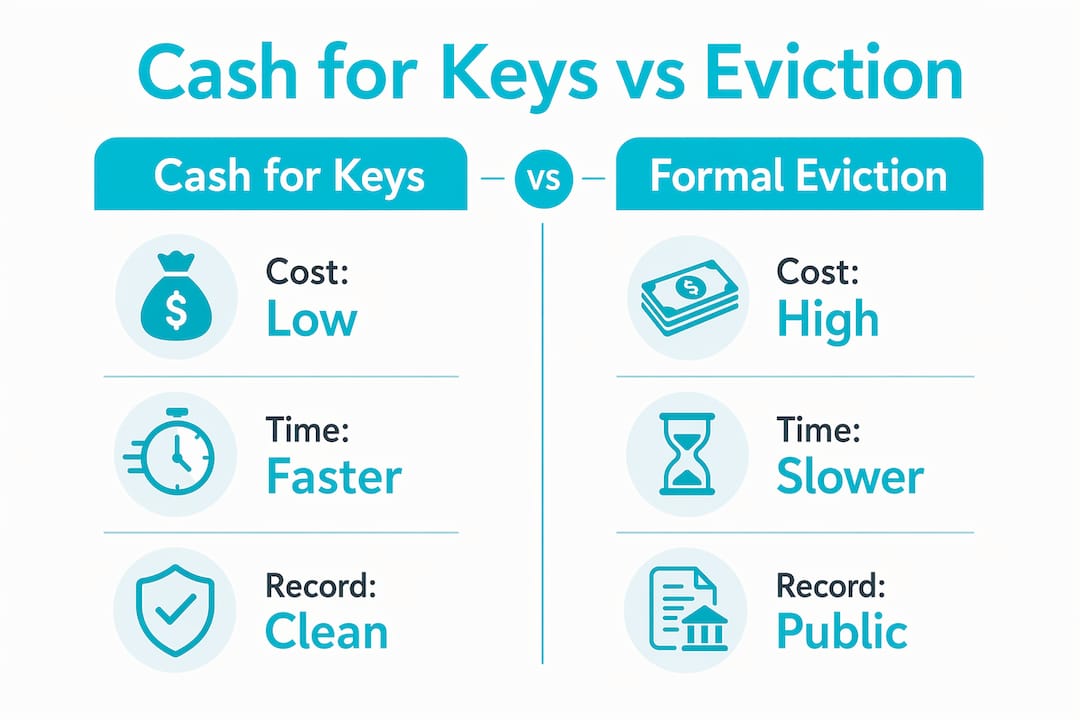
How does cash for keys compare to formal eviction?
Formal eviction is expensive, slow, and unpredictable. Evictions can cost $5,000 to $15,000 or more when you factor in attorney fees, court filing costs, lost rent during the process, and potential property damage. The timeline stretches from three months to over a year in contested cases. That is money and time most homeowners facing foreclosure simply cannot afford.
Cash for keys flips that math. A payment of $1,000 to $5,000 to an occupant who agrees to leave in one to four weeks costs a fraction of a full eviction. The owner avoids court delays, reduces the risk of property damage from a hostile occupant, and gets the property back in usable condition.
"Though paying money to a tenant seems counterintuitive, it can save thousands and weeks in the eviction process, reducing stress for homeowners facing foreclosure or eviction." — Deal Run
The impact on the occupant matters too. A formal eviction creates a public court record. That record follows a renter for years and can block them from future housing. Cash for keys, done correctly, leaves no eviction record. That makes the deal genuinely attractive to occupants, which is exactly why they agree to it.
| Factor | Formal eviction | Cash for keys |
|---|---|---|
| Cost to owner | $5,000–$15,000+ | $1,000–$5,000 |
| Timeline | 3–12 months | 1–4 weeks |
| Property damage risk | High | Low |
| Eviction record for occupant | Yes | No |
| Court involvement | Required | None |
| Stress level | High for both parties | Manageable |
The benefits of cash for keys are clearest when you look at the full cost of the alternative. Eviction is not just expensive in dollars. It drains time, energy, and goodwill that homeowners in difficult situations cannot spare.
What is the typical cash for keys process?
The cash for keys process follows a clear sequence. Skipping steps is where deals fall apart.
- Initiate the conversation. Approach the occupant directly and calmly. Explain that you are offering a financial incentive for a voluntary, timely move-out. Frame it as a mutual benefit, not a threat.
- Set a realistic offer. Base your offer on what the occupant actually needs to relocate. A figure that covers first and last month's rent at a new place is often the right starting point. Going too low wastes time. Going too high sets a bad precedent.
- Draft a written agreement. Include all the elements listed above: payment amount, move-out date, property condition, key return, and mutual release of claims. Both parties sign and date the document. Keep a copy.
- Conduct a move-out inspection. On the agreed date, inspect the property before handing over any money. Confirm broom-clean condition and collect all keys and access devices.
- Make payment at handover. Use a cashier's check or certified check rather than cash. A traceable payment creates a clear record and eliminates disputes about whether the occupant was paid.
- Confirm vacancy and finalize releases. Once payment is made and keys are in hand, both parties sign off on the final release. The deal is complete.
Pro Tip: Never hand over payment before you have the keys and have walked through the property. An occupant who takes money and stays puts you back at square one, and recovering that payment is difficult.
The documents needed for a clean close include the signed agreement, the payment record, and a written confirmation of vacancy. Keep all three.
What misconceptions and legal considerations should homeowners know?
Several misunderstandings about cash for keys lead homeowners to either avoid it unnecessarily or misuse it in ways that create legal risk.
- Cash for keys is not coercion. The process is strictly voluntary. An occupant cannot be forced to accept a cash for keys offer. If they refuse, the owner must pursue formal eviction through the courts. Threatening an occupant or cutting off utilities to pressure them into accepting is illegal.
- Payment is never made in advance. This is the single most common mistake. Paying before the occupant vacates and before you verify property condition removes all your leverage. The occupant has the money and no legal obligation to leave.
- The mutual release clause is not optional. Without it, either party can reopen claims after the deal closes. The owner could face a lawsuit for alleged harassment. The occupant could face a collections action for back rent. The release clause closes both doors.
- No eviction record is a real benefit, not a marketing claim. A cash for keys settlement prevents a money judgment from appearing on the occupant's credit report and keeps the eviction off public record. This is a genuine incentive that makes occupants more willing to negotiate.
- State laws vary, but cash for keys is legal nationwide. Some states have specific rules about notice periods and agreement language. California, for example, has detailed unlawful detainer settlement procedures. Consulting a local real estate attorney before finalizing any agreement is always the right call.
Key Takeaways
Cash for keys is the fastest, lowest-cost way for a homeowner to reclaim a property without going to court, provided the agreement is written, signed, and executed in the correct order.
| Point | Details |
|---|---|
| Core definition | A voluntary payment to an occupant in exchange for timely, clean vacancy. |
| Cost advantage | Cash for keys costs $1,000–$5,000 versus $5,000–$15,000+ for formal eviction. |
| Written agreement required | The deal must be documented with payment, move-out date, condition terms, and mutual release. |
| Payment timing is critical | Never pay before inspecting the property and receiving all keys. |
| No eviction record | A properly structured deal protects the occupant's rental history and future housing options. |
What I have learned from watching cash for keys deals succeed and fail
The deals that go wrong almost always share one trait: someone skipped the paperwork because the conversation felt friendly. A handshake agreement with a cooperative occupant still needs to be in writing. People's memories change, circumstances shift, and a deal that felt settled on a Tuesday can become a dispute by Friday.
The other pattern I see is owners offering too little out of principle. The logic is understandable. Why pay someone to leave a property they were already supposed to vacate? But the math does not support that position. A $1,500 offer that gets rejected and forces a six-month eviction costs you far more than a $3,000 offer that closes in two weeks. The goal is not to win the negotiation. The goal is to get your property back quickly and cleanly.
Cash for keys also works best when you treat the occupant with respect throughout the process. That is not just an ethical point. Occupants who feel disrespected are more likely to leave damage behind, dispute the agreement, or simply refuse to cooperate. A professional, calm approach produces better outcomes every time.
If you are managing a foreclosure situation or dealing with a tenant who has stopped paying, selling directly to a cash buyer can sometimes eliminate the need for cash for keys entirely. The buyer handles the occupant situation as part of the purchase. That option is worth knowing about before you start negotiating on your own.
— Daniel
How Dan buys houses helps homeowners move forward fast
Homeowners in Northwest Indiana facing foreclosure, difficult tenants, or a property they need to exit quickly have a direct option available to them.

Dan buys houses purchases homes in any condition, with no repairs required and no open houses. The process is straightforward: you request an offer, receive a fair cash figure, and choose your closing date. Some sellers close in as little as five days. If your situation involves an occupied property, Dan buys houses has the experience to handle those complexities without putting the burden back on you. Get a cash offer today and find out what your property is worth without any obligation. You can also review how the buying process works before making any decisions.
FAQ
What does cash for keys mean in simple terms?
Cash for keys is when a property owner pays an occupant a set amount of money to vacate the property voluntarily by an agreed date and in good condition. It is a legal, written agreement that avoids the need for a formal eviction.
How much is a typical cash for keys payment?
Payments typically range from $1,000 to $5,000 depending on the situation, the local rental market, and how quickly the owner needs the property vacated. The amount is negotiated between both parties before the agreement is signed.
Is cash for keys legal in Indiana?
Cash for keys is legal in all U.S. states, including Indiana. The agreement must be voluntary, written, and signed by both parties to be enforceable.
When does the occupant receive payment in a cash for keys deal?
Payment is made at the time of key handover, after the owner inspects the property and confirms it meets the agreed condition. Paying in advance removes the owner's leverage and creates serious financial risk.
Does cash for keys affect the occupant's credit or rental history?
A properly structured cash for keys agreement includes a clause preventing any eviction from being filed or reported to tenant screening services. This protects the occupant's credit and keeps their rental history clean, which is one of the main reasons occupants agree to the deal.