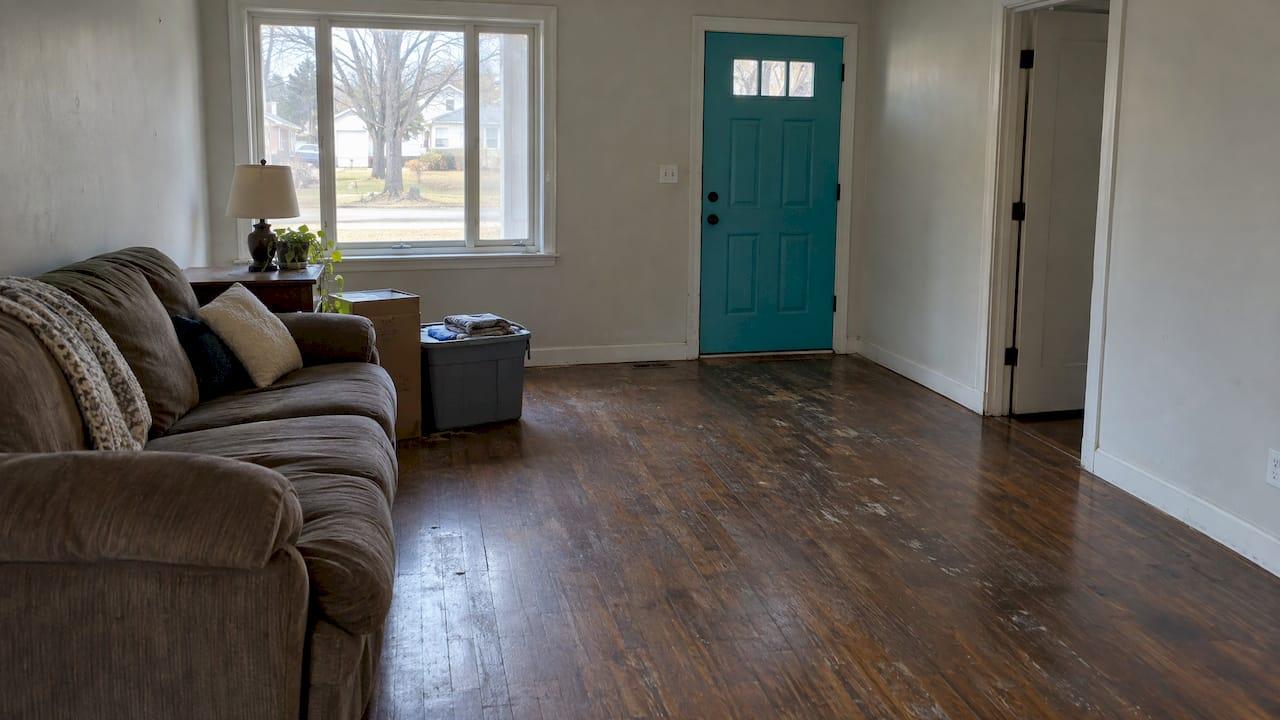
You can sell an Indiana rental as soon as the eviction is finished and you hold possession. The tenant is out, the sheriff has done the removal, and the belongings are handled lawfully. The fastest way to sell a unit that may be dirty, damaged or half-emptied is a direct cash sale, where the buyer takes the house as-is. We buy Northwest Indiana rentals that way, with no repairs, no cleaning and no closing costs for you. This guide covers what has to happen first, what can go wrong, and how to choose the sale route.
TL;DR
- Eviction in Indiana is a court process: written notice, a possession hearing, a writ of possession, then removal by a law enforcement officer. Do not skip a step or remove the tenant yourself.
- Items left in the unit are not yours to throw out. Indiana sets a court-order and storage process, and the time a tenant has to claim stored property is now 45 days.
- A separate damages hearing for unpaid rent can come later. It does not stop you from selling the property.
- A cash sale of the house as-is skips repairs, cleaning, showings and owner-paid closing costs. Some sellers close in as little as five days.
- Always confirm your current case status and deadlines with the court clerk or an Indiana attorney before you act.
Table of Contents
- Can you sell the rental right after the eviction?
- How Indiana eviction works, step by step
- The belongings left behind
- What a rental often looks like after an eviction
- Your sale options after an eviction
- What you must disclose when you sell
- The money you are still owed
- Promo: sell the rental as it stands
- Perspective
- A practical checklist before you sell
- FAQ
- Sources
Can you sell the rental right after the eviction?
Yes, in practical terms. You own the property, and winning possession returns it to you. The eviction rules in Indiana deal with how you get possession and how you treat the tenant's belongings. They do not add a waiting period before the owner may sell. What decides how soon you can sell is the condition of the unit and whether you can show the buyer a clean handover.
Three things usually stand between "the tenant is gone" and "the house is sold":
- Possession is final. The sheriff or other officer has completed the removal.
- Belongings are resolved. Anything left must be handled under Indiana's property rules, covered below.
- The house is sellable. Eviction often leaves a unit with damage, trash and unpaid utilities. A listing on the open market needs these fixed. A direct cash buyer does not.
If you are still in the middle of the case, read our walkthrough of the Indiana eviction process first. It shows the same timeline with the point where a cash sale can run alongside it.
How Indiana eviction works, step by step
Knowing exactly where you are in the process tells you when a sale can close. Here is the sequence.
Step 1: Written notice
For unpaid rent, Indiana Code 32-31-1-6 requires a 10-day written notice to pay or vacate. If the tenant pays all past-due rent within those 10 days, you cannot go forward with the eviction. To end a month-to-month tenancy without cause, the notice is 30 days, per the same Nolo guide.
Where it goes wrong: a notice that is late, missing, or not in writing. A defective notice can force you to start over and add weeks.
Step 2: File the case and attend the possession hearing
If the notice period passes, you file an eviction case. Indiana Legal Help explains that the case has two parts: a possession hearing that decides whether the tenant must leave, and a later, separate damages hearing for unpaid rent and damage. Final possession is typically set about 2 to 3 weeks out, or immediately if the landlord posts money with the court.
This split matters to a seller. The money you are owed is a separate fight from the property you want to sell. You do not need to wait for the damages hearing to get your house off your hands.
Step 3: Writ of possession and removal
If you win, you ask for a writ of possession. The sheriff posts a final notice, usually 48 hours to 5 days depending on the county, then returns to remove the tenant. Only a law enforcement officer may remove a tenant after the landlord wins. Nolo is explicit that landlords must never try to force the tenant out themselves: no changing locks, no shutting off utilities, no moving belongings to the curb.
How long it all takes
One 2026 guide estimates about 21 to 35 days from first notice to lockout for an uncontested nonpayment case, and about 42 to 56 days for a no-cause month-to-month termination. Contested cases add 14 to 60 days. Treat those as ballparks, since court calendars differ by county.

The belongings left behind
This is the step that trips up the most landlords after an eviction. You cannot simply clear the unit and dump everything, however tempting it is when you want to sell.
Indiana's rules sit in Indiana Code Title 32, Article 31, Chapter 4. In plain terms:
- If you were awarded possession, you may seek a court order allowing removal of the tenant's property.
- You then personally serve the tenant at the last known address with notice of the order and the name and location of the warehouseman or storage facility.
- Exempt property, the kind the law protects, must be released on demand without payment.
- The tenant then has a window to claim the property and pay the storage expenses. After it, the warehouseman may sell the items.
That window used to be 90 days. H.E.A. 1079 (P.L. 154-2025) shortened it to 45 days after the tenant receives notice. Older blog posts still quote 90 days, so check the date on anything you read.
There is one more distinction. The law protects you from liability for property that is truly abandoned, meaning a reasonable person would conclude the tenant left and gave up possession. But in a forced eviction where the tenant stays past the possession date, the property is not treated as abandoned. One Indiana firm explains that in that case the landlord pays a licensed, bonded mover to remove the belongings when taking possession. For a full overview of the do's and don'ts of self-help, a guide to Indiana landlord-tenant laws is a good companion.
Why this matters for a sale: a house full of someone else's belongings is not ready to hand over. With a direct buyer you can talk through the timing. We offer flexible closing dates, so you can line the sale up with when the unit is actually clear, instead of rushing and risking a claim.
What a rental often looks like after an eviction
Be realistic about the condition. Evicted units commonly have some mix of:
- Holes in walls, broken doors, damaged flooring
- Trash, odors and pests
- Unpaid utility bills and possibly code notices
- Deferred maintenance that was never fixed during a bad tenancy
On the open market, each of those turns into a repair bill before you can list, a lower appraisal or inspection concern, and weeks of carrying costs: mortgage, taxes, insurance and utilities on an empty house. A damaged roof is one example. Our guide to selling a house with roof damage walks through the same trade-off.
A direct cash purchase removes that spend. We buy houses, condos, duplexes, townhomes, mobile homes, commercial properties, apartment complexes and land in as-is condition, with no repairs and no cleaning required from you.
Your sale options after an eviction
Sell directly for cash, as-is
This is the route built for your situation. You contact a local buyer, describe the property, and receive a cash offer. There are no showings or open houses, and you do not negotiate with buyers who walk after an inspection. We charge sellers no fees or commissions and cover all closing costs. Some sellers close in as little as five days, and you pick the closing date that fits your timeline.
Because we are a local buyer and not a national investor, you deal with a person who knows Northwest Indiana. You can see how our process works in Indiana before you reach out.
Keep the property and re-rent
Some owners keep the house, repair it, screen more carefully and rent again. If that is your plan, it helps to know how to protect yourself as a rental owner before the next tenancy. If instead you are tired of the cycle, our piece on why landlords sell rental properties lays out the usual reasons and numbers.
Selling with a tenant still in place
If the eviction is not yet done, you can sell while the tenant is there. The buyer then takes over the lease, so you will need an estoppel statement and a rent ledger. We explain that in how to prepare an estoppel and rent ledger to sell with tenants. For a larger property, see how to sell an apartment building in Indiana.
What you must disclose when you sell
Indiana's seller disclosure rule (IC 32-21-5) generally applies to sellers of one- to four-unit residential property. Sellers must complete and sign the state's Seller's Residential Real Estate Sales Disclosure form about the known physical condition of the property and give it to a prospective buyer before an offer is accepted. The form reflects your actual knowledge at that time and is not a warranty.
If the condition changes before settlement, you must disclose the change or certify that the condition is substantially the same. After an eviction, that means being honest about damage you know of, such as water damage, a broken furnace or structural issues. The form asks about the foundation, mechanical systems, roof, structure, and water and sewer systems.

Honest disclosure is also the easiest approach with a cash buyer: tell us what you know, and the offer accounts for it.
The money you are still owed
A sale does not erase the rent and damages a tenant owes you. Judgment on those is a separate matter from the property. In Indiana, small claims court handles money claims up to $10,000 per the same 2026 guide, and that includes unpaid rent, damages and cleaning costs. Indiana also has no statewide just-cause eviction requirement for private landlords, and no new statewide moratorium.
If your unpaid balance is large or you are unsure how to pursue it, speak with an Indiana landlord-tenant attorney about the damages hearing and collection. That is a legal question we leave to them. Selling the house first does not prevent you from collecting on a judgment.
Promo: sell the rental as it stands
If the unit is empty and needs work, or the eviction is still unfolding, you do not have to repair, clean or stage anything before you sell. Sell your house for cash to us in Northwest Indiana: we buy rentals in any condition, charge no fees or commissions, cover the closing costs and can close in as little as five days, or on the date you choose.

We also work in local markets such as Hammond, Highland and Chesterton. If the rental is also behind on payments, see our guides on an emergency home sale to stop foreclosure and selling with back taxes.
Perspective
Most landlords who call us after an eviction are worn out. The tenancy went badly, the court dates took time, and now there is a house that needs money they would rather not spend.
Our view is simple: you have already spent enough on this property. A direct purchase means you do not pay for repairs, cleaning, commissions or closing costs, and you do not wait through showings. You tell us the condition, and we make a cash offer.
We are a local buyer, not a hedge fund or national investor. We buy the house ourselves, so the decision is ours and the timeline is yours, from a closing in as little as five days to a later date if you need time to finish the legal steps.
Do the eviction by the book, handle the belongings by the book, and let us take the house off your hands.
Daniel
A practical checklist before you sell
- Confirm possession is complete and the sheriff or officer has finished the removal.
- Check whether any belongings remain and whether a court order and storage notice are needed.
- Photograph the property as you receive it, with dates.
- List the damage you know about, because you will need it for disclosure.
- Gather the lease, ledger, court records and utility balances.
- Decide what you will pursue in the damages hearing.
- Contact us for a cash offer and set a closing date that fits.
FAQ
How long after an eviction can I sell my Indiana rental?
There is no waiting period built into the eviction rules we have covered. Once you hold possession and have lawfully dealt with any belongings, you can sell. The practical limit is the condition of the house and whether your buyer can take it as-is.
Can I sell the house while the eviction case is still open?
Yes, but the buyer would take the property with the tenant in place unless the tenant has left. That means lease paperwork such as an estoppel and rent ledger. A buyer who purchases as-is can also work around a closing date that follows the court timeline.
What do I do with items the tenant left behind?
Do not discard them. Seek a court order allowing removal, serve the tenant with notice of the storage location, and release exempt property on demand. Since H.E.A. 1079, the tenant has 45 days after receiving notice to claim stored property. Check the details with an Indiana attorney if the items are valuable.
Do I still collect unpaid rent after I sell?
Yes. Unpaid rent and damages are decided at a separate damages hearing and are a claim against the tenant, not the property. Small claims court covers money claims up to $10,000 in Indiana.
Sources
- The Eviction Process in Indiana: Rules and Procedures
- Eviction Frequently Asked Questions, Indiana Legal Help
- How to Evict a Tenant in Indiana Legally 2026
- Indiana Eviction Process Guide (2026)
- Indiana Code 2025, Title 32, Article 31, Chapter 4
- 2025 Legislative Update, Indiana Courts
- How to Handle Personal Property in a Forced Eviction
- Seller's Residential Real Estate Sales Disclosure (Indiana)