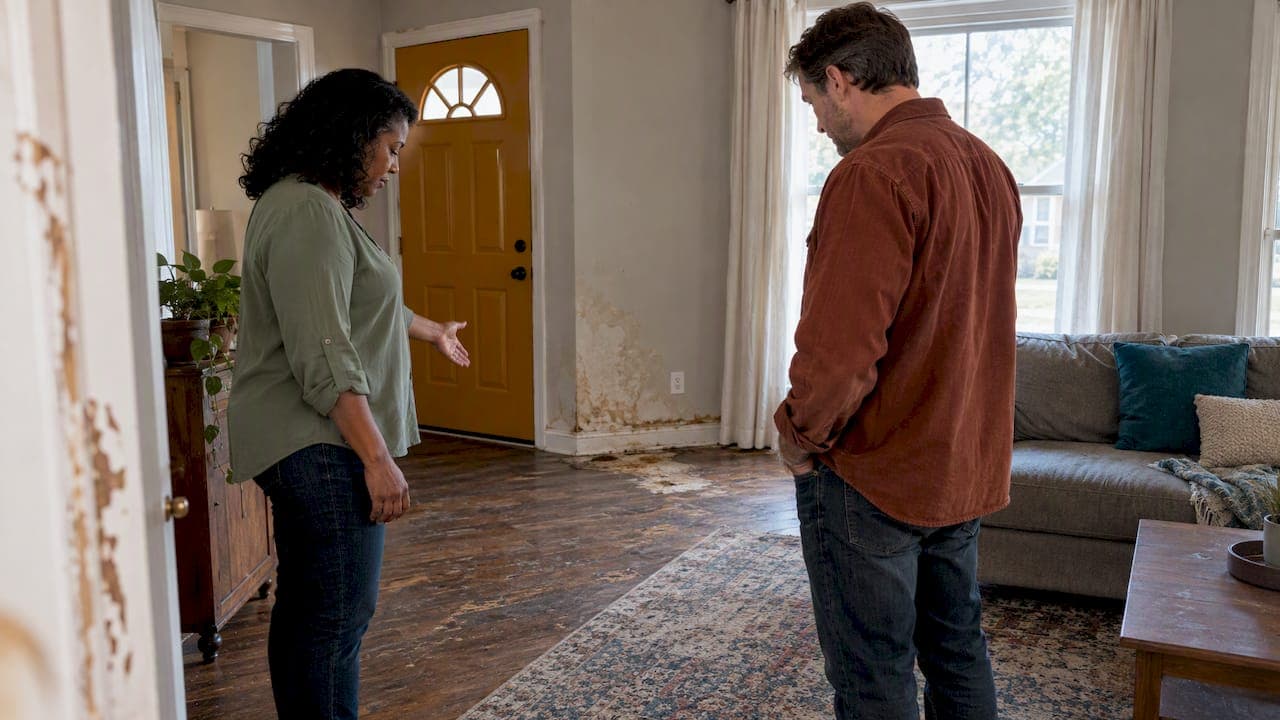
There is no single number, but the working range is this: investor-style cash buyers usually offer somewhere around 70% of a home's after-repair value (ARV) minus the cost of repairs, which for a house that needs real work often lands well under 70% of what it would list for. Cash buyers who aren't fixing and reselling, such as ordinary buyers who simply have the money, pay far closer to market value. The gap between those two worlds is where most sellers get confused.
This guide explains where the percentages come from, what moves your offer up or down, and how to tell whether a cash offer is fair once you count what a traditional sale costs you in time, concessions and risk.
TL;DR
- Investor cash offers are usually built from the 70% rule: ARV × 70%, minus repairs. Because repairs come off the top, the offer as a share of the as-is value of a rough house can be much lower than 70%.
- Across all cash purchases, the discount is smaller. Cotality reports sellers accepted an average 9% discount for cash in 2025, and a UC San Diego study found about 10% on average.
- Condition, price range, market heat and the type of buyer drive the percentage more than anything else.
- Compare offers by net proceeds and timing, not by the headline number alone.
- We don't publish a flat percentage, because every house is priced on its own repairs and comps. You can ask us for a no-obligation offer and see the math.
Table of Contents
- Two different questions hiding in one keyword
- What the research says about cash discounts overall
- How investor cash offers are calculated: the 70% rule
- What moves the percentage up or down
- Is the lower number really a loss?
- Perspective: how we think about the number
- How to tell if a cash offer is fair
- When a lower percentage still makes sense
- Get a cash offer on your Northwest Indiana house
- FAQ
- Sources
Two different questions hiding in one keyword
When people search for the typical cash offer percentage, they usually mean one of two things.
What do cash buyers pay compared with financed buyers? This is a market-wide comparison of buyers who pay in cash and those who use a mortgage. The discount here is modest, in the single digits to low teens.
What will a "we buy houses" investor offer for my house? This is a different calculation. The buyer plans to repair and resell or rent the property, so the offer is built backward from what the finished house is worth. The discount is larger, and it depends heavily on the work needed.
Mixing the two is why online numbers range from 5% to 40% off. Both are right, for different buyers.
What the research says about cash discounts overall
Cash is common. The National Association of REALTORS® (NAR) reported that all-cash buyers made up 27% of existing-home transactions in January 2026, and its 2025 profile put all-cash purchases at 26% over the past year. So roughly one in four buyers can pay without a lender.
What do those buyers save? A few data points:
| Source | What it found | Period |
|---|---|---|
| UC San Diego Rady School of Management | All-cash buyers paid about 10% less on average than mortgage buyers. The gap was about 6% for relatively strong borrowers and up to 17% where mortgage deals were riskier. | 1980–2017 and 2013–2021 |
| Cotality | Sellers accepted an average 9% discount for cash in 2025, up from 4% in 2021, 6.2% in 2022, 6.8% in 2023 and 7% in 2024. | 2021–2025 |
| Peer-reviewed Tallahassee, Florida study | Cash-only sales carried a 4.9% average price discount, concentrated in lower-priced homes and varying by period. | 2006–2015 |
Two takeaways. First, the cash discount has been growing, which tells you buyers with cash have had leverage lately. Second, it is not uniform. The Tallahassee authors concluded that cash discounts are tied more closely to lower-priced segments and market conditions than to distressed status alone.
Why do sellers accept less? The UC San Diego researchers attribute it to sellers valuing the convenience and certainty of cash, especially where a financed deal is more likely to fail.
How investor cash offers are calculated: the 70% rule
A buyer who plans to renovate and resell needs room for repairs, carrying costs and a profit. The most common shortcut is the 70% rule. As Rocket Mortgage explains, an investor estimates the after-repair value, multiplies it by 70%, and subtracts the estimated repairs:
Maximum offer = (ARV × 0.70) − repairs
Its example uses a $220,000 ARV and $40,000 of repairs: $220,000 × 0.70 = $154,000, minus $40,000 = $114,000. Rocket Mortgage also calls the rule a rule of thumb, not a guarantee of profit, since estimates can be off and the formula leaves out items like loan costs, taxes and market swings.

Notice what that means for the percentage. That $114,000 offer is about 52% of the $220,000 ARV. The repair bill, not the 70%, does most of the damage.
A worked example
Here is a hypothetical house, not a real offer:
- Similar renovated homes nearby have sold for $200,000, so ARV is $200,000.
- 70% of ARV is $140,000.
- The house needs a roof, a kitchen and flooring, estimated at $35,000.
- Maximum offer: $140,000 − $35,000 = $105,000, which is 52.5% of ARV.
Now change one thing. If the same house only needed $10,000 of paint and flooring, the maximum offer rises to $130,000, or 65% of ARV. Same neighborhood, same buyer, a 12.5-point swing, purely from condition.
Why the formula stops at 70%
The 30% that the rule holds back isn't all profit. It has to cover the purchase and sale closing costs, months of taxes, insurance and utilities while the work is done, financing if any, and the real chance that the repair estimate runs over. A buyer who offers 85% of ARV on a house that needs work has almost nothing left to cover a surprise.
What moves the percentage up or down
Condition and repair scope
This is the biggest lever. Cosmetic work (paint, flooring, fixtures) costs little and barely dents the offer. Roofs, foundations, plumbing, electrical, HVAC and fire or water damage cost more and are harder to estimate, so buyers price in more cushion. If you want to see how different problems are treated, our guide to home conditions cash buyers accept walks through them.
Price range
The Tallahassee research found the significant discount sat in lower-priced properties. On a lower-priced home, a fixed repair bill is a bigger share of value, and buyers have fewer buyers to resell to, so percentages tend to be lower.
Market conditions
NerdWallet's homeowner guide notes that hot seller's markets can produce competing cash offers, while slower buyer's markets tend to produce lower ones. When several buyers want the same house, the percentage creeps up.
Type of buyer
A household with savings that wants to live in the house will pay closer to market. An investor who needs margin pays less. A buyer who covers your closing costs and doesn't charge commissions is structured differently from one that adds fees later, so always ask what comes out of your check.
Speed and flexibility
Faster, simpler closings are part of what cash buyers sell. Our article on why cash buyers close faster explains what is skipped: lender underwriting, buyer appraisals and financing contingencies.
Is the lower number really a loss?
The fair comparison is net proceeds, not list price versus offer. A financed buyer's higher price usually comes with concessions, repair requests and time.
NerdWallet gives a useful example: a $360,000 cash offer closing in about 10 days against a $380,000 financed offer closing in 30 to 45 days. After $11,400 in concessions on the financed offer, the estimated proceeds before other selling costs are $360,000 versus $368,600. The headline gap of $20,000 shrinks to $8,600 before you count the extra weeks of mortgage payments, utilities and risk.
That risk is real. Freddie Mac notes that financed loans typically take 30 to 45 days to close after acceptance, and that contingencies let a buyer renegotiate or withdraw if conditions aren't met. Its appraisal guide adds that a low appraisal can lead to renegotiation, extra buyer funds or cancellation where an appraisal contingency applies.
NerdWallet's overall view is that cash sales can be faster, more certain and carry fewer contingencies, but usually bring a lower final price.

Costs to put on your side of the ledger
When comparing a traditional listing to a cash offer, add up:
- Agent commissions and your share of closing costs.
- Repairs a buyer's inspection will ask for, or the repairs you do before listing.
- Months of mortgage, taxes, insurance and utilities while the house sits.
- Cleaning, staging and showings.
- The chance the first deal falls apart and you start over.
If the house needs substantial work, the traditional route can cost more than it looks. Our guide to selling a home that needs work lays out the choices.
Perspective: how we think about the number
We buy houses in Northwest Indiana as the buyer, not as a middleman, so we're open about how an offer is built.
We look at what comparable homes sell for, what the house needs to be brought up to that level, and what it costs us to hold and resell it. We then make an offer we can close on. We don't charge you fees or commissions, and we cover the closing costs, so the number we give you is the number that matters, with no deductions from it later.
For many homeowners the question isn't whether a cash offer is lower than a perfect listing price. It's whether a perfect listing is realistic. If you're behind on payments, inherited a house you can't afford to fix, are relocating on a deadline or are tired of a rental, the cost of waiting often exceeds the difference. Some sellers report closing in as little as five days, and you pick a closing date that fits your move.
We are a local buyer, not a hedge fund or national investor. Ask any buyer, including us, to explain the math behind the offer. A fair buyer will.
Daniel
How to tell if a cash offer is fair
Use this checklist before you accept anything.
- Get your own sense of value. Look at what recently renovated, similar homes in your neighborhood sold for. That's roughly the ARV a buyer will use.
- Estimate repairs honestly. Walk the house and list what's wrong. A contractor's quote for the big items, such as roof, furnace and foundation, helps you check the buyer's assumptions.
- Run the 70% rule yourself. (ARV × 0.70) − repairs. If an offer is far below that, ask why. If it's close, the buyer is working within the usual formula.
- Ask what comes out of the check. Fees, commissions, closing costs, "service charges" and cleanout costs should be in writing. Ours are none.
- Compare timelines. A closing in days versus months has a dollar value. See our cash home sale timeline for the usual steps.
- Check flexibility. Some sellers need two weeks and others need ninety days. If you need more time to move, read about flexible closing dates.
- Get more than one offer. A single number tells you little. Two or three, with the math explained, tell you a lot.
Red flags
- A buyer who won't explain how they got the number.
- Pressure to sign the same day.
- Fees that appear at closing that weren't in the offer.
- An offer that can be "re-traded" after inspection without a clear reason.
- No local presence or no proof they've bought houses nearby.
For how this works with investors specifically, see what homeowners need to know about investor cash offers.
When a lower percentage still makes sense
Some situations make the math clearly favorable to a quick cash sale.
Foreclosure. Once the clock is running, every week of delay can cost equity. Selling before the sale date can protect what you have left. Read our guide to an emergency home sale to stop foreclosure in Indiana. If you have received a foreclosure notice, a HUD-approved housing counselor or an attorney can also help you weigh your options.
Inherited property. Heirs often face taxes, insurance, utilities and a house full of belongings in a state they don't want to fix. A cash sale as-is can end all of that.
Major repairs. If the roof, foundation or systems need work, you would have to fund repairs before a lender-financed buyer would touch it. Many financed buyers can't buy a house in that condition at all.
Relocation. Carrying two housing payments is expensive. A fixed, early closing date has value.
Landlord fatigue. Problem tenants, vacancy and deferred maintenance wear down returns. A buyer who takes the property with the tenants or in whatever state it is in can end the problem.
In each case, the question is not "Is this the highest price in theory?" but "What do I keep, and by when?" If speed is your priority, our guide on how to sell fast for cash covers the practical steps, and having your documents ready shortens the timeline further.
Get a cash offer on your Northwest Indiana house
We buy houses, condos, duplexes, townhomes, mobile homes, apartment complexes, commercial properties and land in Northwest Indiana in any condition. You don't repair or clean anything, you pay no fees or commissions, and we cover closing costs. You choose the closing date that works for you.

Tell us about your property on our Sell Your House For Cash page and we'll explain how we got to our number. If you want to know what happens after you reach out, see how our process works in Indiana. We also buy in communities like Highland and Chesterton.
FAQ
What is a reasonable cash offer on a house?
For an investor who will renovate, a common benchmark is 70% of the after-repair value minus repair costs. For a house in good shape, the offer will be much closer to market value. Market-wide, Cotality reported an average 9% cash discount in 2025, so anything wildly outside your expected range deserves an explanation.
How much do cash buyers pay compared to financed buyers?
Research from UC San Diego found all-cash buyers paid about 10% less on average than mortgage buyers. Cotality's 2025 figure was 9%. Those are averages across all cash buyers, not investor offers on homes needing repairs, which can be lower.
Why is a cash offer lower than my listing price?
The cash buyer is giving you speed, certainty and no repairs, and taking on the repair cost, holding costs and resale risk. Studies attribute the gap largely to the convenience and certainty sellers get from cash. A listing price is also not a guaranteed sale price, since concessions, repair requests and failed financing often reduce what you net.
Can I negotiate a cash offer?
Yes. Share your own repair quotes, recent comparable sales and any competing offers. A buyer who builds the number from real comps and real repair costs can walk you through each line, and may adjust if you show the estimate is too high.
Do I pay fees or commissions when I sell to you?
No. We charge sellers no fees or commissions, and we cover closing costs. We earn our return by buying at a price that leaves room to resell or rent the property.
Sources
- NAR: Home Sales Slip, But an Icier Market May Help Some Buyers
- NAR: 2025 Profile of Home Buyers and Sellers summary
- UC San Diego Rady: All-Cash Home Buyers Pay 10% Less than Mortgage Buyers
- Cotality: Why cash buyers are getting a better deal
- Examining the Cash-Only Price Discount (PubMed Central)
- Rocket Mortgage: What is the 70% rule in house flipping?
- NerdWallet: Should I Accept a Cash Offer for My House?
- Freddie Mac: Understanding Contingency Clauses in Homebuying
- Freddie Mac: What Homebuyers Can Expect with an Appraisal