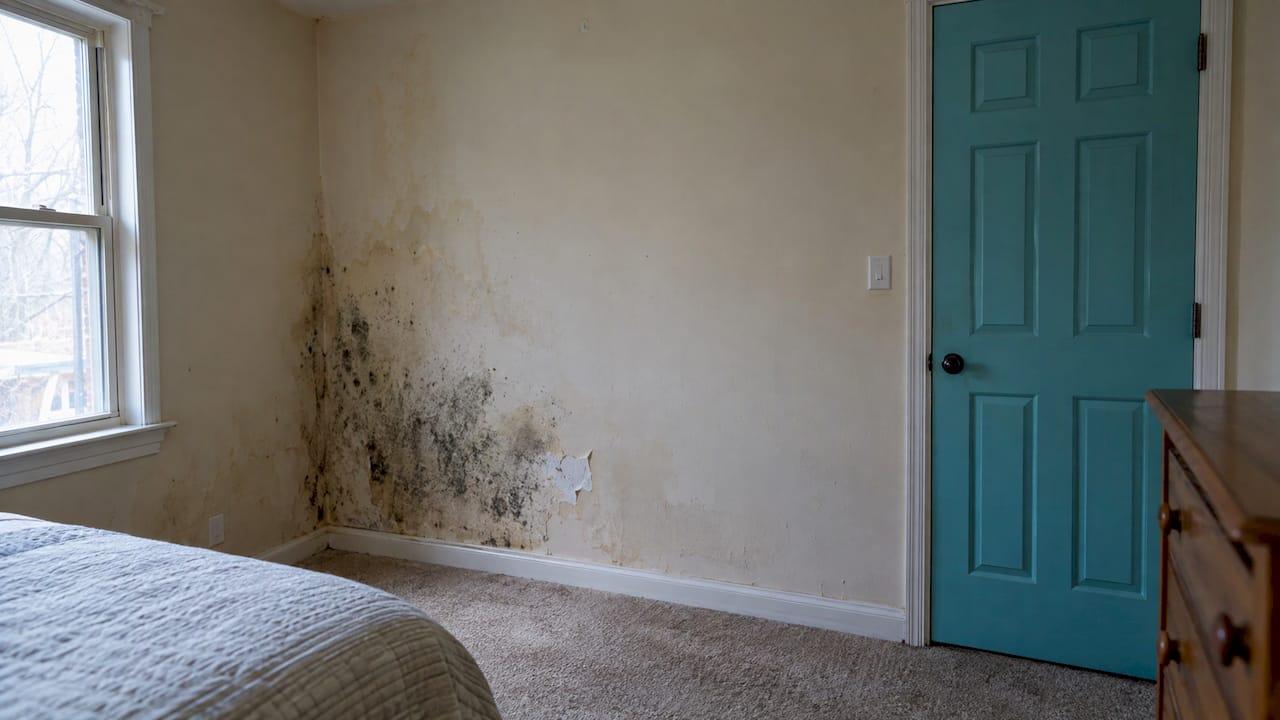
You can sell a house with mold. Mold is not a legal barrier to a sale. It is a known condition that has to be reported honestly, and then you pick a route: pay for remediation and list, list it with a price cut, or sell as-is to a buyer who takes the house the way it stands. If you are under time pressure from foreclosure, a move, an inherited property or a rental that has gone wrong, the as-is cash route is usually the one that fits. We buy houses in Northwest Indiana in any condition, with no repairs, no cleaning and no closing costs for you to pay, and some sellers have closed in as little as five days.
This guide explains what mold does to a sale, what you must say about it, what cleanup costs, and how to decide.
TL;DR
- Mold does not stop you from selling. Known mold and past mold work have to be disclosed truthfully, whichever way you sell.
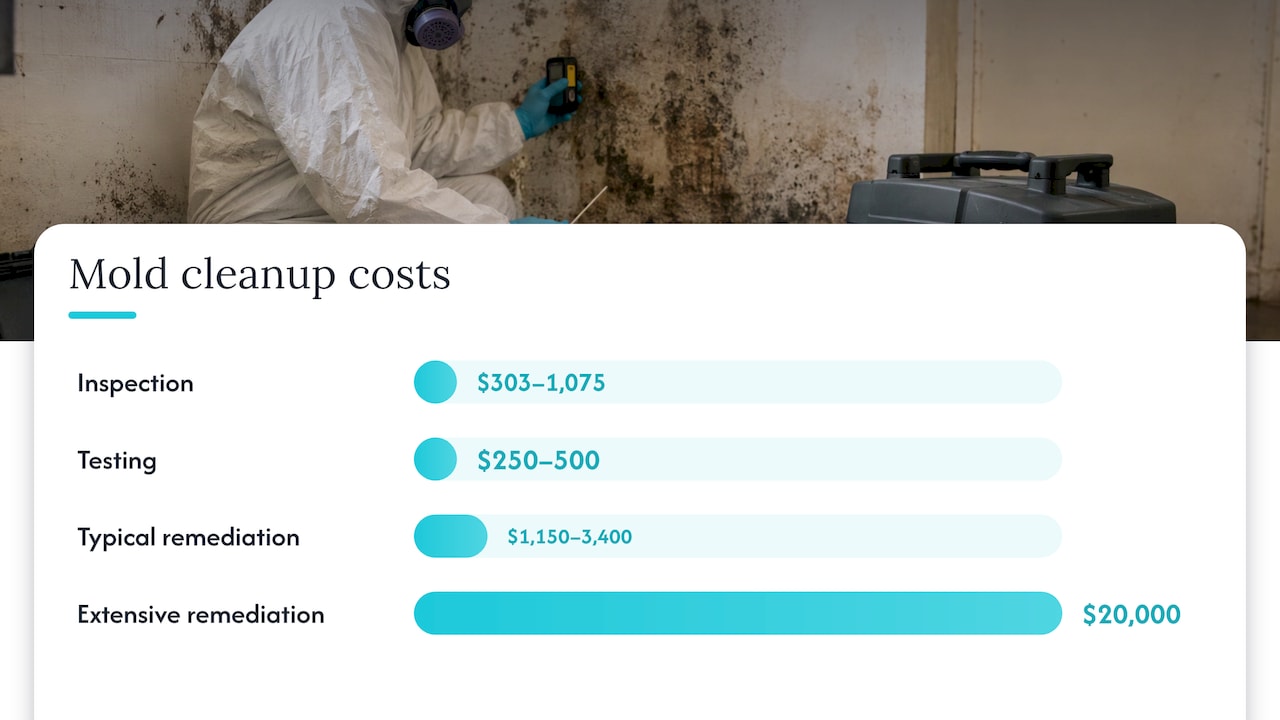
- Professional cleanup typically costs $1,150 to $3,400, and up to $20,000 for extensive cases, before you add inspection and testing.
- Listing on the open market with mold usually means inspections, repair requests and a smaller pool of financed buyers.
- A direct cash sale as-is skips cleanup, listing prep, showings and agent commissions, and can close on your schedule.
- Do not paint over it, clean it up and stay quiet, or call active mold "past" mold. Concealment is what creates legal trouble.
Table of Contents
- Why mold changes a home sale
- What you have to disclose in Indiana
- What mold cleanup and testing cost
- Your four options, compared
- When selling as-is to a cash buyer is the better fit
- How a direct as-is sale works when there is mold
- What a mold-damaged house is worth to a cash buyer
- Mistakes that cost sellers money
- Our view: mold is a timing problem as much as a repair problem
- Get a cash offer for a house with mold
- FAQ
- Sources
Why mold changes a home sale
Mold needs moisture, so it rarely shows up alone. It usually points to a leak, a damp basement, poor ventilation or a past flood. Buyers and their inspectors know that, so they don't only price the stain they can see. They price the unknown: what is behind the drywall, what caused it, and whether it will come back.
That is why a mold problem hits a conventional listing in three ways:
- Inspection leverage. A buyer's inspector finds it, and the buyer asks for a repair, a credit or a lower price. Buyers tend to ask for more than the work will likely cost because they add a cushion for the unknown.
- A smaller buyer pool. Some lenders and loan types balk at active mold or water damage, which leaves investors, cash buyers and deal-seekers.
- Delay. Testing, a contractor, drying time and a re-inspection all take weeks. If the house is in foreclosure or you are carrying a second mortgage payment after a move, weeks cost money.
Research on value gives a rough sense of the scale. A contingent-valuation survey of South Carolina homeowners found that 58% of respondents would bid on a fully disclosed, remediated toxic-mold home, and that they expected post-cure value reductions of 20% to 37%. That study is from 2005 and looks at a serious form of mold contamination, so treat it as a sense of direction rather than a price for your house. It does show that even a fixed mold problem can follow a home into the sale.
What you have to disclose in Indiana
There is no single federal law on mold disclosure when you sell a home. The duty comes from state law, and the rules differ widely. New York requires sellers to say whether the property has been tested for mold. California sellers of properties with up to four residential units must complete a form listing known environmental hazards, including mold. Don't rely on a rule you read about another state.
In Indiana, sellers of one-to-four-unit residential property generally complete the state's Seller's Residential Real Estate Sales Disclosure form under IC 32-21-5. The form tells sellers to answer every question truthfully and to report all known conditions affecting the property, however they learned about them. It is based on what you know, it is not a warranty, and it is not a substitute for a buyer's inspection. The same form lists transfers where it is not required, including transfers ordered by a court in the administration of an estate and transfers by foreclosure sale.
What counts as "known" is broad. In practice, treat all of these as things to report:
- Visible mold anywhere in the house, including the attic, crawl space and basement
- Mold you cleaned yourself, and any test results, even from a store-bought kit
- Past professional remediation, even if the work was completed and the area tested clean
- A history of leaks, flooding or water damage that was not fully dried out
- Contractor or inspector comments that name mold
A state-by-state disclosure guide notes that courts read "known" broadly, so a musty smell you shrugged off can be treated as something you should have known about if a buyer's inspection later finds active mold in that room. Past mold should be described with what happened, when, the cause and what was done, with the records attached, and active mold should never be described as past.
An "as-is" sale does not erase the duty to be honest
Selling as-is means you will not make repairs. It does not cancel your obligation to report what you know, and an as-is clause does not protect a seller who hides a known problem. If a buyer later finds concealed mold, the remedies discussed in legal guides include rescission of the sale, damages for remediation and diminished value, and attorneys' fees. That is why the sound approach is to say what you know, in writing, and let the price reflect it.
If you are unsure how the form applies to your situation, for example because the house is part of an estate or already in foreclosure, ask an Indiana real estate attorney before you sign anything. For heirs and for owners in foreclosure, the form's exemptions for court-ordered transfers may or may not apply to your sale, and an attorney can tell you in one conversation.
What mold cleanup and testing cost
Before choosing a route, put a number on the repair route. Angi's 2026 data, based on thousands of projects, shows mold inspections cost $303 to $1,075, with a national average of $689. Testing runs $250 to $500, and remediation typically costs $1,150 to $3,400, reaching $20,000 in extensive cases. Size of the affected area, how hard it is to reach and the number of samples all move the price.
A simple worked example shows how it adds up. Say a leak under a bathroom has spread into the subfloor and the wall behind it:
| Item | Low | High |
|---|---|---|
| Inspection | $303 | $1,075 |
| Testing | $250 | $500 |
| Remediation | $1,150 | $3,400 |
| Total before fixing the leak or rebuilding | $1,703 | $4,975 |
Those totals leave out fixing the plumbing leak that caused it, replacing drywall and flooring, and repainting. They also leave out the cost of the weeks you wait. If the damage reaches the framing, the cost moves toward the top of the range quoted above.
The EPA's guidance says that if the moldy area is under about 10 square feet, roughly a 3 by 3 foot patch, you can generally handle the cleanup yourself. If there has been a lot of water damage or the mold covers more than that, the EPA points to professional-level remediation. Whoever does the work, the moisture source has to be fixed first or the mold comes back.
Your four options, compared
Most sellers end up choosing among these paths. The right one depends on how much mold there is, how much time you have and how much cash you can put in.
| Route | What you do | Typical trade-off |
|---|---|---|
| Remediate, then list | Fix the water source, hire a remediation company, get clearance testing, list | Widest buyer pool, but you pay up front and wait weeks |
| List with mold disclosed | Hand buyers the test reports and list as is | Price cut and inspection negotiation, with financing hurdles |
| Offer a credit | Lower the price or credit the buyer at closing | The buyer controls the repair, and often asks for a cushion |
| Sell to a direct cash buyer as-is | Disclose what you know, accept an offer for the house in its current state | No repairs, no cleaning, no showings, and a schedule you can set |
The first three routes all need the house to pass through a buyer's financing, appraisal and inspection. The fourth removes those steps. For a seller who is short on time or cash, that is the point.
When selling as-is to a cash buyer is the better fit
The route that fits depends on your situation. These are the cases we see in our service area and the reasoning for each.
Foreclosure. A foreclosure timeline does not wait for a contractor's schedule. If the lender is already moving, a repair project with testing and re-testing may run past the point where it can help you. A direct sale for cash can close in days rather than months, which gives you a way to settle the mortgage before the sale is forced.
Relocation. If you have taken a job in another city, you are paying for two homes while the mold gets fixed. Paying a contractor from a distance, then holding showings from a distance, adds cost and stress. A buyer who accepts the house as it is, and lets you choose the closing date, ends the double payments sooner.
Inherited property. Heirs often discover mold in a house that sat empty after the owner passed, with a leaking roof or a failed sump pump. Funding remediation on a house you may not want to keep is a hard call, and the estate may need to be settled quickly. Selling as-is avoids spending estate money on repairs that the next owner could redo anyway.
Landlords. A rental with moisture problems and tenants who cannot or will not cooperate is a repair project you do not want to manage. Selling without making repairs lets you leave the problem behind. Our guide to selling a rental property without repairs covers that situation in more detail.
Houses in disrepair. When mold is one problem among several, such as a bad roof, old plumbing or a failing foundation, fixing only the mold does not make the house easy to list. In that case a single as-is sale is simpler than a string of contractors. See our guides on selling a fixer-upper as-is and on home conditions cash buyers accept.
How a direct as-is sale works when there is mold
Here is the sequence from the seller's side, with what we handle at each step.
- Write down what you know. Note where the mold is, when you found it, the likely cause and anything you have already done: cleaning, tests, contractor visits. Gather any records. This is the same information you would put on a disclosure form, and it makes every later step quicker.
- Stop the water if you can. If a pipe is dripping or the roof is leaking, a basic fix protects the house from getting worse. You do not need to rebuild anything, and you do not need to clean up the mold for us.
- Tell us about the house. We buy houses, condos, duplexes, townhomes, mobile homes, commercial properties, apartment complexes and land in any condition. You do not need to clean, empty or repair the property before we look at it.
- Get a cash offer. Our offers come with no fees and no commissions charged to you. We are a local buyer, not a national investor or a hedge fund, and we purchase the home ourselves, so there is no listing and no open house.
- Choose your closing date. We offer flexible closing dates and flexible move-out schedules. Some sellers have closed in as little as five days, and others pick a later date that suits a move or the estate.
- Close with no closing costs on your side. We cover the closing costs, so the offer amount is what the sale is built on.
Our process page lays out how we work in Indiana. For the legal side, such as the disclosure form, the title work and estate court steps, you will want your own attorney involved when the situation calls for it, and we are used to working alongside them.
What a mold-damaged house is worth to a cash buyer
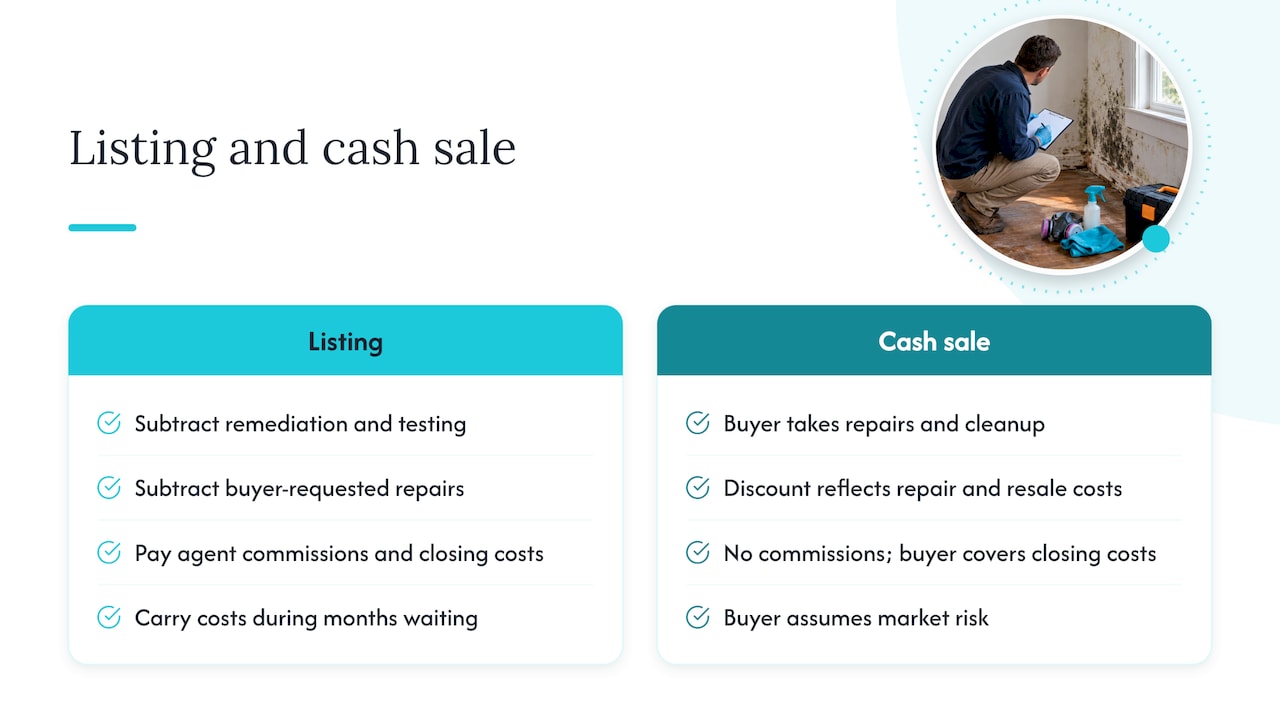
A cash buyer prices the house for what it will take to fix and resell or rent it. We purchase at a discount, since we take on the repairs, the cleanup and the market risk ourselves, and that is how our business earns: by buying the home directly, then reselling or renting it. We charge sellers nothing. The discount replaces the costs you would otherwise face: remediation, repairs, agent commissions, closing costs, months of carrying costs, and the risk that a buyer walks after an inspection.
The way to judge any offer is to compare it with your own net on the other routes. On a listing, subtract remediation and testing (the example above), the repairs buyers will request, agent commissions and closing costs, then the carrying costs for the months you wait. Because our offers have no commissions and we cover closing costs, the figure you see is the figure you work with.
There are two practical points on the other side of the sale. An overly low listing price is not a way to avoid disclosure, and a sale with no inspection contingency is not a way around it either. In every case, say what you know.
Mistakes that cost sellers money
- Painting over it. Cosmetic cover-ups are exactly what inspectors look for, and they turn a disclosed problem into a concealed one.
- Cleaning it and saying nothing. DIY cleanup is fine for a small patch, but it is still something you know about. Past mold, cleaned or not, goes in the disclosure.
- Skipping the cause. Mold without a fixed water source returns, which can undo a remediation certificate quickly.
- Assuming as-is means no questions. It means no repairs. Honest disclosure still applies.
- Waiting. Mold spreads in damp conditions, and the longer a leak runs, the more it costs to deal with. A foreclosure date or a probate deadline only makes waiting costlier.
If water damage is behind the mold, our guide on disclosing water damage first, then weighing a cash sale against repairs walks through that order of steps. A guide to selling a water-damaged house also explains how an as-is sale works when a home has active mold or water damage. For a broader look at who buys these homes, see our article on types of buyers for damaged homes, and for the legal meaning of the term, what an as-is sale means for sellers.
Our view: mold is a timing problem as much as a repair problem
Most people who call us about mold are not worried about the mold itself. They are worried about what it does to their schedule. The foreclosure date is on the calendar, the estate has to be closed, the move is two months away, or the tenants have left a mess.
A traditional sale asks you to solve the mold first, then wait for a buyer, then survive their inspection. We think that order is backwards for a seller who is under pressure. We buy the house as it is, so the mold is our job after closing, not yours before it.
We are a local buyer. We do not charge fees or commissions, we cover the closing costs, and we do not ask you to clean, repair or empty the house first. Tell us honestly what you know about the mold, and we will make you a straightforward cash offer.
Daniel
Get a cash offer for a house with mold
If you own a house in Northwest Indiana with mold and want to skip remediation, showings and inspection negotiations, we will make you a cash offer for it in its current condition. There is no charge to you, and you choose the closing date.

Start on our Sell Your House For Cash page. If you are in Highland, Chesterton or Merrillville, we have pages for those towns too: Highland, Chesterton and Merrillville.
FAQ
Can you be sued if you sell a house with mold?
Yes, if you hide it. Legal guides describe claims for breach of contract, fraud and rescission of the sale when a seller concealed known mold or past remediation. Being open about what you know, in writing, is the protection. If you have a specific worry, an Indiana real estate attorney can review your situation.
Does mold devalue a house?
It can. Buyers add a cushion for the unknown, and some financing is harder to get for a home with active mold. A study of fully informed buyers found expected value reductions of 20% to 37% after a toxic-mold cure. A direct as-is sale removes the guesswork by pricing the house as it is.
Do I have to clean up the mold before I sell?
You are not required to remove mold before a sale, but you must disclose what you know. If you sell to us, you do not need to clean, repair or remove anything. For small patches under about 10 square feet, the EPA says homeowners can generally handle cleanup themselves, though you would still disclose it.
How fast can I sell a house with mold for cash?
Some of our sellers have closed in as little as five days. Because we do not depend on a buyer's mortgage, appraisal or inspection, and you can choose the closing date, the timeline is set mainly by you and by the title work.
Sources
- Angi: How Much Does a Mold Inspection Cost?
- Simons and Throupe: An Exploratory Review of the Effects of Toxic Mold on Real Estate
- Environmental Law Institute: State Indoor Air Quality Database, 2025 mold laws
- Environmental Law Institute: State Indoor Air Quality Database, 2026
- State of Indiana: Seller's Residential Real Estate Sales Disclosure form
- EPA: A Brief Guide to Mold, Moisture and Your Home
- Mold Disclosure When Selling a House: State-by-State Guide
- 7 Steps to Disclose Past Mold Issues to Buyers
- Can You Sell a House With Mold? A Guide for Georgia and South Carolina