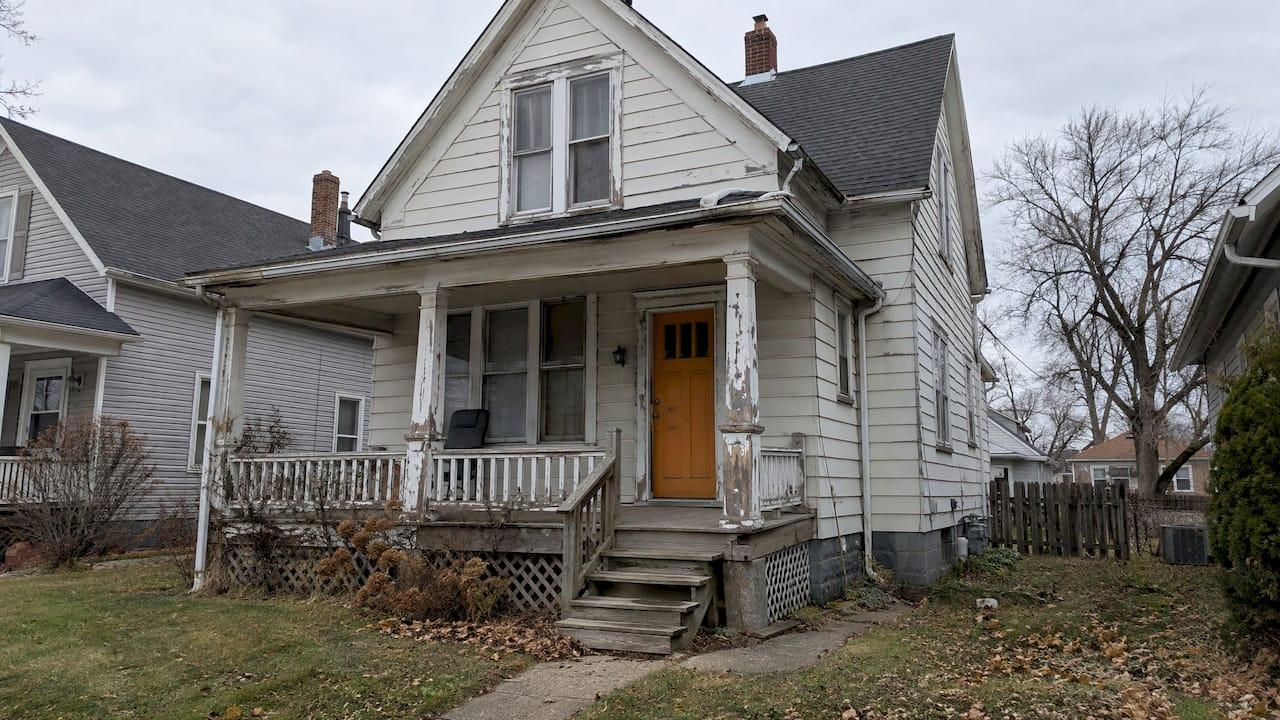
You can sell a fixer-upper as-is without spending a dollar on repairs. The question is which buyer you sell to. A direct cash buyer purchases the house in its current condition, covers the closing costs and closes on your schedule, so you skip the listing, the showings and the inspection renegotiations. We are Dan Buys Houses, and we buy homes in Northwest Indiana this way. This guide covers what "as-is" means, what you still have to disclose, how buyers price repairs and how the process runs.
TL;DR
- "As-is" means you will not make repairs. It does not cancel your duty to disclose problems you know about.
- Indiana requires most sellers of one-to-four-unit homes to complete a state disclosure form, with exceptions such as court-ordered transfers and foreclosure sales.
- Buyers price a fixer-upper from the repaired value minus repairs, minus a margin for their risk and costs. Knowing that formula helps you read any offer.
- With a direct cash sale from us, you pay no fees or commissions and no closing costs, and some sellers report closing in as little as five days.
- Foreclosure, probate, relocation and tired-landlord situations all reward a fast, certain sale more than a perfect price.
Table of Contents
- What "as-is" really means
- What you still have to disclose in Indiana
- How buyers price a fixer-upper
- Your three realistic routes
- How a direct as-is sale works, step by step
- When speed matters most
- Perspective
- Selling to us
- FAQ
- Sources
What "as-is" really means
An as-is sale generally means the seller is not committing to make repairs. Redfin's seller guide adds that it does not automatically remove disclosure obligations or protect against misrepresentation. The North Carolina Real Estate Commission describes it as a pre-negotiated decision not to make repairs that puts buyers on notice. The buyer can still inspect, but you have said up front that nothing will be fixed.
In a traditional listing, that promise only goes so far. Zillow notes that after their own inspection a buyer may try to renegotiate the price or ask for a credit. You do not have to fix anything, but the deal can still shift or fall apart. That uncertainty is the real cost of an as-is listing, and it is the part a direct sale removes.
What you still have to disclose in Indiana
Disclosure means telling the buyer about defects you know of. Indiana law, IC 32-21-5, generally requires sellers of one-to-four-unit residential property to complete the state's Seller's Residential Real Estate Sales Disclosure form. The form is based on what you know about the property's condition, however you learned it. The state form lists transfers that do not need it, including court-ordered transfers such as estate administration, foreclosure sales, bankruptcy trustee sales and transfers from a divorce decree.
In practice, the things buyers and courts care about are the material ones: water damage, foundation or structural problems, roof, electrical and plumbing defects, pest damage, environmental hazards and unpermitted work, as Redfin's guide lists them. Realtor.com's reporting says flaws must be material, such as lead paint, sinkholes or flooding, rather than every crack or drafty window. Other states put the same principle in different words. Texas, for example, has a Seller's Disclosure Notice under its Property Code.
Two rules of thumb keep you safe:
- Write down what you know, including the old leak you patched. A "no" on a form where the true answer is "yes" can create civil liability for misrepresentation.
- Disclose in writing, before the contract is signed.
For a deeper look at how duties and risks interact, this overview of disclosures, pricing and your options is a solid companion. If your problem is a specific one, we have written about water damage and foundation issues, and the as-is paperwork you will meet along the way. For legal questions about a particular disclosure, talk to an Indiana real estate attorney.
How buyers price a fixer-upper
Price is where most sellers get surprised, so it helps to see the arithmetic from the buyer's side. Investors typically start with the after-repair value (ARV): what the house would sell for fully updated, based on comparable sales. Redfin explains that investor offers are built from ARV, estimated renovation costs and a profit margin.
A common rule of thumb is Maximum Offer = ARV × 70% − estimated repair costs. The Fix-N-List write-up says the 30% covers holding costs, closing costs, profit and a buffer for surprises. It is a heuristic, not a law, and it moves with the market.
Here is a worked example with made-up round numbers:
| Line | Amount |
|---|---|
| Comparable updated homes sell for (ARV) | $200,000 |
| ARV × 70% | $140,000 |
| Estimated repairs (roof, kitchen, flooring) | $45,000 |
| Rule-of-thumb maximum offer | $95,000 |
Owner-occupant buyers think differently. Realtor.com suggests taking the cost of major items off a comparable move-in-ready home, so a $20,000 roof and a $30,000 kitchen means roughly $50,000 off. Zillow's example shows a $400,000 home needing major work drawing offers 10% to 20% below market value, with condition, location, comps and market conditions driving the number.
The lesson is that the repair discount is real in every route, and it is the buyer's cost of taking on the work. What differs is everything around it: how much you spend to sell, how long the house sits and how likely the deal is to close.

Your three realistic routes
1. Sell directly to us. We buy houses, condos, duplexes, townhomes, mobile homes, commercial properties, apartment complexes and land in as-is condition for cash. You do not repair or clean, and you do not pay commissions, fees or closing costs. We make you a cash offer, and you choose the closing date. We are a local buyer, not a hedge fund or national investor.
2. List as-is with an agent. You put "as-is" in the listing, price it from repair-adjusted comps and wait for a buyer. This brings showings, the buyer's inspection, possible renegotiation and a contingency window that Realtor.com says typically runs 10 to 45 days. If a buyer walks away over inspection findings, most states require you to share that with future buyers.
3. Repair first, then list. This puts your own money and months into the house before you see a dollar back. It suits sellers with time, cash and a contractor they trust.

If your goal is to avoid renovations, route one is the cleanest. For a longer comparison, see our guide to selling a home that needs work.
How a direct as-is sale works, step by step
- Gather what you know. Note the age of the roof, any leaks, past repairs, liens and anything unpermitted. You do not need estimates from contractors.
- Contact us. Tell us about the property and your timeline. The process page shows how it runs in Indiana.
- Receive a cash offer. There is no cost to you to ask, and no obligation.
- Choose your closing date. Some sellers report closing in as little as five days, and we also offer flexible closing and move-out schedules when you need more time.
- Leave the cleanup. You do not have to clear the house or scrub it first. If you are wondering what that means in practice, read what you must do before selling uncleaned.
- Close and get paid. We cover the closing costs.
The title work and the signing happen with a title company, as they do in any sale. Keep your disclosure honest, because it is the one step that stays with you in every route.
When speed matters most
Facing foreclosure
In Indiana, foreclosure is judicial, which means it goes through the courts. Nolo's Indiana summary says the sheriff must advertise the sale for three weeks, with the first notice at least 30 days before the sale, and that you can redeem by paying the full loan balance before the sheriff's sale. Selling the house before that date lets you pay off the loan from the proceeds and keep the foreclosure from finishing. A fixed, fast closing date is worth more here than a higher price that arrives too late. Talk to a HUD-approved housing counselor or an attorney about your specific deadlines.
Inherited homes
Heirs often inherit a house with deferred maintenance, belongings and no one to manage it. Realtor.com notes that as-is homes are often sold by heirs who want a quick sale. Our guide to selling an estate home quickly covers the timing. Confirm with the estate's attorney who has authority to sign before you accept any offer.
Relocating
A job move does not wait for a contractor's schedule. Flexible closing dates let you align the sale with your move rather than the other way around. See our quick sale guide.
Landlords with a problem property
Repairs after a hard tenancy, plus the vacancy while you do them, add up. We buy rental properties as-is, and we explain the details in our piece on selling a rental without repairs.
Perspective
Most sellers who call us have already priced the repairs in their head and found the number scary. The thing they actually want is a finish line: a date, a number and no surprises.
Our model is simple. We buy the house ourselves, for cash, in the condition it is in. That is why we can charge sellers no fees or commissions and pay the closing costs. Because we are the buyer, there is no inspection fight to lose and no financing to fall through.
The question to ask about any sale is not only "what is the top price?" but "what will I actually keep, and when?" For a house that needs a roof, a kitchen and a cleanout, a fast, certain sale from a local buyer is often the answer that makes the most sense.
Daniel
Selling to us
If you own a house in Northwest Indiana that needs work you do not want to do, Sell Your House For Cash is where we start. We buy in any condition, charge no fees or commissions and cover closing costs. You can also read about our company or see the pages for Highland and Merrillville.

We will give you an offer and a closing date that fit your timeline.
FAQ
Do I have to disclose problems if I sell as-is?
Yes, known material problems still need to be disclosed. In Indiana, most one-to-four-unit sellers complete the state disclosure form based on what they know about the property. Selling as-is changes who pays for repairs, not what you must tell the buyer.
Is it better to sell as-is or fix it up?
It depends on your time, cash and risk. Repairing means spending money and waiting months. Selling as-is to a direct buyer means no repair bills, no cleaning and no closing costs on your side.
How much less will a fixer-upper sell for?
It depends on the repairs and the market. Zillow's example shows a $400,000 home needing major work drawing offers 10% to 20% below market value. Subtract what the repairs would cost you plus the commissions and closing costs, and compare it with a cash offer.
How fast can an as-is sale close?
Some sellers report closing with us in as little as five days. We also offer flexible closing dates when you need more time to move.
Sources
- Selling a House That Needs Repairs: A Seller's Guide, Redfin
- Selling a Fixer-Upper: A Guide for a Quick Sale, Redfin
- NCREC Bulletins: What Does "As Is" Really Mean?
- Seller's Residential Real Estate Sales Disclosure, State Form 46234
- How to Sell a Home 'As Is', Realtor.com
- Selling a House As Is: What It Means for Buyers, Realtor.com
- Navigating 'As Is' Sales, Texas A&M
- Can You Sell a House Without an Inspection? Zillow
- How Much Do You Lose Selling a House As-Is? Zillow
- How to Price a Fixer-Upper in 2026, Fix-N-List
- Indiana Foreclosure Laws, Process and Homeowner Rights, Nolo
- How to Sell a House As Is: Disclosures, Pricing and Your Options